In the Thick of It

A blog on the U.S.-Russia relationship
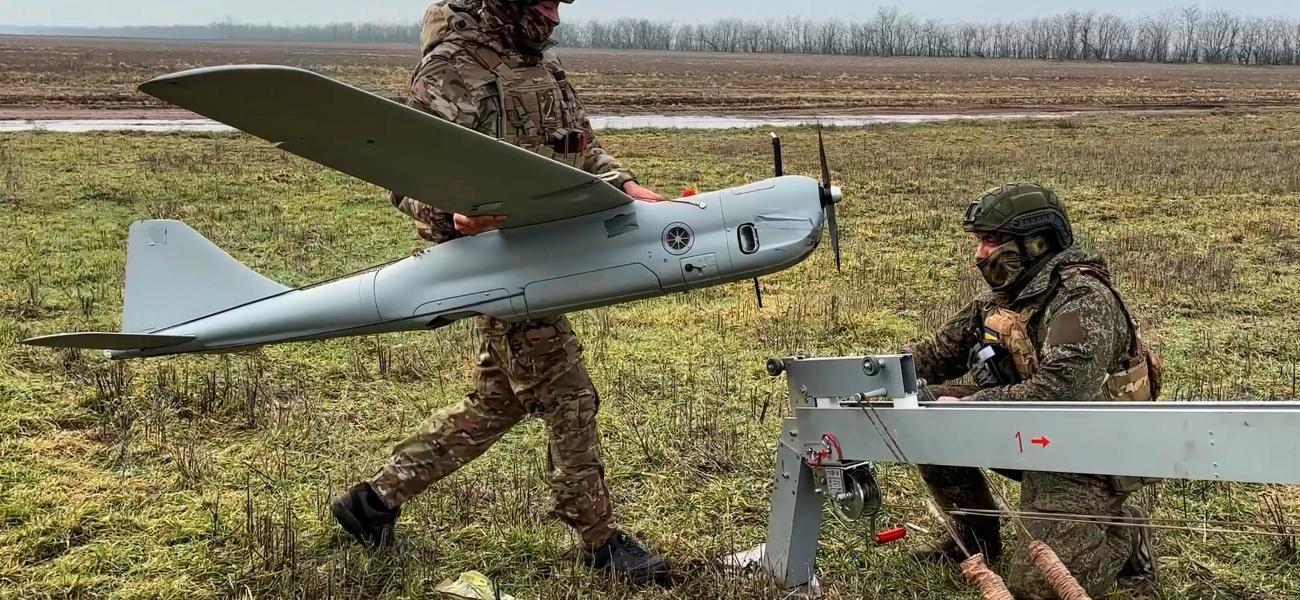
In this image made from video provided by Russian Defense Ministry Press Service on Sunday, Feb. 15, 2026, shows Russian servicemen preparing to launch an Orlan-10 reconnaissance drone for an action in an undisclosed location in Ukraine. (Russian Defense Ministry Press Service via AP)

RM’s analysis indicates that Russia’s military expenditures increased 3.16–4.62 times in nominal terms from 2021 to 2025.   

Source of the claim: The Wall Street Journal (Jan. 11, 2026)

In a Jan. 11, 2026, op-ed titled “The U.S. Could Make 2026 Even Worse for Putin Than 2025,” Amy Knight wrote that “Russia’s total military spending in 2025 has been estimated at 15.5 trillion rubles—in nominal terms, five times that of 2021.” However, RM’s analysis of Russian budgetary documents and data from both the Stockholm International Peace Research Institute (SIPRI), and International Institute for Strategic Studies (IISS), indicates that Russian military expenditures increased from 3.16 to 4.62 times in nominal terms (without adjusting for inflation) from 2021 to 2025 (See Table 1). In real terms, expenditures increased from 2.43 to 3.12 times over the period of study (See Table 1). 
Read More
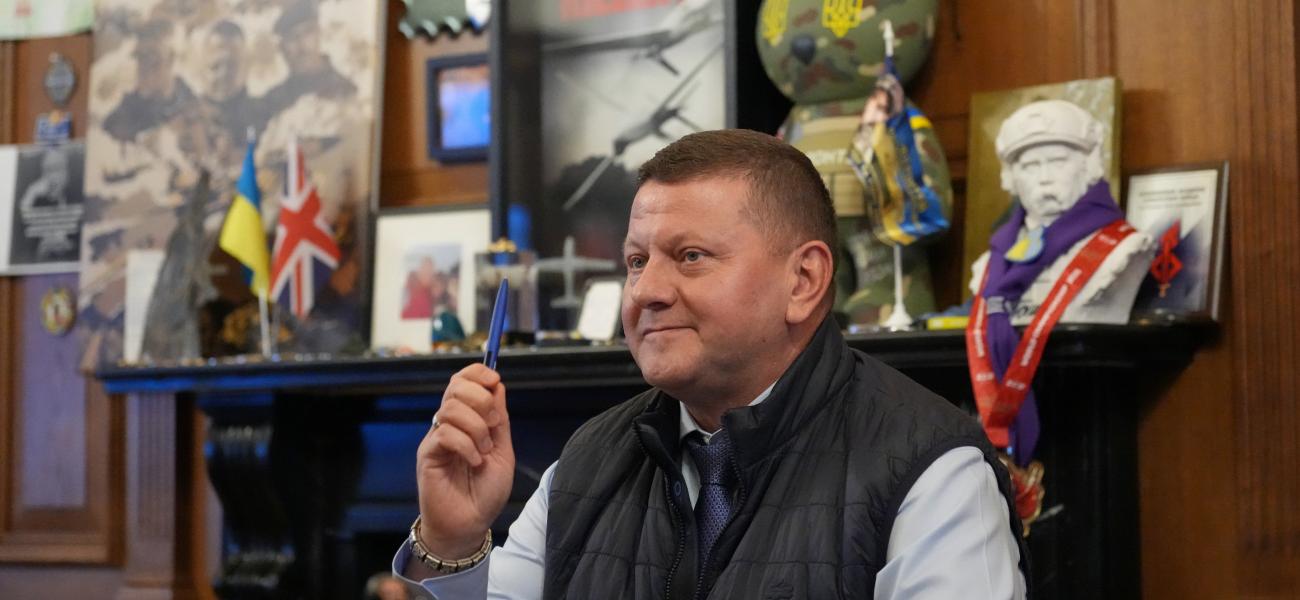
Valerii Zaluzhnyi, Ukraine's ambassador to the United Kingdom, speaks with The Associated Press in London on Feb. 2, 2026. (AP Photo/Frank Augstein)

Ukraine’s goals and strategies, the current battlefield situation and how and when the war might end were among the key topics Valerii Zaluzhnyi, former commander-in-chief of Ukraine’s armed forces and current ambassador to the U.K., addressed in his latest extended Q&A. The wide-ranging conversation with students of Serhiy Nyzhny Kyiv School of Government also touched on the state of the world order, conflicts in the Middle East and Western cohesion, amid Russia’s war against Ukraine. Below is our selection of highlights from the hour and a half conversation.

Read More
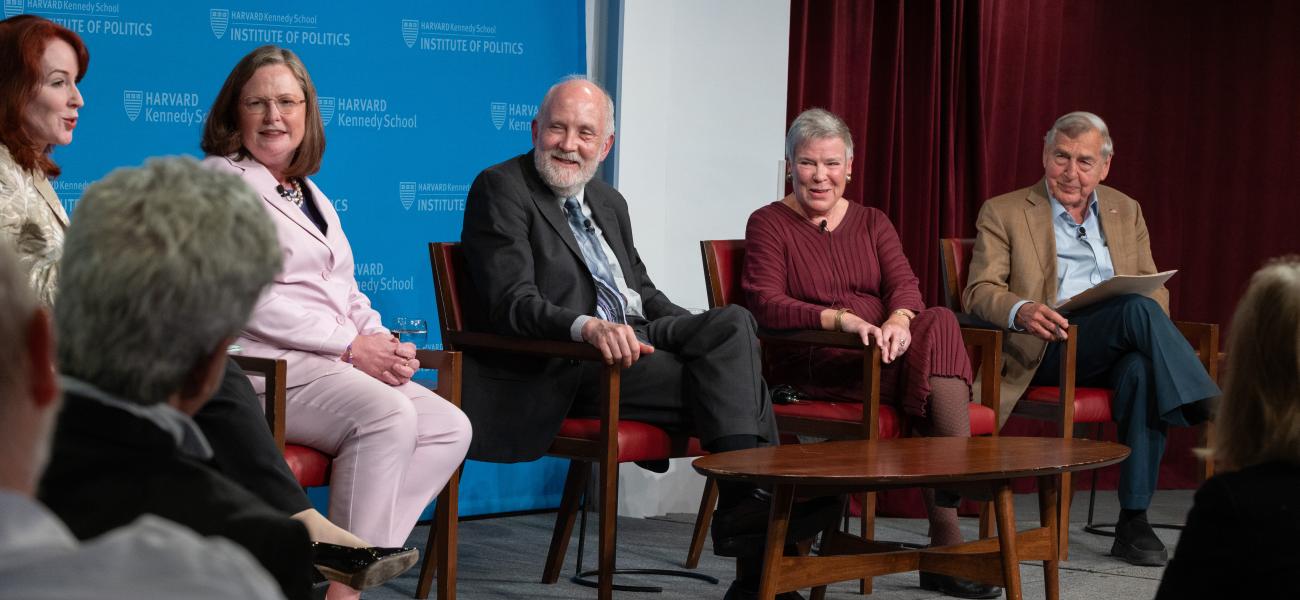
Belfer Center Director Meghan O'Sullivan moderates expert panel with Laura Holgate, Matthew Bunn, Rose Gottemoeler, and Graham Allison

On April 15, 2026, Harvard Kennedy School’s Belfer Center for Science and International Affairs launched its new Carnesale Convenings series1 with a question central to American national security: can a “frayed” nuclear nonproliferation regime survive rising geopolitical tensions and new proliferation pressures? Belfer Center Director Meghan O’Sullivan moderated a wide-ranging discussion to answer that essential question with speakers including Graham Allison (Douglas Dillon Professor of Government at Harvard University), Rose Gottemoeller (William J. Perry Lecturer, Freeman Spogli Institute for International Studies and Research at Stanford University), Laura S.H. Holgate (Former Ambassador to the IAEA and Belfer Center Senior Fellow), and Matthew Bunn (James R. Schlesinger Professor of the Practice of Energy, National Security, and Foreign Policy at Harvard Kennedy School). Moving between moments of optimism and unease, the panel grappled with the prospects of new nuclear-armed states, the erosion of traditional arms control, the growing imprint of great power politics on the IAEA, and NATO’s efforts to send a clear deterrence message to Moscow.

Read More
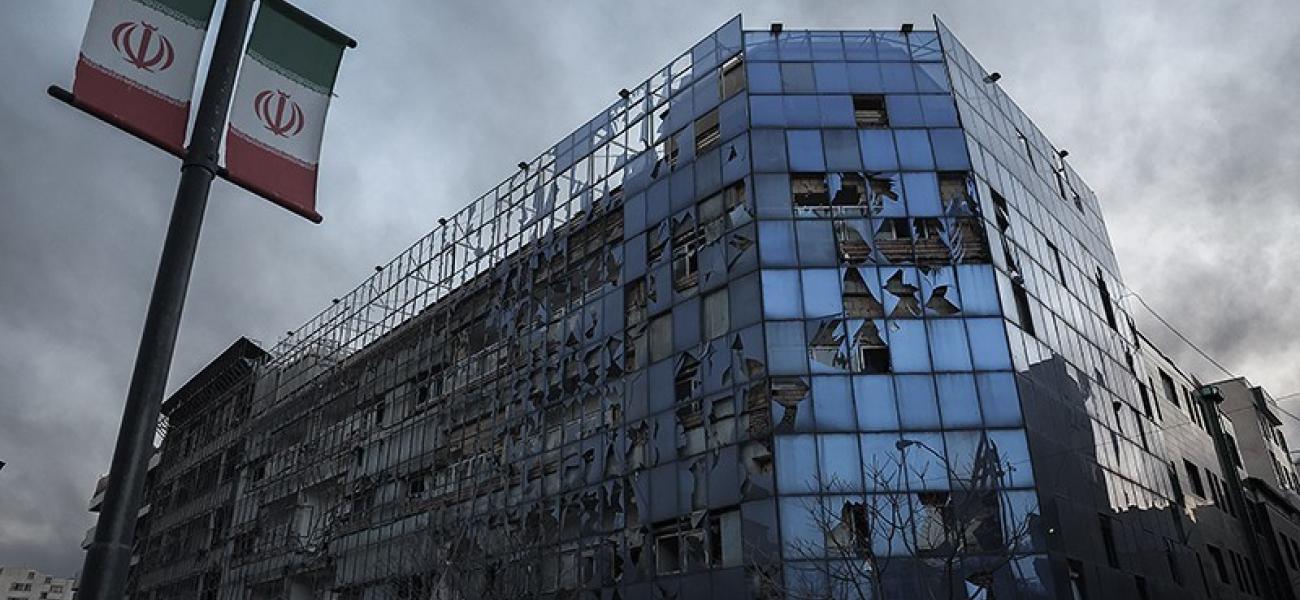
Attack around Enghelab Square

On March 2, we at RM selected and published assessments of the then-early stage of the Iran conflict as part of our “Clues from Russian Views” rubric. A month later, several of these predictions turned out to be accurate, in our view.  

First, Alexei Chepa, first deputy chairman of the Russian State Duma’s International Affairs Committee, predicted that U.S. involvement in Iran would divert Washington’s attention from Ukraine, likely delaying a peace agreement. Second, Sergei Balmasov, an expert at Russia’s Institute of Middle East Studies assessed that Iranian strikes could generate new enemies for Tehran in the region. Third, Vladimir Mukhin, senior journalist at Nezavisimaya Gazeta, predicted that Iran’s attacks on U.S., Israeli and allied targets would negatively impact the military aid that Western nations can supply to Ukraine (that prediction was a no brainer). Fourth, Nikita Smagin, a Russian expert on Russian-Iranian relations, argued that instability affecting Iran’s energy exports could create an opening for Russia to expand its oil exports (also a no brainer). Fifth, State Duma Speaker Vyacheslav Volodin’s warning that the conflict could escalate across the region appears accurate as Iranian-backed proxies in Lebanon and Yemen have also been involved in the fighting. In contrast, Russian energy expert Mikhail Krutikhin predicted a possible revision of Iran’s “political course,” which we find to be inaccurate so far.

Read More
Victory Day Parade Moscow 2025

Comparing the U.S. intelligence community’s newly-released Annual Threat Assessment-2026 with the previous edition of this document reveals a change in how this community approaches analyzing Russia and other countries that negatively impact U.S. national security. While the 2025 assessment had separate chapters on China, Russia, Iran and North Korea, the 2026 document, which was presented on March 18, includes chapters on regions, such as Europe-Eurasia, Asia and the Middle East rather than country profiles. The 2025 assessment looked at Russia through perhaps, a more comprehensive analytical lens, emphasizing the broad‑spectrum threats posed by Russia to U.S. global interests. By contrast, the 2026 assessment of Russia is more dispersed across thematic and regional categories. The sheer amount of space the annual document dedicates to examining Russia has also diminished. While the 2025 document included 152 references to Russia, the 2026 document included only 99 such references (see Table 1). The three other countries to which the 2025 document dedicated separate chapters, (China, Russia, Iran1 and North Korea,) also saw their number of references decrease in the 2026 document. References to China and its leaders declined from 148 in 2025 to 98 in 2026; references to Iran decreased from 65 explicit mentions in 2025 to 51 in 2026; and references to North Korea and its leader fell from 59 in 2025 to 41 in 2026. Unsurprisingly, both assessments point to cooperation within this quartet as a cause for major concern for the United States.

Read More
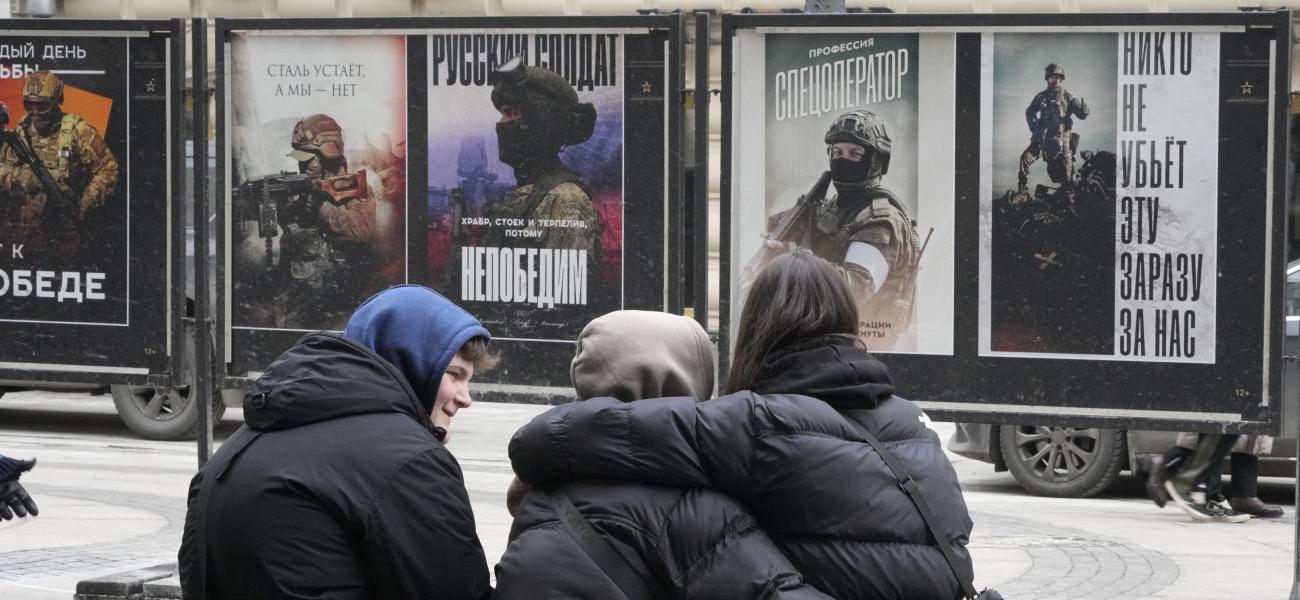
Young people sit near a street exhibition of military posters named 'Together to Victory' dedicated to Russian army in St. Petersburg, Russia, Monday, Feb. 24, 2025. (AP Photo/Dmitri Lovetsky)

A recent survey by the Levada Center indicates that while a large majority of Russians express support for the actions of the Russian armed forces in Ukraine and for its strikes on Ukraine’s energy infrastructure, support for peace negotiations has reached its highest level to date. 

Strong support for actions of Russian army in Ukraine…

The survey, which Levada conducted on Feb. 18-25 and released on March 3, shows 72.2% of respondents support the actions of the Russian armed forces in Ukraine, down from 75.8% in January 2026. Opposition to these actions stands at 16.7%, slightly higher than 15.8% in Jan. 2026. Compared with most of 2023–2025 (typically 74–78% support), the latest figures suggest modestly declining support, although backing for the war remains above 70%, indicating continued majority approval.

Read More
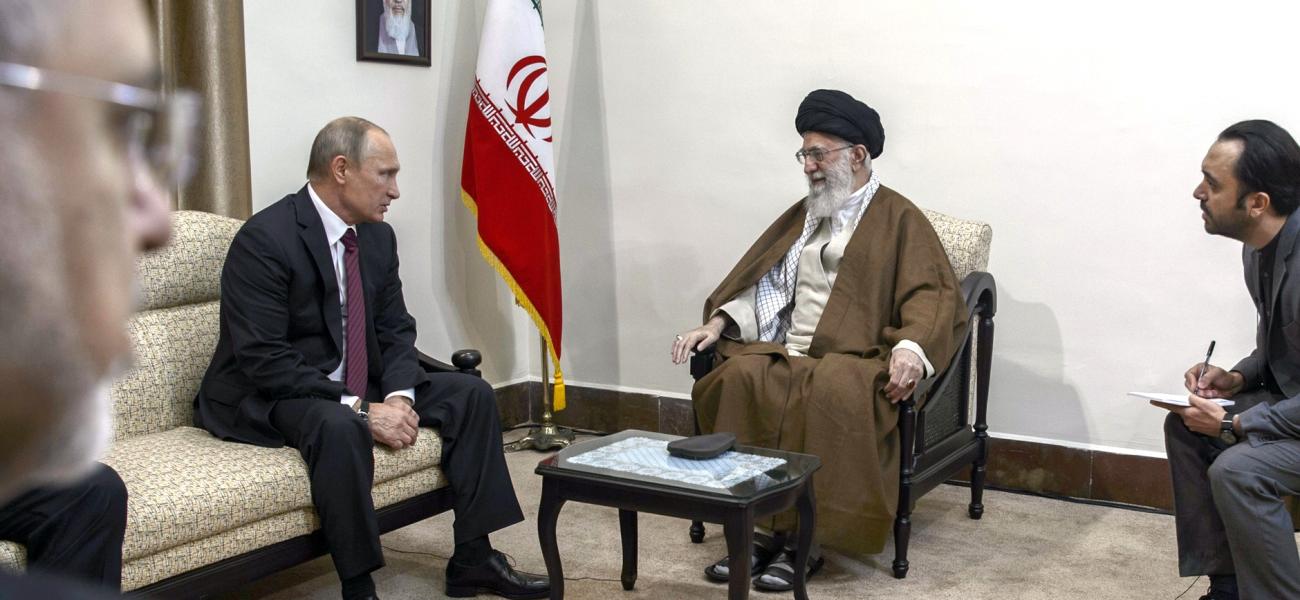
Vladimir Putin with With the Supreme Leader and Spiritual Leader of the Islamic Republic of Iran, Ayatollah Ali Khamenei, 2017

Russia’s official line regarding the U.S. and Israeli strikes on Iran has been, so far, to condemn the attacks, call for the preservation of Iran’s sovereignty and position the Kremlin as a guardian of “law” and diplomacy. Meduza reports that Russian authorities have called the crisis an “unprovoked act of armed aggression” and criticized the U.S. for its “serial” “practice of hunting foreign leaders,” although Vladimir Putin refrained from naming names of those he believes are guilty of the "cynical" murder of Ayatollah Ali Khamenei. Meanwhile, Russia’s Kremlin-controlled television has leveled its criticism at the West’s “tried-and-true trick” of luring adversaries into talks and then striking, Meduza reports. Voices on Russian television have also rattled the nuclear saber, saying that the “only thing that can deter the enemy is nuclear weapons and an iron will that leaves no doubt they will be used,” according to Meduza. Russia’s pro-war Telegram channels (“Z-channels”) also rattled the nuclear saber, suggesting Russia let Tehran borrow a nuclear bomb, and have called into question the wisdom of “negotiat[ing] about anything with Trump” following the strikes on Iran, Meduza reports.

As for Russia’s actual strategic calculation, it appears that the Kremlin believes the Iran crisis is dangerous, as it could lead to a regime change in Iran that would impact Russia geopolitically and economically. However, the Kremlin appears to also be considering the potential dividends of the crisis for Russia, such as the diversion of U.S. focus and Western weapons supplies away from Ukraine.

See below an evolving selection of (mostly) Russian officials and experts’ views on the Iran crisis, arranged in chronological and alphabetical order.

Read More
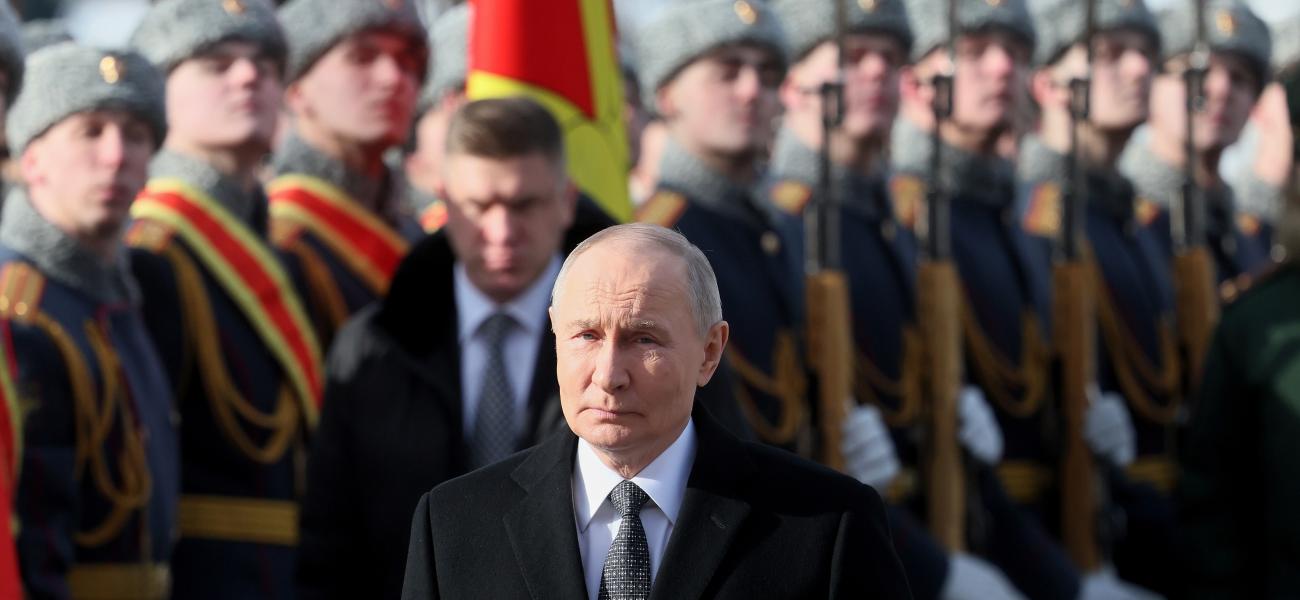
Russian President Vladimir Putin attends a wreath-laying ceremony at the Tomb of the Unknown Soldier, near the Kremlin Wall during the national celebrations of the "Defender of the Fatherland Day" in Moscow, Russia, Monday, Feb. 23, 2026. (Maxim Shipenkov/Pool Photo via AP)

Introduction

Is Vladimir Putin a rational actor who weighs costs and gains before making a momentous decision, such as whether to invade another country? Multiple scholars of Putin assert he is. If so, the fourth anniversary of Putin’s announcement of a full-scale invasion of Ukraine is an appropriate opportunity for Russia Matters’ staff to revisit1 the costs and benefits of the ongoing invasion for the Russian dictator and the country he rules. 

Before we do so, however, we must note that providing quantitative estimates of these costs and benefits is, predictably, very challenging; as it is difficult to find rigorous research that separates the impacts of the aggression on aspects such as, for instance, Russia’s economic output, from other factors that impact its GDP. It is also difficult to estimate the duration of many of these costs, given varying degrees of the Kremlin’s success at reducing them through, for instance, the evasion of sanctions imposed on Russia in the course of the invasion, which has already been underway longer than the Soviets’ war against Nazi Germany. 

While trying to estimate the “pros” and “cons” of the invasion for Russia, we of course acknowledge the horrendous costs which have been endured by Ukraine and Ukrainians, many of which we refer to below.

Read More
A man walks past a billboard promoting contract military service in the Russian army's unmanned systems units, in St. Petersburg, Russia, Wednesday, Feb. 4, 2026. (AP Photo/Dmitri Lovetsky)

The Levada Center has again measured Russians’ attitudes toward some of their countries’ foes (and one friend) and the results come as no surprise.

Almost half of the respondents to the center’s January 2026 poll said they had a negative attitude toward the U.S., reaffirming that the brief period when more Russians had a positive view of this country than a negative one last year, is over. As many as 45% of these respondents said “bad” when asked “How do you generally feel now about the United States of America?” by this Russian pollster, which shared a detailed breakdown of the results of the recent polls on Russians’ attitudes toward the U.S., EU, Ukraine and China with Russia Matters. The Jan. 15-23, 2026, result of 45% of respondents with a negative opinion of the U.S. was three percentage points above the historical average of 42% for such measurements since Levada began polling post-Soviet Russians on that question in 1992. (That year, as many as 74% of Russians viewed the U.S. in a positive light). Whether and when more Russians may warm up to Americans again may, in part, depend on whether U.S.-mediated peace talks on the Russia-Ukraine war end on conditions suitable enough for Moscow. 

Read More
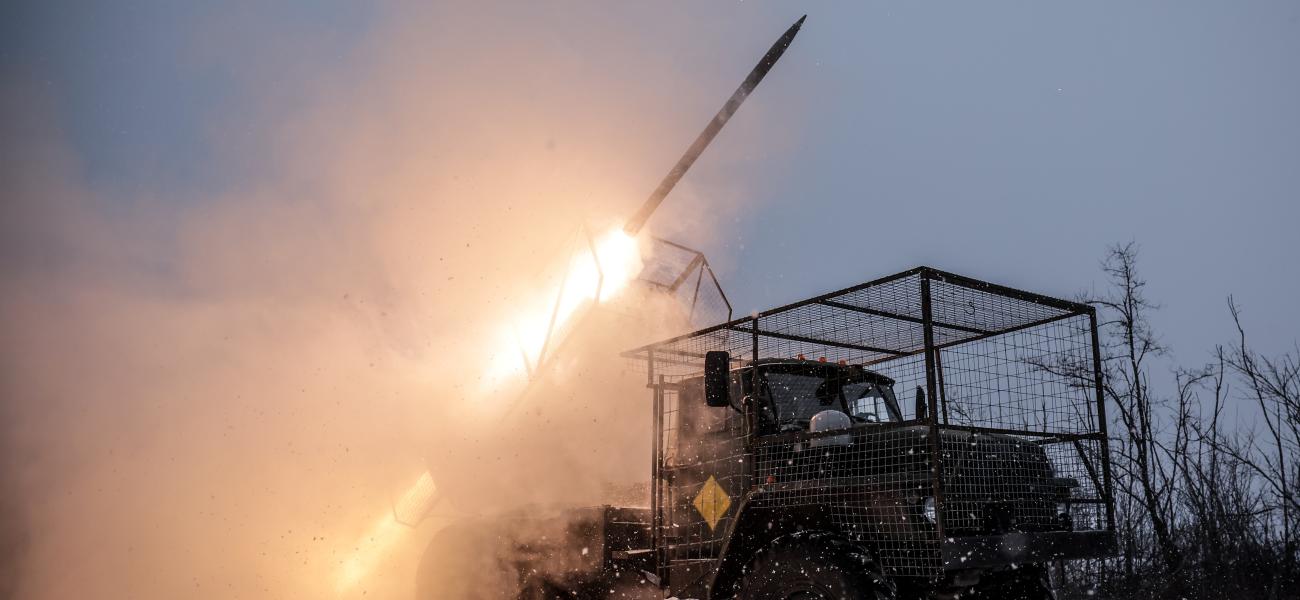
In this photo provided by Ukraine's 24th Mechanized Brigade press service, declared to be taken on Jan. 24, 2026, an MRLS BM-21 "Grad" fires towards Russian army positions near Chasiv Yar, Donetsk region, Ukraine. (Oleg Petrasiuk/Ukraine's 24th Mechanized Brigade via AP)

The Levada Center’s latest polling on Ukraine indicates a notable hardening of the Russian public’s attitude toward the war in Ukraine. While the poll indicates support for immediate peace talks remained higher than support for continued fighting, if peace talks fail, the balance could shift toward greater acceptance of escalation, according to the center’s January 2026 poll. At the same time, while confident in Russia’s victory, the majority of Russians believe the war will last another six months or more, according to the poll. Together, these trends point to possible further normalization of a long war and reduced public appetite for compromise in Russia. 

Support for Peace Talks Falls, But Still Greater Than Support for War

Levada released to RM a detailed dataset on the national poll conducted Jan. 15–23, prior to completion of the most recent round of talks between Russia and Ukraine with U.S. mediation on Jan. 23–24 in Abu Dabi.1 This data shows that the share of Russians who believe their country should continue military operations rather than pursue peace negotiations with Ukraine rose by as much as 25% (6 percentage points), increasing from 25% in December to 31% in January. Over the same period, the share of respondents who favor starting peace negotiations instead of continuing military operations declined by 9% (5.4 percentage points), from 66.4% in December to 61% in January.2 It is worth noting that this decline in support of peace talks in January comes after a record level of support among Levada’s respondents in December.  That month saw the largest share of respondents in favor of peace negations (66.4%) and the lowest share (25%) in favor of continued military operations since Levada began polling on this question in September 2022.3 In comparison, in 2025, the average share of Levada’s respondents in favor of peace was at 62.6%, while an average of 28.9% of respondents favored continued military action in 2025.4

Read More