
In the Thick of It

A blog on the U.S.-Russia relationship
dandelion

When scanning commentaries on post-Soviet Eurasia from English- and Russian-language sources, certain words or phrases stand out as fads that later fade away. So when RFE/RL described on July 30, 2022, a “bold prediction” by Russia expert Iver Neumann that we are witnessing “the beginning of the end” of Vladimir Putin’s regime, it seemed like one of the newest fads that have emerged after Putin’s decision to (re-)invade Ukraine in February. We decided to reaffirm that hunch as Neumann’s prediction began to gain traction in other media. With no skills or means immediately available for meta-analysis, we searched in Factiva, Google, Yandex and other open sources for “beginning of the end”+ “Putin” and “начало+конца”+ Путин.

The search revealed that proclaiming the beginning of Putin’s end was a trend long before his troops marched into Ukraine on Feb. 24, 2022. In fact, the earliest such proclamation we found was made on Oct. 26, 2002: a column by Moscow-based sociologist Boris Kagarlitsky that asks in its headline whether the Russian authorities’ mishandling of the deadly hostage crisis at Moscow’s Dubrovka theater during the second full year of Putin’s presidency meant the beginning of his political end. 

In total, we have found 38 predictions of the beginning of Putin’s end made from Dec. 31, 1999, (Putin’s ascent to the presidency) to July 30, 2022, including 22 made before the invasion of Ukraine (Table 1) and 16 made after the invasion (Table 2).
Read More
rubles

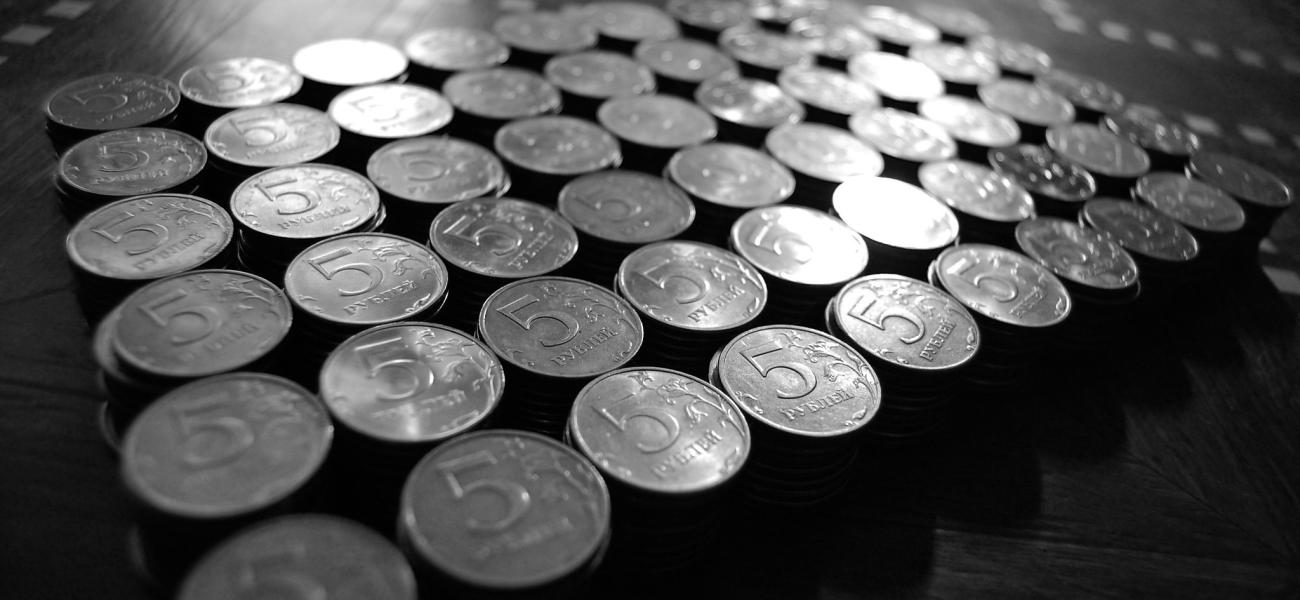
Despite the latest Western sanctions against Russia approaching their half-year point, Russia’s war effort in Ukraine rages on. How has Russia sustained its campaign in the face of what many major news outlets and at least one academic institution have called “crippling” sanctions? One possible answer: Russia’s economy is not as crippled as people think. Just last week, the IMF revised upward its annual projection for changes to Russia’s GDP, saying it would contract not by 8.5% but only by 6% this year (at the same time, the IMF downgraded its forecasts for global, U.S., EU and Chinese growth). The World Bank has likewise revised its 2022 forecast for Russian economic output, saying it would shrink by 8.9% instead of the 11.2% estimated in April. Russia’s Central Bank, meanwhile, cut interest rates to below pre-invasion levels, another sign Russia’s economy is doing better than anticipated. While the U.S. and its allies are focusing on the long-term impact of sanctions, a number of other indicators show that, despite sanctions, Russia’s economy is doing as well as—or better than—other major economies.

Of course, there is clearly a negative side to the state of the Russian economy, from shrinking imports to plummeting equity indices. But getting a full picture means looking at positives and negatives. Here are some of the positives, which have been underreported in my view, to help our readers have a more complete picture when forming their opinions on Russia’s economic performance in the wake of sanctions.

Read More
Putin and Kirill in church

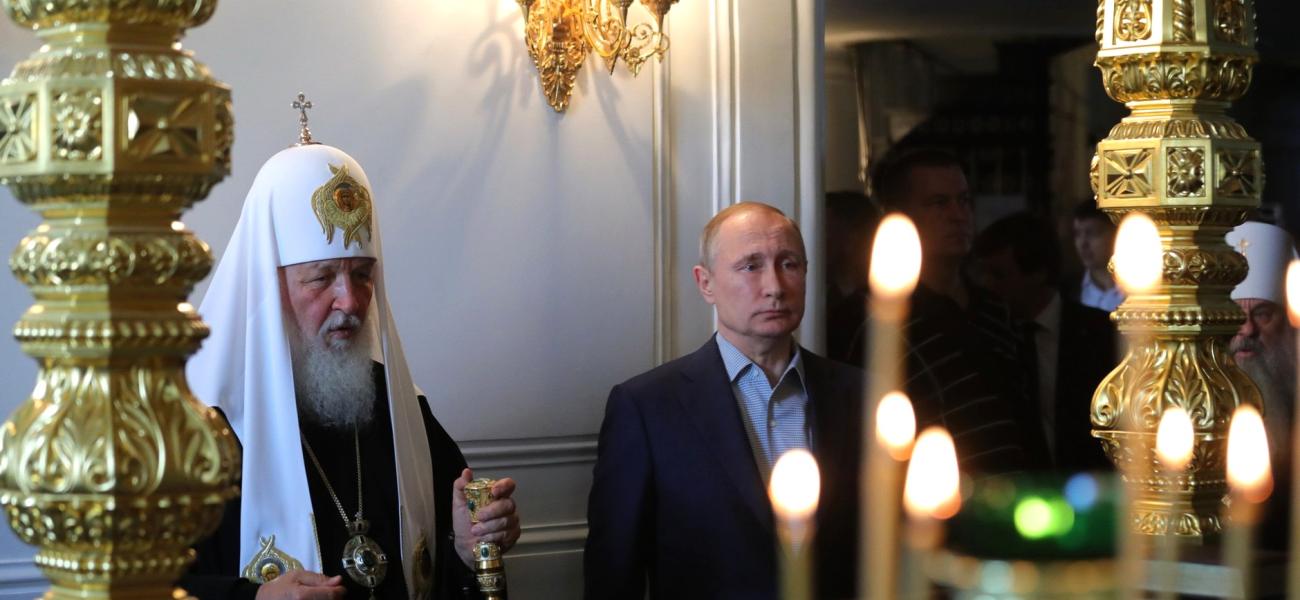
This week, Russian President Vladimir Putin proclaimed in his written address to the Tenth Review Conference of the Non-Proliferation Treaty (NPT) that he “believe[s] that a nuclear war cannot be won and must never be fought, and we stand for equal and indivisible security for all members of the world community.” Interestingly enough, there was no such coupling in Putin’s address to the previous NPT Review Conference in 2015. In fact, “indivisible security,” which has become one of the Kremlin’s favorite principles when expressing grievances vis-à-vis the West, was absent from that 2015 address. Perhaps this new coupling indicates that Putin wants the world to know that according to Russia, preventing nuclear war should be indivisible from ensuring that no country can enhance its own security at Russia’s expense. If so, that would not be inconsistent with Putin’s and his team’s efforts to implicitly threaten the use of nuclear weapons over the West’s assistance to Ukraine.

It would, perhaps, be just as interesting to know what Putin, as a practicing member of the Russian Orthodox Church (ROC), may believe when it comes to nuclear war. For clues on that, one can read Dmitry Adamsky’s profound “Russian Nuclear Orthodoxy” volume. Or one can skim the statements on the issue, gathered below, made by the ROC’s leadership and Putin’s apparent confessor. These statements, gathered from various sources, indicate that the ROC has nothing quite as extensive, long and thoughtful as the Catholic Church’s just war theory in general or Catholics’ views on nuclear weapons. Overall, if these statements (and blessings) are any guide, the ROC appears to be significantly more tolerant of nuclear weapons than the Catholic Church.

Read More
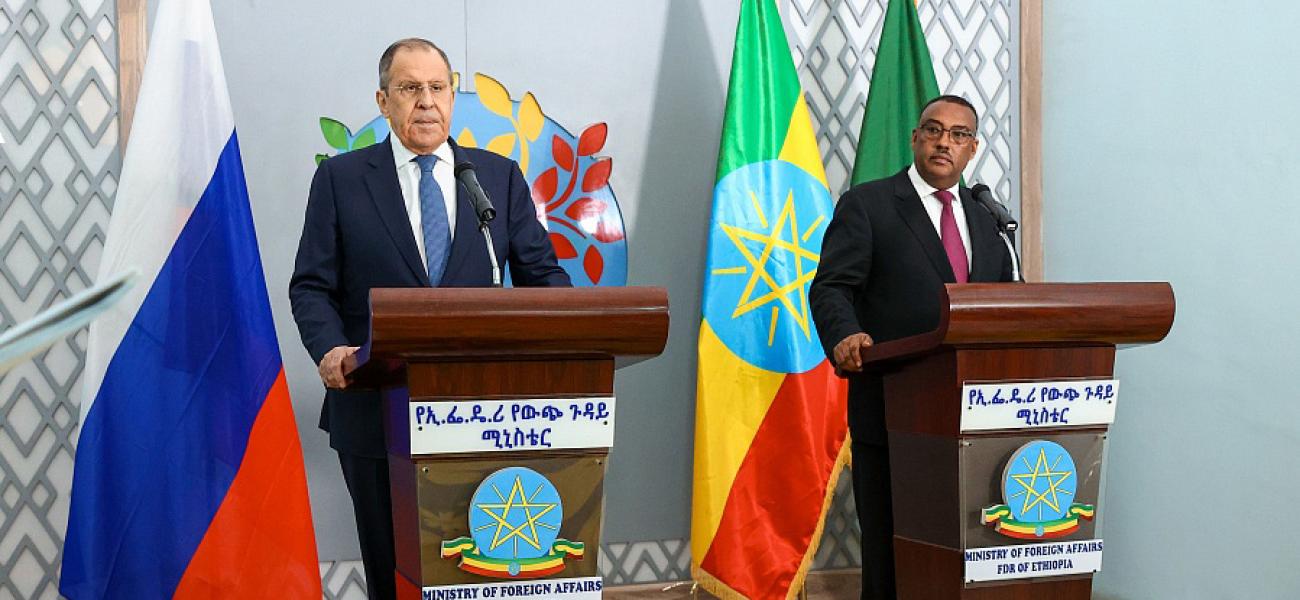
Lavrov in Ethiopia, July 2022

As the West’s increasing punitive measures bear down on Russia for its invasion of Ukraine, Russian Foreign Minister Sergei Lavrov is in Africa this week, trying to develop economic ties and rally political support from governments there. Why Africa? For one, the continent is forecast to become the world’s “next growth miracle.” As important, not one African country to date has imposed sanctions on Russia, and when Ukrainian President Volodymyr Zelensky addressed the African Union via videolink, only four African heads of state reportedly attended. While some analysts and Western officials claim that Russia is isolated, the inconvenient fact is that condemnation of Russia’s actions in Ukraine is far from universal. The U.N. resolution condemning Russia’s invasion of Ukraine was met with abstention or outright opposition from countries accounting for about half of the world’s population, while the resolution to remove Russia from the U.N. Human Rights Council was abstained from or opposed by nations representing a whopping 75% of the world’s population.

Read More
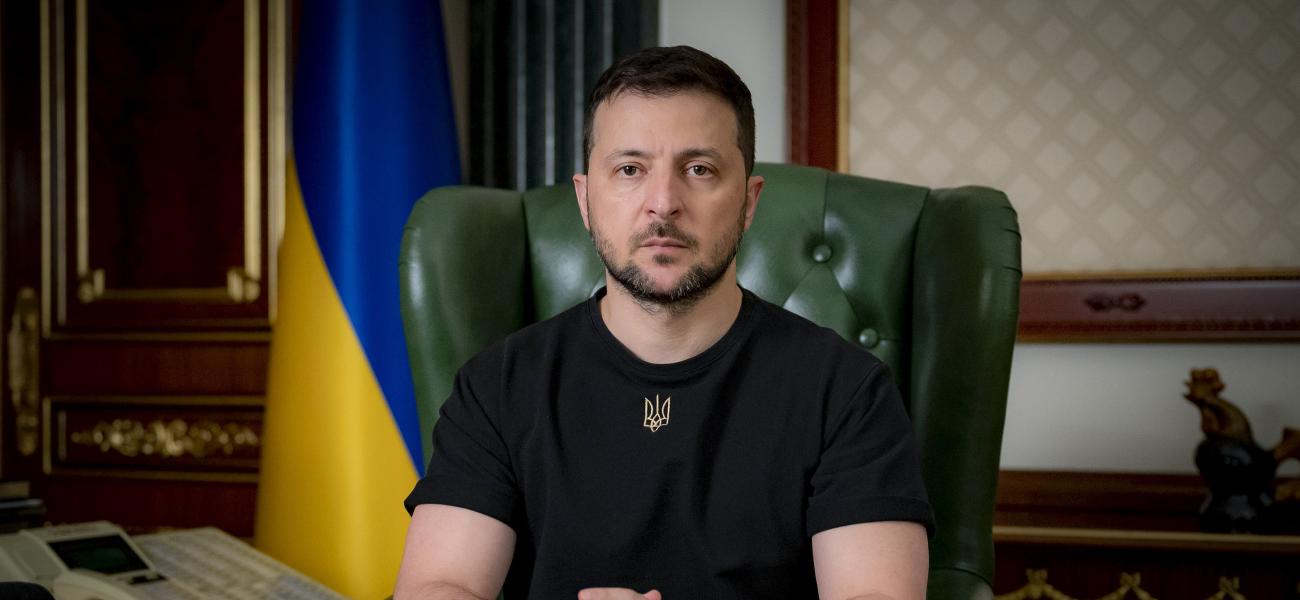
Zelensky

What’s the latest on Ukraine? Top security officials ousted: Ukraine’s president, Volodymyr Zelensky, has suspended two senior political allies—the country’s Security Service chief and prosecutor general—alleging they had failed to prevent treasonous collaboration with Russia among scores of their subordinates. Announcing the decision in his nightly video address on July 17, Zelensky said more than 60 employees of the two agencies had “remained in the occupied territory and are working against our state,” according to the official English translation of his remarks. He added that 651 criminal cases involving treason and collaboration had been initiated against prosecutors, detectives and other law-enforcement officials. “Such an array of crimes against … the national security of the state and the connections detected between the employees of the security forces of Ukraine and the special services of Russia pose very serious questions to the relevant leadership,” Zelensky said, promising that the “inspection of law enforcement agencies” would continue. While Zelensky initially only suspended spy chief Ivan Bakanov and Prosecutor General Iryna Venediktova, Ukraine’s parliament approved their dismissal on July 19. Both were considered Zelensky loyalists, and Bakanov is a childhood friend of the president’s.

Read More
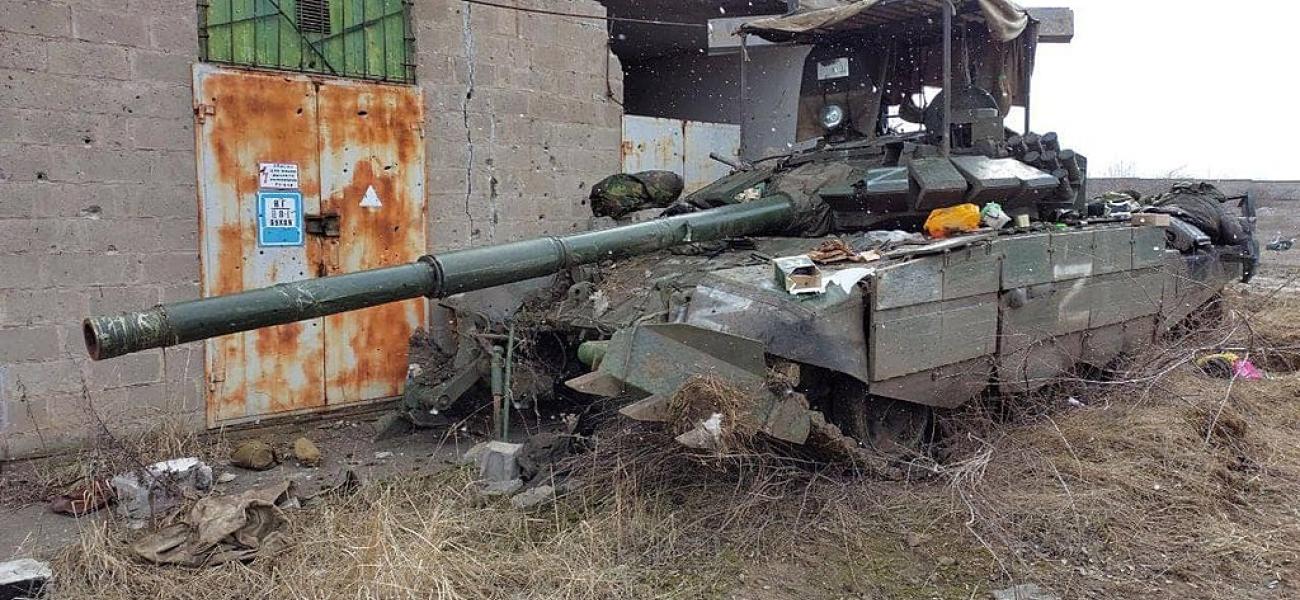
Russian tank damaged by Ukrainian troops in Mariupol

This week’s reports that Russia’s invasion seems to be “entering a more aggressive phase” throw into stark relief one recurring theme in analysis of the Ukraine war: the prediction that Russian forces will soon exhaust their capabilities, reaching what the famous Prussian general and military theorist Carl von Clausewitz described as a Kulminationspunkt, or “culminating point,” of attack. In his book “On War,” Clausewitz defined this as a “point at which the forces remaining are just sufficient to maintain a defensive, and to wait for Peace.”

Below is a compilation of such predictions, beginning in March 2022. Some were made that month, and may have rested on a looser definition of culminating point than Clausewitz’s original, predicting that Russian forces would not be able to sustain their offensive on the many fronts of their initial invasion; indeed, by late March, Russia started moving troops away from Kyiv, marking Moscow’s new strategic focus on eastern Ukraine.

However, the predictions continued even as Russian forces made advances in the east, most recently capturing nearly all of the Luhansk region that remained in Ukrainian hands. If nothing else, this timeline reaffirms the truism that making predictions can be an ungrateful business, particularly amid the fog of war.

Read More
book

Since it began in February 2022, Russia's war in Ukraine has remained a top news story around the world. From polls that give insight into the Russian public's attitude to the war, to the problem of negotiating peace and bringing the war to an end, our top 10 reads of 2022 so far attempt to address the many complicated questions surrounding Russia's invasion of Ukraine and what comes next. Check them out below. 

Read More
donbas industry vs breadbasket

With Russian forces coming closer to establishing control over the entire Donbas, one can’t help but wonder what Kyiv might lose for good if Russia captures the remainder of this historical region, which consists of Ukraine’s Donetsk and Luhansk provinces, and holds onto it, per Putin’s plan. Searches for “Donbas”1 turn up descriptions of an “industrial heartland” and a “breadbasket” (though the latter term crops up far less often). Is the Donbas either? And what would Russia gain from controlling it?

The short answer to the first question, based on data from the State Statistics Service of Ukraine, is that prior to the conflict, the Donbas could indeed have been described as an industrial heartland, but not exactly a breadbasket.

Read More
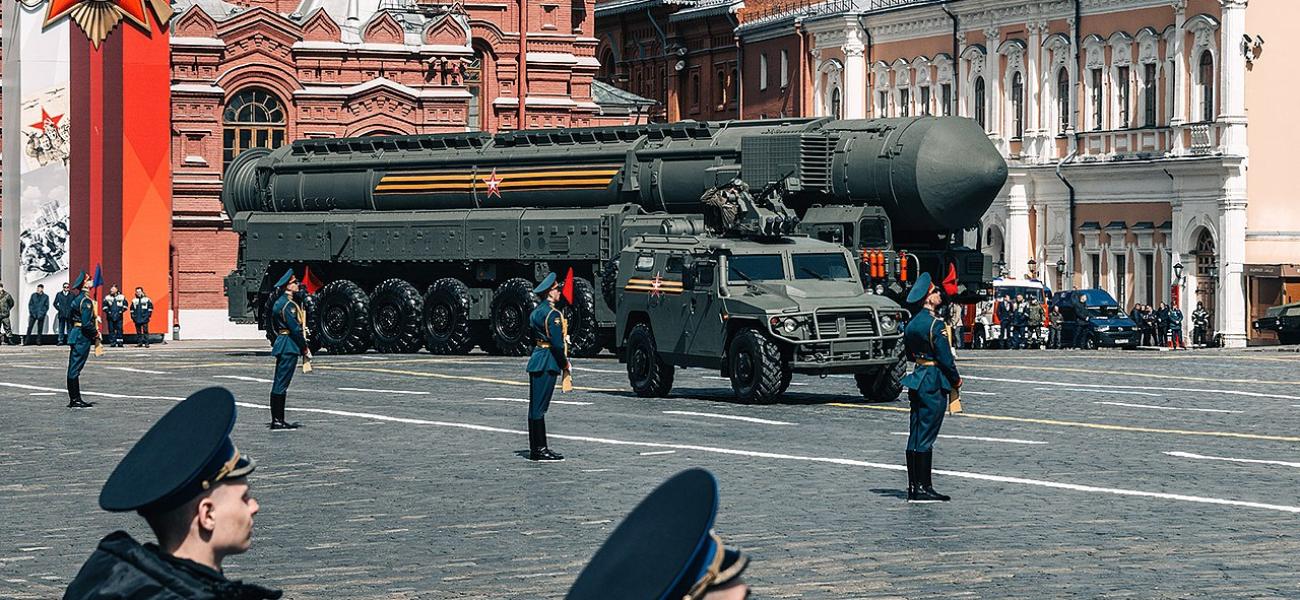
Russia Victory Day parade 2022

A majority of Russians are growing more apprehensive of NATO, according to the results of one of the latest polls conducted by the Levada Center, the most respected of Russia’s independent pollsters. That’s hardly surprising, considering the Kremlin’s efforts to mobilize public opinion against the West as Vladimir Putin’s war of choice in Ukraine rages on. What does come as a surprise is that a majority of Russians surveyed by Levada in May believe this apprehension should be mutual: Asked whether they “think NATO countries have grounds to be apprehensive of Russia,” 61% of respondents answered in the affirmative—the most since April 1997, when Levada first asked the question. It is possible that this is a function of the Kremlin’s propaganda, which keeps many ordinary Russians uninformed about their military’s flawed performance against Ukraine’s armed forces, which are far less powerful than NATO forces. More ominously, while Levada’s May polls show that almost half of Russians are concerned that the situation in Ukraine may escalate into an armed conflict between Russia and NATO, a third of respondents say they are not particularly afraid of the possibility that Russia could use nuclear weapons in such a conflict. That such a high percentage of Russians do not find the notion of a nuclear strike by Russia to be intimidating is alarming, especially given that both Putin and his aides have repeatedly dropped dark hints that Russia may initiate such a strike.

Read More
Patrushev shaking hands with Putin, 2015

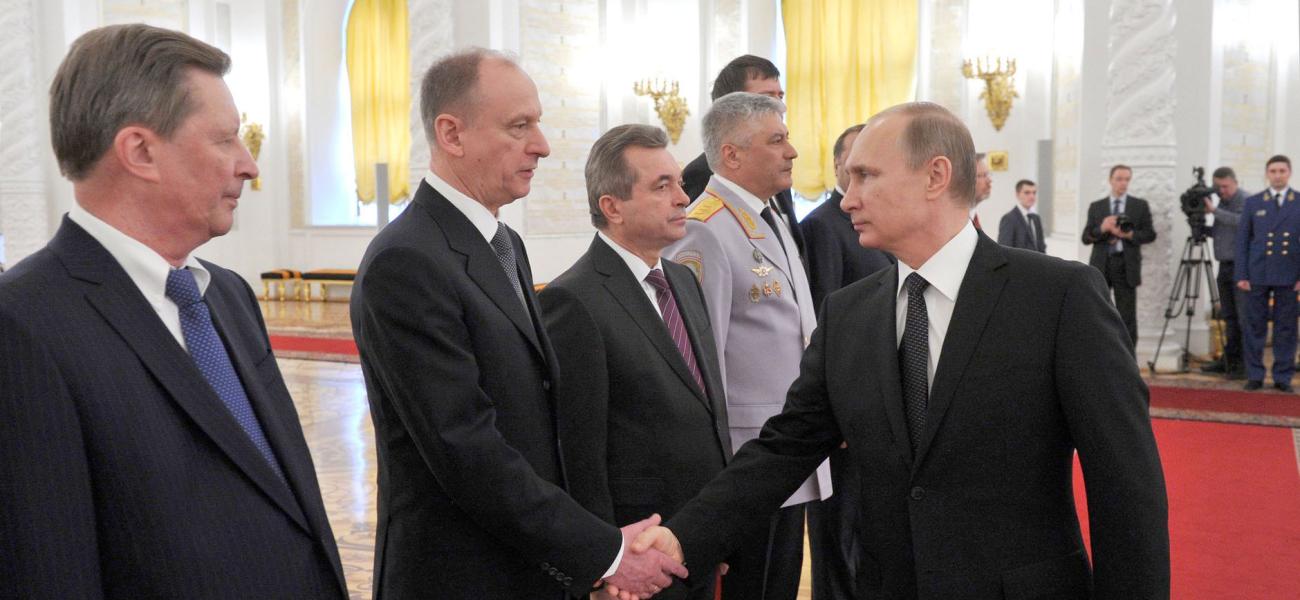
This week, the powerful secretary of Russia’s National Security Council, Nikolai Patrushev, said that Poland is poised to seize Ukrainian land—part of the West’s pursuit of its “selfish interests” in the region. The comments fit into Patrushev’s steady portrayal of an “aggressive” U.S.-led West bent on destroying Russia and build on his recent claims about other nefarious Western plots. Patrushev’s accusations against Warsaw came after Polish President Andrzej Duda’s visit to Kyiv, where he said that “the Polish-Ukrainian border should unite, not divide,” and flagged three new bilateral initiatives.

Read More