Contestable Claims

Far too often we see a significant gap between Russia-related claims, even by top officials and respected authors, and the reality on the ground. We also often encounter a wide divergence in expert views on crucial policy questions related to Russia. This section has two basic aims: (1) to dispel misconceptions that could adversely affect the quality of U.S. policy toward Russia, particularly when vital U.S. interests are involved, through rigorous fact-checking where possible and (2) to identify and debate key dilemmas for decision-makers per the adage that “truth is born in argument.”

We invite you to explore the section and send us more claims to fact-check or debate using the rectangular red button below. (For most fact-checks, we’ve adopted the "traffic light" rating system: red for incorrect; yellow for partially correct; green for correct.)
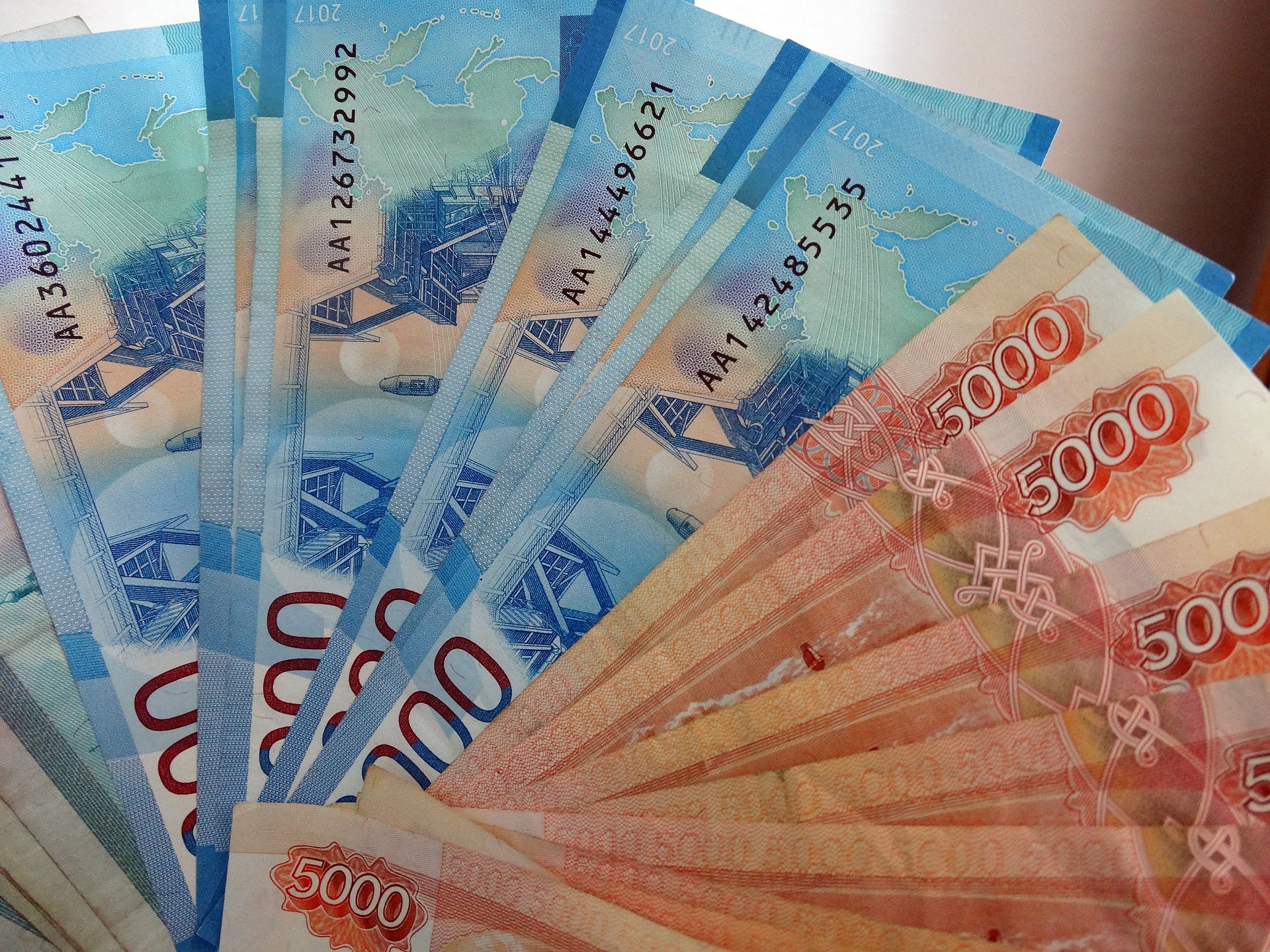
Claim in January 2026: “Russia’s total military spending in 2025 has been estimated at 15.5 trillion rubles—in nominal terms, five times that of 2021.”

Incorrect: RM’s analysis indicates that Russia’s military expenditures increased 3.16–4.62 times in nominal terms from 2021 to 2025.
Read More

Chinese Drone Tech Fuels Both Sides of Russia-Ukraine War

September 10, 2025
Quinn Urich

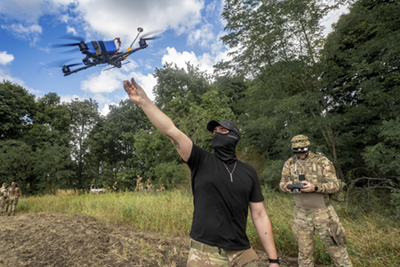
In a recent editorial by The Wall Street Journal’s Editorial Board, entitled “Russian Drone Parts, Made in China,” the editors make the point that “Trump hasn’t been able to stop Xi Jinping’s support for Putin.” The Sept. 1 editorial accuses Trump of not doing enough to limit Chinese purchases of Russian fossil fuels and chides him for failing to take action against “Chinese suppliers [who] provide components and machinery that let Russia produce its own arms.”1 Even pro-Kremlin Russian media acknowledges that Chinese drones, operated by Russian personnel, have been zipping around the battlefield, snooping on Ukrainian soldiers and dropping bombs on them.2 But what the WSJ editorial doesn’t ask is whose war machines are also powered by Chinese drones and components? Who supplies Ukraine’s drones? And, for that matter, who provides the components for America’s own drones? 

If you answered “China” to each of the previous questions, you would be correct. Although Western partners have certainly sent their fair share of domestically produced drones to Ukraine, (Shield AIAeroVironment and Anduril systems, to name a few), they make up only a sliver of the millions of drones used by Ukraine each year. But while Ukraine’s drone assembly lines may be buzzing, the industry is hardly self-reliant. With only 5% of Ukrainian defense firms reporting they do not use Chinese components in their systems, the vast majority of drones that fill the sky are likely either made in China or contain a number of key components made in China. A more accurate way to describe these so-called “domestically produced” Ukrainian drones, therefore, would be “made in China, assembled in Ukraine.” 

Read More

Claim in July 2025: “In the battle for Ukraine, the front line is increasingly at a standstill.”

Incorrect: Russian troops continued to make territorial gains in June 2025, according to data provided by both the U.S.-based Institute for the Study of War (ISW) and an online resource that relies on data from Ukraine-based DeepState (DS), which is affiliated with the Ukrainian Defense Ministry—two open sources most of the Western expert community and media tend to rely on for estimates of territorial control in the Russian-Ukrainian war. The rate of Russia’s territorial gains in June 2025 was significantly higher than in May 2025, according to both ISW and DS. It was also higher than the average rate of advance in the preceding five months of 2025 and higher than the average rate of advance in the preceding 18 months, according to ISW and DS. (Fact-check completed on July 24, 2025.)
Read More

Does Western Help With Missile Targeting Cross Putin’s Red Line in War Against Ukraine?

September 18, 2024
Simon Saradzhyan

AP Photo/Lewis Joly, FileThis is the inaugural entry in Tech and Tactics, a series of blog posts conceived by RM editor Ivan Arreguín-Toft on how military technology is being used in the war in Ukraine.
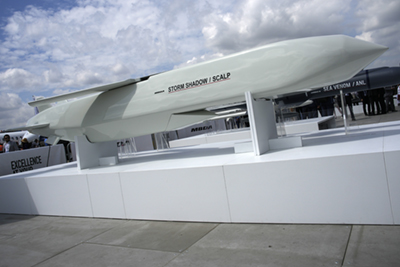
To hear Vladimir Putin say it the other day, NATO countries assisting Ukraine in collecting and using information for its strikes against targets inside Russia would cross one of his red lines, prompting him to escalate. Speaking on Russian TV Sept. 12, Putin identified two reasons why NATO countries giving Ukraine permission to use their long-range missiles for such strikes would mean that these countries “are at war with Russia.” The first reason is that for Ukraine to use such missiles, these NATO countries will have to provide Kyiv with satellite intelligence on targets in Russia. The second reason is that some of these countries’ specialists would have to enter data into the Western-supplied missiles’ targeting systems because it is something Ukrainians cannot do themselves, according to Putin. “We will make appropriate decisions in response to the threats that will be posed to us,” the Russian leader warned.1

Putin’s reasoning is problematic, however. First, Ukraine has been using U.K.-made Storm Shadow missiles, which Ukraine wants the Biden administration to approve for its use against targets inside Russia along with their French-made analogue Scalp, for strikes inside parts of Ukraine that are controlled by the Russian armed forces and which Putin describes as Russia’s own (e.g. Crimea), at least since 2023.2 Thus, if Ukrainian personnel are, indeed, unable to enter targeting data into these missiles, then Western specialists have been doing it for them since at least 2023. Second, Ukraine has reportedly been using intelligence data collected by satellites operated by entities located in NATO countries, including the U.S., since the first half of 2022.

Read More

Has the War in Ukraine Destroyed Russia’s Economy?

July 31, 2024
RM Staff
rubles

In the wake of Russia’s invasion of his country in February 2022, Ukrainian President Volodymyr Zelenskyy pleaded with Western countries to leave Russia. Hundreds of U.S. and EU-based companies heeded his call to “make sure that the Russians do not receive a single penny,” with Western politicians reportedly predicting that the exodus “would help strangle the Russian economy and undermine the Kremlin’s war effort,” while Yale’s Jeffrey Sonnenfeld and his four co-authors declared that “business retreats and sanctions are catastrophically crippling the Russian economy.” Predictions of Russia’s economic meltdown continued into 2023, with the New Republic diagnosing Russia as “going broke fast” and Business Insider editors describing Russia’s economy as “spiraling.” The future has looked dim even to some of the lead players in the Russian economy. One of Putin’s own oligarchs, Oleg Deripaska, predicted in March 2023 that Russia may run out of money in 2024 and would need foreign investment to prevent that. 

Fast-forward to 2024, however, and you will find that Russia’s National Wealth Fund contains 228 billion Chinese yuan, 335 tons of gold and 1.65 billion rubles in what totaled some $135.7 billion as of April 2024. Moreover, this year saw Russia post a consolidated budget surplus of 559.6 billion rubles ($6.3 billion) in January–May 2024, with its national debt under 20% of GDP.   

Not only is Russia far from being penniless, its economy is growing, prompting both the World Bank (WB) and International Monetary Fund (IMF) to revise upward their forecasts of Russian GDP growth. The WB now sees the Russian economy growing by 2.2% this year rather than 1.3% as it has previously predicted. Meanwhile the IMF expects Russian GDP to grow by 3.2% rather than by 2.6% as previously predicted. If the IMF’s forecast holds, then Russia’s economy will have grown faster than all advanced economies, including Germany (0.2% growth expected by IMF in 2024), the U.K. (0.5% growth expected by IMF in 2024) and the U.S. (2.7% growth expected by IMF in 2024).

Read More

How Much Would 0.25% of Ramstein Group Members’ GDP Really Raise for Ukraine?

March 07, 2024
Conor Cunningham, RM Staff

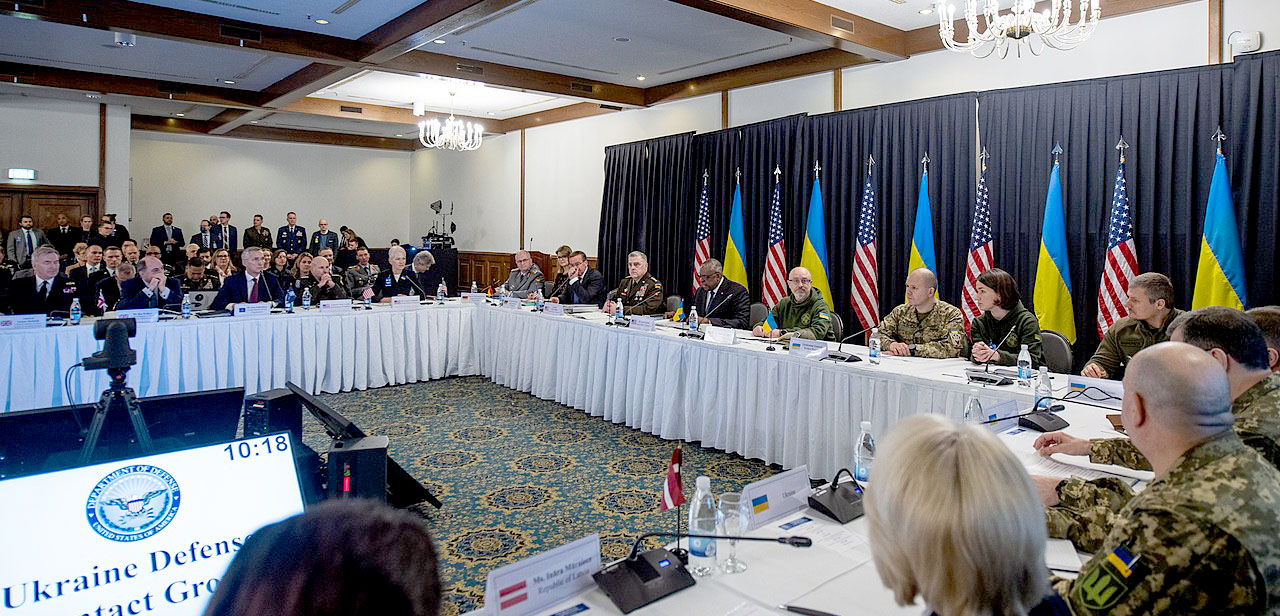
UDCG group meeting, January 2023Estonian Prime Minister Kaja Kallas was quoted on Jan. 17, 2024, as saying that every member of the so-called Ramstein group should channel the equivalent of 0.25% of their gross domestic product to Kyiv annually, which “would raise at least €120 billion ($131 billion) and swing the conflict in Ukraine’s favor,” according to Bloomberg.
In her claim, Kallas did not list members of this group, which is officially known as the Ukraine Defense Contact Group (UDCG), only noting that the group comprised more than 50 countries, including all 31 members of the North Atlantic Treaty Organization. Thus, we contacted Kallas’ staff to ask for the list of members. The prime minister’s office referred us to the Wikipedia page, and advised contacting the press service of the U.S. Department of Defense, which typically hosts the group’s meetings at the U.S. Air Force’s Ramstein air base in Germany (thus, the informal name of the group), for an official list. In response to the RM inquiry, Pentagon spokesman Maj. Charlie Dietz identified 43 countries (44 including Ukraine) as members of UDCG, listed below in Table 1.

Having ascertained the number of group members, as calculated by the Pentagon, we then totaled 0.25% of their GDP for 2022, as measured by the World Bank in constant (and, thus, inflation-adjusted) dollars. The resultant sum equaled €117.87 billion ($128.3 billion) (see Table 1). That comes close to Kallas’ estimate, even though she stated that the group includes more than 50 countries, while Pentagon spokesman Dietz identified only 43 members of the group. For our calculation, we rely upon the number supplied by the Pentagon, as the UDCG is led by the U.S. Given the discrepancy between the Pentagon spokesman’s number and the prime minister’s number, we can posit that 0.25% of the approximately 10 remaining countries’ GDP likely satisfies the gap between $128.3 and $131 billion.  

Read More

Is Russia the World’s 5th Largest Economy in GDP, PPP?

August 16, 2023
RM Staff and Associates

rubles"Russia becomes Europe’s biggest economy.” That’s the headline that Kremlin-funded RT’s editors put on a story they ran Aug. 4. The story went on to trumpet that “Russia was among the world’s five largest economies and the largest in Europe in terms of purchasing power parity (PPP) as of the end of 2022, despite Western sanctions, the latest World Economics report has revealed.” Three days later, analytical resource bne IntelliNews, which is focused on emerging markets, published an article repeating these two claims. “In these terms Russia has just overtaken Germany to become the fifth wealthiest economy in the world and the largest in Europe, worth $5.3 trillion,” the report said, without citation.

But are these claims accurate? We consulted the World Bank’s and the International Monetary Fund’s (IMF) databases, which both offer the following methodologically different approaches toward measuring countries’ GDP in terms of purchasing power parity: (1) absolute value of GDP, PPP, measured in current dollars, (2) absolute value of GDP, PPP, measured in constant 2017 international dollars, and (3) countries’ shares in world GDP, PPP, also measured in constant dollars. Only the first of these three approaches (GDP, PPP, in current dollars) supports the dual claim that Russia has become Europe’s largest and the world’s fifth largest economy in 2022 (see Table 1). The other two methods (GDP, PPP, in constant dollars and share of world’s GDP, PPP, in constant dollars) ran counter to these two claims, showing that Russia was Europe’s second largest economy after Germany, as well as the world’s sixth largest economy in 2022 (see Tables 2 and 3).1

Read More

Debate: Is US Support for Ukraine Costing ‘Peanuts’ or Too Much?

March 30, 2023
Yana Demeshko

dollarWestern policymakers are asking themselves whether the billions of dollars in aid to Kyiv have been well spent. Two analysts offer opposing assessments in a debate co-hosted by Russia Matters: Investment strategist and Chatham House fellow Timothy Ash has argued that Vladimir Putin poses such a significant threat to the U.S., the West and the global order that the West has “no option but to support Ukraine”; meanwhile, Trita Parsi, executive VP of the Quincy Institute for Responsible Statecraft, has contended that a prolonged war in Ukraine has dangerous hidden costs—namely, it increases the risk of a “direct Russian-NATO war” and the “use of nuclear weapons.” The key points of their Feb. 24 debate, that RM co-hosted with the Monterey Initiative in Russian Studies, are summarized below, followed by a full transcript.

Why it matters: Since Russia’s full-blown invasion of Ukraine a year ago, the U.S. alone has poured over $75 billion in aid and weapons into Kyiv's war effort, by one count. The assistance has helped Ukraine to stop and reverse much of Russia’s territorial gains, but there is no end to fighting in sight, with neither side close to a victory. Meanwhile, Western public support for assistance to Ukraine has waned, and NATO munitions stockpiles are reportedly dwindling, stoking debate over how much more support the West can and should provide.

Read More

Russia Is Running Out of Missiles ... or Not

December 15, 2022
Simon Saradzhyan

missileIs Russia running out of precision munitions, such as missiles, in its war against Ukraine? That is the question I posed to some of my professional acquaintances and myself last month, hoping some of us would come up with an accurate answer. Three weeks later, I am still searching for that answer, but my efforts have not been completely in vain. What I have found is that, starting as early as the spring, multiple Western officials and experts have announced that Russia was running out of precision munitions, and yet Russia has continued to use scores of attack missiles, such as Kalibr missiles, well into winter. I have also found that most of these announcers did not specify the kinds of munitions Russia was close to depleting, with one proclaiming that Russia was “running low on everything.” Nor have most of these announcers specified when the exhaustion of Russia’s arsenals could occur. That didn’t stop leading American and European media outlets from repeatedly quoting such announcements,  with most of the media reports I have come across showing no effort to either verify the forecaster’s claims or put them into context (i.e. state whether there have been earlier claims of that kind and whether or not they proved to be correct).

One of the first, if not the first, claim that Russia was running out of precision means of attack was made exactly one month after Vladimir Putin launched the invasion of Ukraine on Feb. 24: Russia is running out of precision guided munitions, U.S. Under Secretary of Defense for Policy Colin Kahl was quoted as saying by Reuters on March 24. Kahl did not specify when Russia might fully run out of which precision munitions.

Read More

Will Post-Soviet Russia’s Economic Gains Be Wiped Out by Ukraine War in 2022?

September 28, 2022
RM Staff

stocksThree months after the Kremlin launched its invasion of Ukraine, economist Anders Aslund wrote that, by starting the war, President Vladimir Putin had “in a single day … wiped out most of the economic gains Russia had made since 1991.” CNBC issued a similar verdict in March. While the word “most” would typically mean more than 50%, Aslund clarified to RM that his assessment wasn’t meant to be strictly quantitative—more a turn of phrase to describe the scale of Western sanctions’ impact on Russia.1 Nevertheless, we think it is important to determine how much of Russia’s past gains in economic output may be erased by Putin’s war in Ukraine by the end of this year. Would the forecasted losses amount to more than half, i.e., “most”?

Here's what we found: If “economic gains” are measured as growth of GDP—the only metric for which sufficient data is available2—and if the latest projections of changes to Russia’s GDP in 2022 from the World Bank and IMF are more or less correct, then the decline in Russian economic gains this year will total about 16%-24% of the gains accrued from 1992 to 2021, which is far from “most.”

The table below shows the increase in Russia’s inflation-adjusted GDP from 1992 to 2021 by three different measures and the forecasted drop in GDP between 2021 and 2022, including the World Bank’s June 2022  forecast that Russia’s real GDP will contract by 8.9% this year and the IMF July 2022 forecast that Russia’s real GDP growth will total -6%.3

Read More