In the Thick of It
A blog on the U.S.-Russia relationship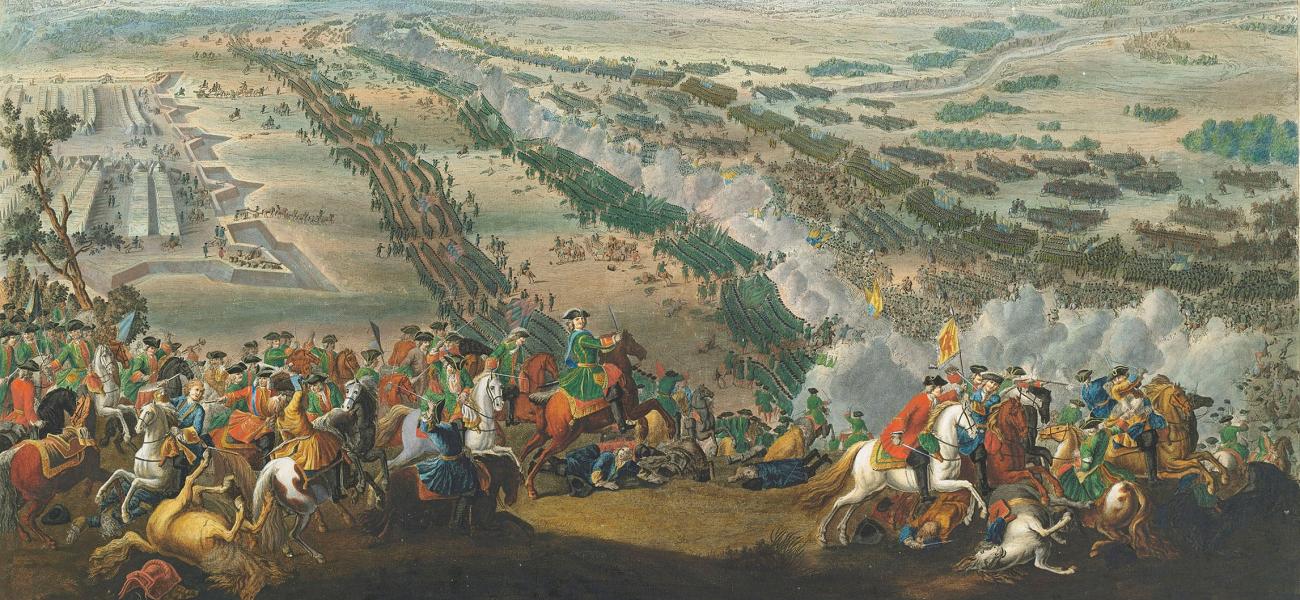
Russia’s Longer Inter-State Wars Have More Often Ended in Victory
About a year ago, Vladimir Medinsky, Vladimir Putin’s assistant and Russia’s then chief negotiator with Ukraine, told The Wall Street Journal: “With Russia, it’s impossible to fight a long war.” As we have written earlier, he then cited Russia’s participation in a 21-year war against Sweden in the beginning of the 18th century as evidence of Russians’ ability to endure historically longer hostilities than Russia’s full-fledged invasion of Ukraine. As is the case with many historical analogies, Medinsky’s was far from perfect if it was meant to convince Ukrainians that Russians would outlast them in combat, given that Ukrainians fought on both Russia’s and Sweden’s sides of that 18th century conflict, better known as the Great Northern War. More importantly, while that war ended with Russia and its allies inflicting a military defeat on Sweden, no such defeat is in sight in the current Russia-Ukraine war, which entered its fifth year on Feb. 24, 2026. In fact, the full-scale Russian invasion of Ukraine officially surpassed the duration of World War I earlier this month. That led one of us (Simon Saradzhyan) to wonder, first, what other wars Russia has fought against other states;1 second, for how long; and, third, with what outcomes.
You can find our collective attempt to answer these three questions below in Table 1 of this evolving product.2 Russia fought 49 inter-state wars since Ivan IV was crowned as the first tsar of Russia in 1547, including its current full-fledged invasion of Ukraine. Of these, Russia won 28, lost 11 and eight ended in a draw, with one outcome difficult to categorize and the conflict in Ukraine ongoing. Seventeen conflicts lasted longer than the ongoing Russian invasion as of June 2026. Of these 17, 11 ended in Russian victories, one ended in a draw and five ended in losses.
Given that we are looking at just one country, which has changed drastically multiple times since the establishment of the Tsardom of Russia in 1547, these results cannot have external validity. Nevertheless, they could perhaps be useful for those wondering if the characteristics of Russia’s past wars might impact Vladimir Putin’s thinking—who is fond of reading Russian history—on how long to continue fighting in Ukraine and what kind of outcome he might accept in this conflict.
Inter-State Wars Involving Russia Since Establishment of Tsardom of Russia in 1547
| Approximate duration (years) | Name and dates of the war | Outcome of the war (Russia won, Russia lost, draw) | Source |
| <1 | 1552 Conquest of Kazan/Russo-Kazan War | Won: Russian forces captured Kazan, and the Khanate of Kazan was incorporated into the Russian state. | Encyclopedia Britannica, “Ivan the Terrible.” |
| <1 | 1556 Conquest of Astrakhan | Won: The Khanate of Astrakhan was annexed, giving Russia control over the lower Volga and access toward the Caspian region. | Encyclopedia Britannica, “Ivan the Terrible.” |
| 25 | 1558–1583 Livonian War | Lost: Truce of Yam-Zapolsky with the Polish-Lithuanian Commonwealth and the Truce of Plussa with Sweden. Russia failed to secure Livonia and lost access to key Baltic positions. |
Encyclopedia Britannica, “Livonian War;” Robert I. Frost, The Northern Wars; David R. Stone, A Military History of Russia. |
| 16 | 1581/1582–1598 Conquest of the Khanate of Sibir/Russian conquest of Siberia | Won: Yermak’s campaign opened the conquest of western Siberia. By 1598, the Khanate of Sibir had effectively collapsed and the region was incorporated into Russia. No single peace treaty. | Encyclopedia Britannica, “Yermak Timofeyevich;” Donald Ostrowski, “Sibir,’ Khanate of,” in The Encyclopedia of Empire, ed. John M. MacKenzie et al. (Oxford: Wiley Blackwell, 2016).
|
| 5 | 1590–1595 Russo-Swedish War | Won/limited Russian recovery: The Peace of Täysinä/Tyavzino revised the Truce of Plussa; Russia recovered several territories lost to Sweden, though it did not recover Narva and renounced claims to Estonia. | Encyclopedia Britannica, “Peace of Täysinä.” |
| 13 | 1609–1618 Russo-Polish War | Lost: In 1618, Russia signed a truce with Poland and lost Smolensk. The Truce of Deulino left Smolensk and other territories under Polish-Lithuanian control, while Władysław retained his claim to the Russian throne. | Encyclopedia Britannica, “Truce of Deulino;” Chester S. L. Dunning, Russia’s First Civil War; Maureen Perrie, The Time of Troubles. |
| 7 | 1610–1617 Ingrian War/Russo-Swedish War | Lost: The Treaty of Stolbovo ended Swedish intervention in Russia but left Sweden with Ingria and Kexholm, blocking Russia from the Baltic Sea. | Encyclopedia Britannica, “Treaty of Stolbovo.” |
| 2 | 1632–1634 Smolensk War | Lost: Russia attempted to retake Smolensk from Poland but failed; Smolensk remained under Polish control.
| Encyclopedia Britannica, “Treaty of Polyanov;” Paul Bushkovitch, A Concise History of Russia; Brian L. Davies, Warfare, State and Society on the Black Sea Steppe. |
| 13 | 1654–1667 Russo-Polish War | Won: Russia regained Smolensk, lands lost during the Time of Troubles, as well as Left-Bank Ukraine and Kyiv. | Serhii Plokhy, The Cossacks and Religion in Early Modern Ukraine; Brian L. Davies, Warfare, State and Society on the Black Sea Steppe. |
| 5 | 1656–1658/1661 Russo-Swedish War | Draw/no lasting Russian gains: The Treaty of Cardis ended the war begun in 1656 and largely maintained the territorial settlement of the earlier Treaty of Stolbovo. | Britannica, “Treaty of Cardis.” |
| <5 | 1676–1681 | Draw: Treaty of Bakhchisaray established a buffer zone in Ukraine; neither side gained decisive advantage. | Treaty of Bakhchisaray (January 13, 1681) |
| <15 | 1686–1700 | Won: Treaty of Constantinople secured Azov for Russia. | Treaty of Constantinople (July 13, 1700) |
| 21 | 1700–1721 Great Northern War | Won: Russia defeated Sweden and gained access to the Baltic Sea. The Treaty of Nystad confirmed Russia’s acquisition of Ingria, Estonia, Livonia and part of Karelia, thereby transforming Russia’s position in the Baltic. | Encyclopedia Britannica, “Great Northern War” and “Peace of Nystad;” Robert I. Frost, The Northern Wars; Lindsey Hughes, Russia in the Age of Peter the Great. |
| 3 | 1710–1713 Russo-Turkish War | Lost: Russia ultimately returned Azov to Turkey. | Encyclopedia.com, “Pruth River, Campaign and Treaty;” Virginia Aksan, Ottoman Wars, 1700–1870; Lindsey Hughes, Russia in the Age of Peter the Great. |
| 1 | 1722–1723: Russo-Persian War | Won: Russia gained Caspian territories including Derbent, Baku and Rasht. | Muriel Atkin, Russia and Iran, 1780–1828; Alexander Mikaberidze, ed., Conflict and Conquest in the Islamic World; Michael Axworthy, A History of Iran. |
| < 2 | 1733–1738 War of the Polish Succession | Won: Russia successfully installed Augustus III on the Polish throne, consolidating its influence over the Commonwealth. | Encyclopedia Britannica, “War of the Polish Succession;” Hamish Scott, The Birth of a Great Power System; Jerzy Lukowski, Liberty’s Folly. |
| 4 | 1735–1739 Russo-Turkish War | Draw: Russia regained Azov but failed to secure Black Sea naval rights. | Encyclopedia Britannica, “Treaty of Belgrade;” Virginia Aksan, Ottoman Wars, 1700–1870; Brian L. Davies, Warfare, State and Society on the Black Sea Steppe. |
| 2 | 1741–1743 | Won: Treaty of Åbo forced Sweden to cede additional Finnish territory and accept a Russian-approved heir to the Swedish throne. | Treaty of Åbo (August 18, 1743) Encyclopedia Britannica, “Treaty of Åbo;” Robert I. Frost, The Northern Wars; Michael Roberts, The Age of Liberty. |
| 5 | 1757–1762 Seven Years' War | Won: Russia won but returned its conquests to Prussia. | Encyclopedia Britannica, “Seven Years’ War;” Franz A. J. Szabo, The Seven Years War in Europe; H. M. Scott, The Emergence of the Eastern Powers. |
| 6 | 1768–1774 Russo-Turkish War | Won: Russia gained southern Ukraine and the North Caucasus. | Encyclopedia Britannica, “Treaty of Küçük Kaynarca;” Virginia Aksan, Ottoman Wars, 1700–1870; Isabel de Madariaga, Russia in the Age of Catherine the Great. |
| 4 | 1787–1792 | Won: Treaty of Jassy confirmed Russia's 1783 annexation of Crimea and pushed the Ottoman border westward to the Dniester River. | Treaty of Jassy (January 9, 1792) Encyclopedia Britannica, “Treaty of Jassy;” Virginia Aksan, Ottoman Wars, 1700–1870; Isabel de Madariaga, Russia in the Age of Catherine the Great. |
| 2 | 1788–1790 | Draw: Treaty of Värälä restored the status quo ante bellum. Sweden's surprise offensive failed to recover any territory lost in 1743. | Treaty of Värälä (August 14, 1790) Encyclopedia Britannica, “Treaty of Värälä;” Robert I. Frost, The Northern Wars; Michael Roberts, The Age of Liberty. |
| < 1 | 1796 Russo-Persian War | Draw: Russia captured Derbent, Quba and Baku; however, Paul returned these territories to Persians after Catherine II’s death. | Muriel Atkin, Russia and Iran, 1780–1828; Alexander Mikaberidze, ed., Conflict and Conquest in the Islamic World; Michael Axworthy, A History of Iran. |
| < 1 | 1799 | Unclear: Russia withdrew. Russia had important successes in Italy and serious setbacks in Switzerland, then withdrew from the coalition without a formal Russo-French peace settlement. | Russia withdrew (October 1799); no formal Russo-French treaty. Alexander Mikaberidze, The Napoleonic Wars: A Global History; Paul W. Schroeder, The Transformation of European Politics; Dominic Lieven, Russia Against Napoleon. |
| 9 | 1804–1813 Russo-Persian War | Won: Persia recognized Russian control over several territories. Under the Treaty of Gulistan, Persia recognized Russian control over major territories in the eastern Caucasus. | Encyclopedia Britannica, “Treaty of Gulistan;” Muriel Atkin, Russia and Iran, 1780–1828; Alexander Mikaberidze, ed., Conflict and Conquest in the Islamic World. |
| 2 | 1805–1807 Third and Fourth Coalitions | Draw: Ended with the Treaties of Tilsit. | Encyclopedia Britannica, “Treaties of Tilsit;” Dominic Lieven, Russia Against Napoleon; Alexander Mikaberidze, The Napoleonic Wars: A Global History. |
| 6 | 1806–1812 Russo-Turkish War | Won: The Treaty of Bucharest was signed on May 18, 1812. The terms of the treaty allowed Russia to annex Bessarabia but required it to return Walachia and the remainder of Moldavia, which it had occupied. | Encyclopedia Britannica, “Treaty of Bucharest;” Virginia Aksan, Ottoman Wars, 1700–1870; Dominic Lieven, Russia Against Napoleon.
|
| 1 | 1808–1809 Finnish War | Won: Russia annexed Finland. By the Treaty of Fredrikshamn/Hamina, Sweden ceded Finland and the Åland Islands to Russia, leading to the creation of the Grand Duchy of Finland within the Russian Empire. | Encyclopedia Britannica, “Treaty of Hamina;” Max Engman, A People’s History of Finland; David Kirby, A Concise History of Finland. |
| 1 | 1803–1814 (Russian participation in 1812–1814) Napoleonic Wars | Won: Allied forces captured Paris. | Encyclopedia Britannica, “French invasion of Russia;” Dominic Lieven, Russia Against Napoleon; Alexander Mikaberidze, The Napoleonic Wars: A Global History. Dominic Lieven, Russia Against Napoleon; Alexander Mikaberidze, The Napoleonic Wars: A Global History; Encyclopedia Britannica, “Napoleonic Wars.”
|
| 2 | 1826–1828 Russo-Persian War | Won: Russia annexed the Erivan and Nakhichevan Khanates. Treaty of Turkmenchay signed. | Encyclopedia Britannica, “Treaty of Turkmenchay;” Muriel Atkin, Russia and Iran, 1780–1828; Alexander Mikaberidze, ed., Conflict and Conquest in the Islamic World. |
| 1 | 1828–1829 Russo-Turkish War | Won.
| Encyclopedia Britannica, “Treaty of Edirne;” Virginia Aksan, Ottoman Wars, 1700–1870; Barbara Jelavich, Russia’s Balkan Entanglements. |
| <1 | 1848–1849 Russian intervention in Hungary | Won/successful intervention: Russian troops intervened on Austria’s side and helped suppress the Hungarian Revolution. The Hungarian army surrendered at Világos. | Encyclopedia Britannica, “Hungarian Revolution, 1848–1849.” |
| 3 | 1853–1856 Crimean War | Lost: Russia lost territory and naval rights. The Treaty of Paris neutralized the Black Sea, restricted Russian naval power there and required Russia to cede southern Bessarabia. | Encyclopedia Britannica, “Treaty of Paris, 1856;” Orlando Figes, The Crimean War; David R. Stone, A Military History of Russia. |
| 21 | c. 1864–1885 Russian conquest of Central Asia/Central Asian campaigns | Won: Russia established control over much of Central Asia. The Emirate of Bukhara became a Russian protectorate in 1868, Khiva in 1873, Kokand was annexed in 1876 and Russian expansion reached the Turkmen frontier by the mid-1880s. No single treaty covered the whole process. | Encyclopedia Britannica, “History of Central Asia: The modern period;” Alexander Morrison, The Russian Conquest of Central Asia. |
| 1 | 1877–1878 Russo-Turkish War | Won: Russia gained territory and influence. | Encyclopedia Britannica, “Treaty of San Stefano” and “Congress of Berlin;” Barbara Jelavich, Russia’s Balkan Entanglements; Dominic Lieven, Empire. |
| 1 | 1904–1905 Russo-Japanese War | Lost: Japan annexed Southern Sakhalin. | Encyclopedia Britannica, “Russo-Japanese War” and “Treaty of Portsmouth;” Rotem Kowner, Historical Dictionary of the Russo-Japanese War; David Schimmelpenninck van der Oye, Toward the Rising Sun. |
| 3 | 1914–1918 First World War | Lost: Russia withdrew after the Bolshevik Revolution. | Encyclopedia Britannica, “Treaties of Brest-Litovsk;” Dominic Lieven, The End of Tsarist Russia; Joshua Sanborn, Imperial Apocalypse. |
| 2 | 1919–1921 Polish-Soviet War | Lost/Polish victory: The Treaty of Riga ended the war and set the Polish-Soviet border, leaving substantial parts of Belarus and Ukraine within Poland. | Encyclopedia Britannica, “Russo-Polish War” and “Treaty of Riga.” |
| < 1 | 1929 Sino-Soviet Conflict | Won. | Michael M. Walker, The 1929 Sino-Soviet War; S. C. M. Paine, The Wars for Asia, 1911–1949; David R. Stone, A Military History of Russia. |
| < 1 | 1938 Soviet-Japanese conflict at Lake Khasan | Draw/tactical Soviet success: Japanese forces withdrew after heavy fighting, and the disputed frontier remained under Soviet control. | Office of the Historian, FRUS 1938; Alvin D. Coox, “The Lake Khasan Affair of 1938.” |
| < 1 | 1939 Battles of Khalkhin Gol/Nomonhan Incident | Won: Soviet-Mongolian forces defeated Japanese forces. The armistice restored the status quo and reinforced the Soviet-Mongolian interpretation of the frontier. | Alvin D. Coox, Nomonhan; A. Sella, “Khalkhin-Gol: The Forgotten War.” |
| 6 | 1939–1945 Second World War | Won: together with allies. | Encyclopedia Britannica, “World War II;” Richard Overy, Russia’s War; David Glantz and Jonathan House, When Titans Clashed. |
| < 1 | 1956 Invasion of Hungary | Won. | Encyclopedia Britannica, “Hungarian Revolution;” Csaba Békés, Hungary’s Cold War; National Security Archive materials on 1956. |
| < 1 | 1968 Invasion of Czechoslovakia | Won. | Encyclopedia Britannica, “Prague Spring;” Kieran Williams, The Prague Spring and Its Aftermath; Office of the Historian, “Soviet Invasion of Czechoslovakia, 1968.” |
| < 1 | 1969 Sino-Soviet Border Conflict | Draw. | Lorenz M. Lüthi, The Sino-Soviet Split; S. C. M. Paine, The Sino-Japanese War of 1894–1895 for regional background; Hoover Institution materials on the 1969 Sino-Soviet border conflict. |
| 10 | 1979–1989 Intervention in Afghanistan | Lost. | Rodric Braithwaite, Afgantsy; Artemy Kalinovsky, A Long Goodbye; Encyclopedia Britannica, “Soviet invasion of Afghanistan.” |
| < 1 | 2008 War With Georgia | Won. | International Crisis Group, Russia vs Georgia: The Fallout; Ronald D. Asmus, A Little War That Shook the World; Congressional Research Service reports on the 2008 Russia-Georgia conflict. |
| 9 | 2015–2024 Russian intervention in Syria | Lost. | Encyclopedia Britannica, “Syrian Civil War.” |
| 4 | 2022–present Russia’s full-scale invasion of Ukraine | N/A |
Endnotes
- Some entries, including imperial conquests and foreign military interventions, are not inter-state wars in the narrow legal sense. They are included here because they involved organized military action by Russia or the USSR against another political entity or on the territory of another state.
- This is an evolving product. It may not be a complete list of all inter-state wars, campaigns and military interventions involving Russia or the USSR.
Opinions expressed herein are solely those of the authors.
Photo: Battle of Poltava by Pierre-Denis Martin.