In the Thick of It
A blog on the U.S.-Russia relationship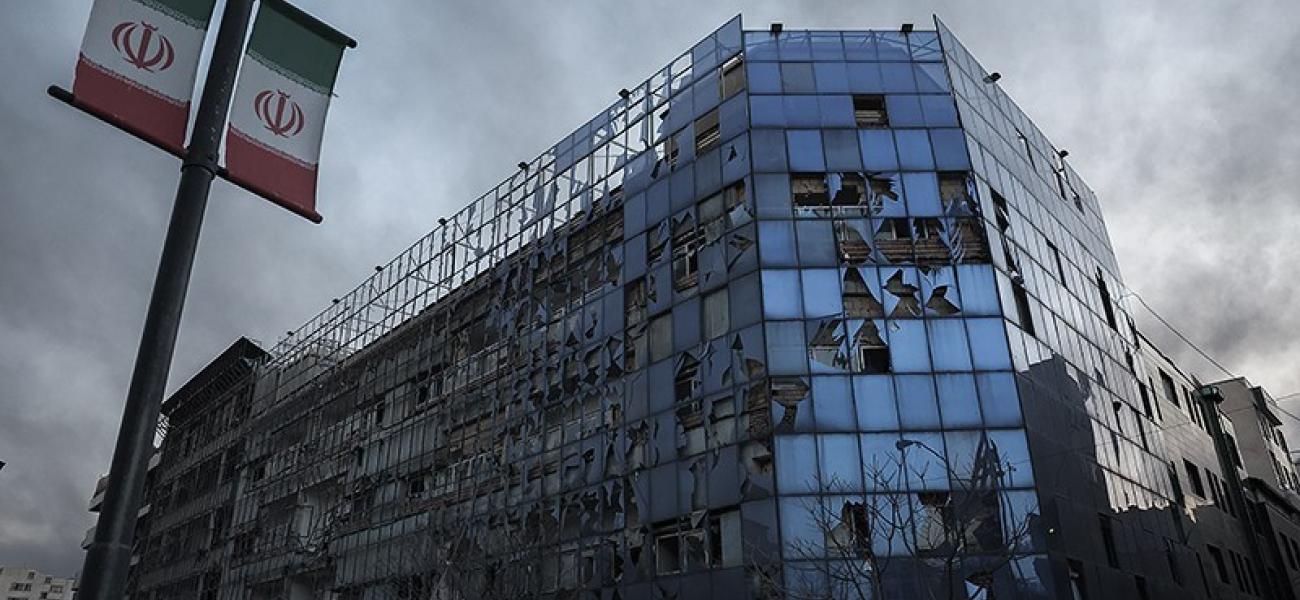
Russians’ Predictions of Iran Crisis Impact: One Month Later
On March 2, we at RM selected and published assessments of the then-early stage of the Iran conflict as part of our “Clues from Russian Views” rubric. A month later, several of these predictions turned out to be accurate, in our view.
First, Alexei Chepa, first deputy chairman of the Russian State Duma’s International Affairs Committee, predicted that U.S. involvement in Iran would divert Washington’s attention from Ukraine, likely delaying a peace agreement. Second, Sergei Balmasov, an expert at Russia’s Institute of Middle East Studies assessed that Iranian strikes could generate new enemies for Tehran in the region. Third, Vladimir Mukhin, senior journalist at Nezavisimaya Gazeta, predicted that Iran’s attacks on U.S., Israeli and allied targets would negatively impact the military aid that Western nations can supply to Ukraine (that prediction was a no brainer). Fourth, Nikita Smagin, a Russian expert on Russian-Iranian relations, argued that instability affecting Iran’s energy exports could create an opening for Russia to expand its oil exports (also a no brainer). Fifth, State Duma Speaker Vyacheslav Volodin’s warning that the conflict could escalate across the region appears accurate as Iranian-backed proxies in Lebanon and Yemen have also been involved in the fighting. In contrast, Russian energy expert Mikhail Krutikhin predicted a possible revision of Iran’s “political course,” which we find to be inaccurate so far.
See more in the table below.
Predictions as of… | Accurate, inaccurate or unclear as of April 2, 2026 |
Feb. 28, 2026 | |
| Alexei Chepa, First Deputy Head of the Russian State Duma’s International Affairs Committee expressed hope that the United States will become preoccupied with the conflict in Iran and “forget” about Ukraine and assessed that the new conflict will likely delay a peace deal in Ukraine. (ISW, 02.28.26) | Accurate, although “forget” is too strong to describe the diversion of America’s attention from Ukraine to Iran. |
| Russia’s Foreign Ministry stated that "the economic consequences of Washington and Tel-Aviv’s gamble, are producing more and more painful repercussions beyond the conflict zone, practically at the global level." (Russian Foreign Ministry via TASS, 02.28.26) | Accurate so far. |
| Dmitry Medvedev, Russian Security Council Deputy Chairperson, said regarding the conflict’s outcome: “The question is who has more patience to wait for the inglorious end of their enemy." (TASS, 02.28.26) | Unclear. |
March 1, 2026 | |
| Sergei Balmasov, an expert at the Institute of Middle East Studies and the Russian International Affairs Council, said: “Given that Iranian missiles and drones sometimes hit tourist areas in neighboring Middle Eastern countries, it risks making even more enemies in the region.” (Gazeta.ru, 03.01.26) | Accurate. |
| Mikhail Krutikhin, co-founder and leading analyst of RusEnergy: “Unless the unpredictable Trump prematurely ends the war in Iran and declares any interim success a triumphant victory, the systematic destruction of the Islamic Republic’s military potential and political elite will continue. Bombs and missiles won’t lead to a change in the country’s political system, but a week or two of attacks could create the conditions for radical changes in the country’s governance system and even a revision of its political course.” (The Moscow Times, 03.01.26) | Inaccurate. So far, more than four weeks have passed since the beginning of the conflict and Iran has undergone no “radical changes in the country’s governance system” nor “a revision of its political course.” |
| Valentina Matviyenko, Federation Council Speaker, said: “U.S. and Israeli aggression against Iran is an act capable of causing serious damage to regional and global stability." (Interfax, 03.01.26) | Too early to say. |
| Vadim Mukhanov of Russia’s Primakov National Research Institute of World Economy and International Relations: “If the United States carries out strikes for a few days, nothing terrible will happen to Iran. But if they drag on and are supplemented by a ground operation, the consequences could be catastrophic. And this will directly affect the South Caucasus. First and foremost, Armenia and Azerbaijan will face an influx of refugees.” (NG.ru, 03.01.26) | Too early to say. |
| Vladimir Mukhin, senior writer at Nezavisimaya Gazeta: “Iran’s strikes on targets of the U.S., Israel and their allies will have a negative effect on the flow of military assistance that Western countries can provide to Ukraine. The longer the war in the Middle East lasts, the greater the need will be for weaponry, especially air defense systems.” (NG.ru, 03.01.26) | Accurate. |
| Nikita Smagin, an expert on Russian-Iranian relations. “Russia can even benefit short term,” Smagin said of the potential to leapfrog Iran in oil exports to China. “And maybe even these benefits can be really significant.” (The Moscow Times, 03.01.26) | Accurate. Russia is making $150 million a day thanks to the surge in oil prices caused by the war, according to one estimate. |
| Vyacheslav Volodin, State Duma Speaker, said: “Such actions pose an uncontrollable threat of escalation for the entire region.” (Duma.gov.ru, 03.01.26) | Accurate. Fighting has expanded into Lebanon and Yemen. |
March 2, 2026 | |
| Alexei Chepa, First Deputy Head of the Russian State Duma’s International Affairs Committee, said: “It's possible this will escalate into a more global conflict, and here the Americans could miscalculate.” (Lenta.ru, 03.02.26) | Inaccurate. While having expanded in the immediate region, the armed conflict has not taken on a global nature. |
| Dmitry Medvedev, Russian Security Council Deputy Chairperson warns “now there is no doubt that Iran will with triple energy seek to create nuclear weapons.” (TASS, 03.02.26) | Too early to say. |
| Dmitry Medvedev, Russian Security Council Deputy Chairperson, said: “Trump made a grave mistake. With his decision, he put all Americans at risk of harm, even though the Iranian regime is disliked in neighboring Arab countries. The main point is that the late ayatollah was the spiritual father of nearly 300 million Shiites. And now he's also a martyr. You can figure out the rest for yourself.” (TASS Telegram channel, 03.02.26) | Unclear what risks of harm Medvedev had in mind. |
| Mikhail Pakhomov, head of the working group of the Expert Council of the Defense Committee of the State Duma, said: “Russia’s position, characterized by the absence of practical measures and only verbal support for Iran, against the backdrop of its desire to avoid escalation with the U.S. and Israel, creates preconditions for a crisis of trust in bilateral relations. If Iran plunges into chaos or its regime is replaced by a pro‑Western one, Russia will lose not only an important ally but will also suffer damage in terms of its own geopolitical influence.” (MIR.tv, 03.02.26) | Unclear. Too early to say. |
| Anatoly Wasserman, State Duma deputy, said: “Accordingly, the result in terms of changing the country's policy will be absolutely nothing. But the result in terms of a willingness to punish those responsible for these murders will be more than sufficient. (...) I don't rule out a shift to a war of sabotage and retaliatory terrorist attacks.” (Lenta.ru, 03.02.26) | Prediction on Iran’s policy not changing was accurate. Prediction on terrorist attacks is, so far, inaccurate. |
March 3, 2026 | |
| Sergei Lavrov, Foreign Minister of Russia, said: “This operation, this war that has now been unleashed against Iran, firstly, may spur a movement in favor of creating nuclear weapons, and not only in Iran. Such a movement would immediately emerge in the Arab countries that border the Islamic Republic of Iran.” (AA.com.tr, 03.03.26) | Unclear. Too early to say. |
| Konstantin Kosachev, Deputy Chairman of the Federation Council, said the Iran war against the U.S. and Israel will generate a conflict in the region that will be of “a large-scale, long-lasting nature. (TASS, 03.02.26) | Unclear. Too early to say. |
| Aleksei Pushkov of the Federation Council believes the United States could theoretically portray its withdrawal from the war in Iran as a victory. He assessed that Iran can sustain military operations at the current intensity for 60–90 days, contradicting claims that it can last only “several weeks.” (RIA Novosti, 03.03.26, EADaily, 03.03.26) | Unclear. Too early to say. |
March 6, 2026 | |
| Sergei Shoigu, secretary of the Security Council, said: "The impact of this war will affect the transit of liquefied natural gas and oil, as well as logistics." (Saba, 03.06.26) | Accurate. |
This item is part of Russia Matters’ “Clues from Russian Views” series, in which we share what newsmakers in/from Russia are saying on Russia-related issues that impact key U.S. national interests so that RM readers can glean clues about their thinking. Photo by Tasnim News Agency shared under a Creative Commons license.