In the Thick of It
A blog on the U.S.-Russia relationship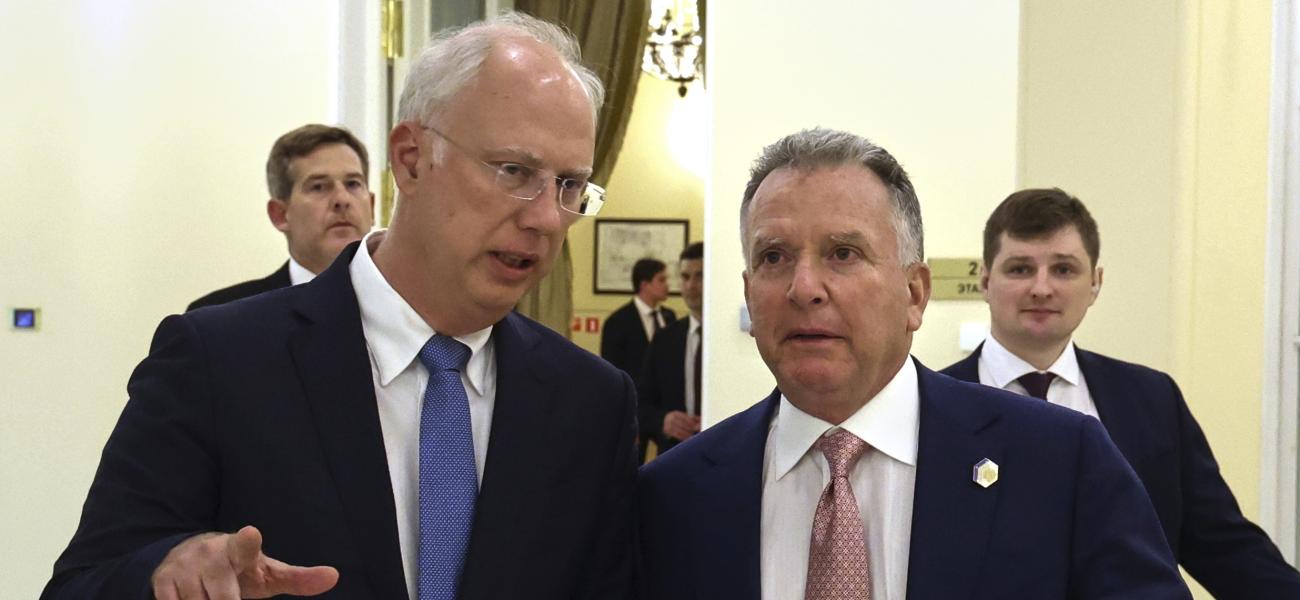
US-Russian Ukraine Plan: What’s In It and What Do Stakeholders Think?
The leaked 28-point peace proposal—reportedly drafted by U.S. and Russian negotiators before being presented to Kyiv—triggered an immediate wave of sharply divergent reactions from top officials across Washington, Moscow, Kyiv and Europe. In the United States, Secretary of State Marco Rubio framed the moment as one demanding “difficult but necessary concessions,” even as other senior figures rejected that logic. In her turn, the White House press secretary Karoline Leavitt insisted the initiative did not require Ukraine to relinquish major territory or gut its armed forces.
Moscow’s response was restrained. Kremlin spokesman Dmitry Peskov claimed there was “nothing new,” and Foreign Ministry spokeswoman Maria Zakharova emphasized that any genuine U.S. overture should arrive through official diplomatic channels. In Ukraine, President Volodymyr Zelenskyy's office said the U.S. believed the draft plan could "help reinvigorate diplomacy" and added that Ukraine had "agreed to work on the plan's provisions in a way that would bring about a just end to the war." In contrast, Zelensky’s adviser Mykhailo Podolyak condemned the terms as “unconditional capitulation,” a sentiment echoed by Ukrainian journalists and former leaders. European leaders, apparently excluded from the proposal’s drafting, warned that “peace cannot be capitulation” and demanded full Ukrainian and European involvement in any negotiation framework. See below what the plan calls for, according to the press, and what reactions it has elicited.
Update: Since the time of publication, the full text of the peace deal has been published and is available to read here.
Conditions of the [28-point] Peace Deal
Reportedly drafted by the U.S. and Russia and then proposed to Ukraine, as of 11.20.25
Territorial:
- Ukraine to withdraw from remaining Donbas areas, creating a demilitarized zone. (Source: U.S. and Ukrainian officials, cited in Axios, 11.19.25)1
- Freeze lines of control in Kherson and Zaporizhzhia, with Russia returning some land. (Source: U.S. official, cited in Axios, 11.19.25)
- U.S. and other countries to recognize Crimea and Donbas2 as Russian territory (Ukraine would not be asked to do so). (Source: U.S. official, cited in Axios, 11.19.25)
Military and military aid:
- Ukraine to reduce its armed forces by more than half (to ~400,000). (Source: Ukrainian official briefed on the plan; also reflected in Washington Post and AFP, 11.19.25 and 11.20.25)
- Restrictions on Ukraine’s future mobilization and military structure. (Source: AFP via The Moscow Times, 11.20.25)
- Ukraine to give up all long-range weapons. (Source: Ukrainian official, cited in Axios, 11.19.25)
- U.S. security guarantees for Ukraine and Europe in exchange for territorial concessions. (Source: U.S. official, cited in Axios, 11.19.25)
- End of U.S. military assistance to Ukraine after the agreement. (Source: Daily Telegraph, citing U.S. officials, 11.19.25)
- Restrictions on receiving certain categories of Western weapons. (Source: Financial Times reporting, echoed via Meduza in file, 11.19.25)
- Ban on foreign troops stationed in Ukraine. (Source: Officials familiar with leaked proposal, cited in Washington Post, 11.20.25)
- Ban on foreign diplomatic aircraft landing in Ukraine. (Source: Economist’s Oliver Carroll, summarizing plan details on X, 11.19.25)
Legal and Sanctions:
- International sanctions on Russia to be lifted. (Source: Bloomberg reporting, 11.20.25)
- Ukraine to halt war-crimes investigations of Russian forces. (Source: Bloomberg reporting, 11.20.25)
Language/Religion:
- Russian language granted official status in Russian-controlled territories. (Source: Meduza citing Financial Times and other leaks, 11.20.25)
- Russian Orthodox Church granted official status. (Source: Daily Telegraph, 11.19.25)
Reactions to the Proposed Deal as of 11.20.25
Ukraine:
- Mykhailo Podolyak, Adviser to the President of Ukraine: “Unconditional capitulation.”
(Source: Washington Post, 11.20.25) - Illia Ponomarenko, Ukrainian journalist: “Reward a militaristic dictatorship… outright capitulation.” (Source: Meduza, 11.20.25)
- Roman Sheremeta, Ukrainian economist: “A deal made over Ukraine—not with Ukraine—risks becoming another Molotov–Ribbentrop Pact.”
(Source: Meduza, 11.20.25) - Arseniy Yatsenyuk, former Prime Minister of Ukraine: The plan is “creeping capitulation” and repeats Putin’s earlier demands. (Source: Meduza, 11.20.25)
- Volodymyr Zelenskyy, President of Ukraine: Peace must “ensure security for the people” and be coordinated with partners. In a statement, Zelenskyy's office said the U.S. believed the draft plan could "help reinvigorate diplomacy" and added that Ukraine had "agreed to work on the plan's provisions in a way that would bring about a just end to the war." (Source: Meduza, 11.20.25, BBC, 11.20.25)
Russia:
- Dmitry Peskov, Kremlin spokesman: “Nothing to add… nothing new.”
(Source: Moscow Times/AFP, 11.20.25) - Maria Zakharova, Russian Foreign Ministry spokeswoman: Any real U.S. proposals would come through diplomatic channels. (Source: Meduza, 11.20.25)
- Alexander Kots, Russian military blogger: Rejects the idea of Russia paying “rent” for Donbas; calls the plan unacceptable. (Source: Meduza, 11.20.25)
- Boris Bondarev, former Russian diplomat: Russia only wants negotiations on terms of Ukrainian surrender. (Source: RFE/RL, 11.20.25)
United States
- Marco Rubio, U.S. Secretary of State: Ending the war requires “difficult but necessary concessions.” (Source: Meduza, 11.20.25)
- Lindsey Graham, U.S. Senator: No plan will work unless Russia fears more military aid and economic pressure. (Source: Meduza, 11.20.25)
- Don Bacon, U.S. Representative: The approach resembles “1938 Munich”; negotiating with Russians instead of Ukrainians is a mistake. (Source: Meduza, 11.20.25)
- Dan Fried, former U.S. diplomat: It is “a terrible plan… may be a ploy without legs.”
(Source: RFE/RL, 11.20.25) - Karoline Leavitt, White House press secretary: The U.S. is “steadfast” in ending the Ukraine war and has been working on a new plan for a month; both sides have been involved. She says the plan should be “acceptable to both sides” and rejects suggestions that it requires Ukraine to give up major territory or sharply reduce its military. "It's a good plan for both Russia and Ukraine," she said, without providing further details. "We believe that it should be acceptable to both sides. And we're working very hard to get it done,” she said.
(Source: BBC, 11.20.25, News Live, 11.20.25)
Europe
- Jean-Noël Barrot, French Foreign Minister: “Peace cannot be capitulation.” (Source: Washington Post, 11.20.25)
- Radosław Sikorski, Polish Foreign Minister: Europe was not consulted; Ukraine must not face military restrictions. (Source: Washington Post, 11.20.25)
- Kaja Kallas, EU High Representative for Foreign Affairs: Any plan must include Ukrainians and Europeans; no Russian concessions are visible. (Source: Moscow Times/AFP, 11.20.25)
- Johann Wadephul, German Foreign Minister: Europeans were not briefed; close coordination is required. (Source: Moscow Times/AFP, 11.20.25)
- Kir Giles, Chatham House analyst: The plan leaves Ukraine defenseless and is “catastrophic for European security.” (Source: Korrespondent.net, 11.20.25)
- Marina Miron, King’s College London: The plan “is clearly in favor of Russia,” including massive Ukrainian force reductions. (Source: Korrespondent.net, 11.20.25)
- Western European diplomatic source (via Michael Weiss): The plan is a deliberate extreme opening offer—a “ridiculous price” to make the next offer seem reasonable. (Source: Meduza, 11.20.25)
Footnotes
- Despite being under Russian control, the areas in Donbas from which Ukraine would withdraw would be considered a demilitarized zone, with Russia not able to position troops there, according to Axios.
- Or Ukraine to lease Donbas to Russia for a rental fee. (Source: Daily Telegraph citing U.S. and Russian sources, 11.19.25)
President Vladimir Putin's investment envoy Kirill Dmitriev, left, and U.S. President Donald Trump's special envoy Steve Witkoff walk to attend the talks with Russian President Vladimir Putin in St. Petersburg, Russia, Friday, April 11, 2025. (Vyacheslav Prokofyev, Sputnik, Kremlin Pool Photo via AP)