
The US Shouldn’t Dismiss BRICS Challenge
October 29, 2024
This is a summary of an article originally published by the Carnegie Russia Eurasia Center.
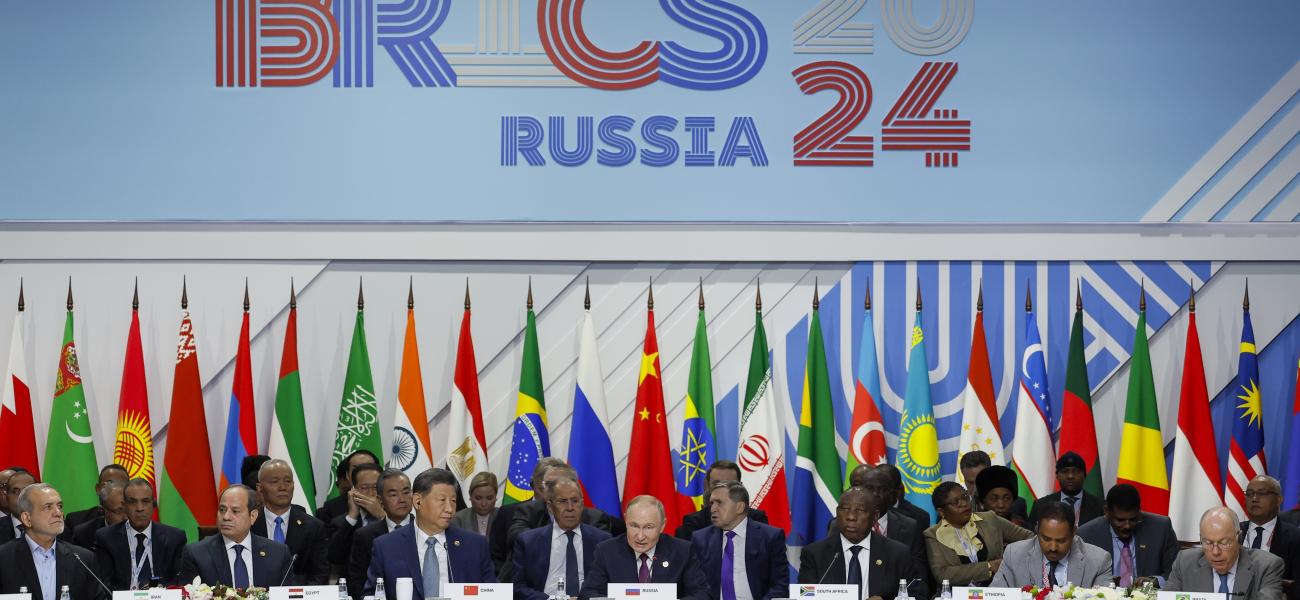
- It’s easy to dismiss BRICS. The dominant view in the U.S. is that the grouping of emerging economies can’t present a real challenge to the current order – especially when it comes to the global financial system still underpinned by the U.S. dollar. But this week’s BRICS summit hosted by Russian President Vladimir Putin points to a problem. Some of the most impactful countries in the Global South are cozying up to America’s adversaries like China and Russia, hoping to get more maneuvering space amid waning U.S. preeminence. They share an interest in reducing their dependency on the greenback, and have embarked on a long-term project to create hedging options.
- The challenge may seem insignificant and remote, but doing nothing about it only increases the risks of it materializing some years down the road. For obvious reasons, no systemic solution to the problem exists without addressing the state of public finance in the U.S. Beyond that, the U.S. could work more with BRICS members like India and Brazil that are interested in adapting the current order to make it more inclusive, rather than destroying it. For example, the further redistribution of voting rights inside the IMF and World Bank and expansion of their leadership beyond the current American-European duopoly could be a good symbolic start to boost trust and inclusiveness in the existing system.
Read the full article at the Carnegie Russia Eurasia Center website.
Opinions expressed herein are solely those of the author. Photo by Maxim Shemetov, Pool Photo via AP.