
Russia in Review, July 17–24, 2026
3 Things to Know
- Zelenskyy replaces Syrskyi with Drapatyi, but no role so far for Fedorov: Despite several days of protests across Ukraine over the ouster of Defense Minister Mykhailo Fedorov, Volodymyr Zelenskyy refused to reinstall the 35-year-old reformist to his post, offering him a range of other job opportunities to choose from, only for Fedorov to decline them. While refusing to reinstall Fedorov at the MoD, Zelenskyy did agree to heed the protesters’ other demand, to fire Fedorov’s 60-year-old arch-rival, Gen. Oleksandr Syrskyi, from the post of commander-in-chief of the Ukrainian Armed Forces. After interviewing several candidates, Zelenskyy replaced Syrskyi with Fedorov’s ally, 43-year-old veteran of Ukraine’s conflict with Russia Gen. Mykhailo Drapatyi. Western and some Ukrainian media portray Drapatyi as a modern war leader, with NYT describing him as someone who “represents a newer generation of post-Soviet military leadership in Ukraine that has embraced more modern approaches to warfighting.” In contrast, Syrskyi is described by the Kyiv Post as someone known for “micromanagement of tactical-level operations and [a] preference for costly assaults.” Syrskyi’s predecessor, U.K. ambassador Valerii Zaluzhnyi, broke his silence on the military reshuffles this week to call Drapatyi’s job “incredibly difficult,” while describing him as “a person of honor” who will have “no reason to be ashamed.” Whether Drapatyi proves to be more effective in running Ukraine’s war than his predecessor is something we will likely learn during the remainder of the summer campaign already under way.*
- Putin wants to hold on to parts of Sumy and Kharkiv, while Rubio tells Lavrov new ideas are needed: “Russia is no longer willing to return some occupied territories to Ukraine as part of any deal to end the war and plans to retain them as buffer zones,” “people close to the Kremlin” told Bloomberg. Vladimir Putin now intends to retain occupied border areas of the Sumy and Kharkiv oblasts as permanent “buffer zones” and remains determined to seize all of the Donetsk oblast before returning to talks, according to the news agency. “While the U.S. insists no deal to end Russia’s war in Ukraine was reached at the summit last August, Kremlin officials have repeatedly asserted that a package of undertakings existed under a so-called ‘spirit of Anchorage’ agreement between Putin and [Donald] Trump,” according to Bloomberg. Meanwhile, Trump’s Secretary of State Marco Rubio this week pronounced that spirit dead. Rubio took a question on the proposals made during the August 2025 Anchorage summit when talking to press after meeting with Russian Foreign Minister Sergei Lavrov in Manila on July 23. In his response, Rubio said of the so-called Anchorage proposals “we’ll have to find new suggestions and new ideas, because certainly that one, it was not acceptable in Ukraine at the time.” Lavrov, for his part, "reaffirmed Russia's readiness for a political and diplomatic settlement of the conflict," telling Rubio that Moscow remained committed to proposals put forward at the August 2025 summit, according to a Russian Foreign Ministry statement cited by Reuters. Meanwhile, Kremlin spokesman Dmitry Peskov said Moscow is not optimistic about a quick peace deal, but hopes U.S. envoys Steve Witkoff and Jared Kushner will visit Moscow when available.
- Russia keeps gaining land in Ukraine: Based on data from Ukraine’s DeepState OSINT group, in the past four weeks (June 23–July 21, 2026) Russian forces made a net gain of 15 square miles of Ukraine’s territory (about two-thirds the size of Manhattan Island). In comparison, during the prior four-week period (May 26–June 23, 2026), Russia made a net gain of 12 square miles, according to DeepState’s data. In contrast, RM’s analysis of ISW data indicates that in the past four weeks (June 23–July 21, 2026), Russia made a net gain of 10 square miles of Ukraine’s territory, according to the latest issue of the Russia-Ukraine War Report Card.
I. U.S. and Russian priorities for the bilateral agenda
Nuclear security and safety:
- Russia’s government has proposed expanding who can enlist in the military during wartime to include people with certain serious criminal records, notably those convicted of theft of nuclear materials, smuggling strategically important goods, and illegal entry into protected facilities with intent to disclose state secrets. The bill aims to “expand the pool” of eligible recruits. (Meduza, 07.18.26)
- Germany on July 22 approved an application by French firm Framatome to produce nuclear fuel rods under a licensing agreement with state-backed Russian firms despite political concerns, arguing it lacked the legal basis for a rejection. A Framatome subsidiary had applied to produce at its plant in northern Germany fuel elements to supply nuclear plants in the eastern European market using Russian licenses and technology in a joint venture with Russian firms TVEL/Rosatom. (MT/AFP, 07.22.26)
- A new U.S.–Saudi civil nuclear deal loosens long‑standing nonproliferation constraints by allowing Riyadh to enrich reactor fuel and limit some inspections, stoking fears of “nuclear hedging” and a wider arms race. Analysts warn the concessions set a precedent other states—and rival suppliers like Russia and China—may exploit, even as France offers expanded nuclear deterrence to European allies and more countries openly debate acquiring nuclear capabilities. (New York Times, 07.23.26)
North Korea’s nuclear and missile programs:
- Russian President Vladimir Putin met North Korean foreign minister Choe Son Hui in Moscow, thanking Pyongyang for “supporting his military operations” in Ukraine amid deepening military and economic ties. Kim Jong Un has already sent “thousands of troops and huge supplies of weapons” to Russia, according to South Korean assessments, under a 2024 mutual‑aid pact; the visit may be laying groundwork for another Putin–Kim summit as North Korea seeks more aid and technology and positions itself in a “new Cold War” with Russia and China against Washington. (Washington Post, 07.20.26)
Iran and its nuclear program:
- U.S. President Donald Trump warned China and Russia it would be “very bad” for them if the U.S. discovers they are supplying weapons to Iran as the U.S.–Iran war escalates. Trump said Xi Jinping assured him in Beijing that China would “not, under any circumstances, give or sell weapons” to Tehran, including via Chinese companies, and that Vladimir Putin similarly pledged not to arm Iran. Trump stressed that the U.S. sells weapons “to NATO countries” at full price and claimed no knowledge of their onward distribution, adding that if Beijing or Moscow did arm Iran “it would be very bad for them — certainly not in their best interests.” (Colorado Politics, 07.24.26)
- Speaking in Manila, Russian Foreign Minister Sergei Lavrov denied Western claims that Russia and China are supplying Iran with weapons for attacks on U.S. targets, calling the allegations “simply embarrassing.” He said Moscow wants the Strait of Hormuz conflict to end because it harms the global economy, stressed that Russia remains a trading partner for many countries despite sanctions, and accused unnamed states of “inciting” the confrontation while insisting Russia is not among them. (TASS, 07.22.26)
- U.S. intelligence is investigating whether Russia helped Iran target recent drone strikes on CIA facilities in Saudi Arabia and eastern Iraq, after a Western memo and regional officials suggested Moscow likely supplied enhanced Shahed drones and precise Kometa‑M navigation. Analysts have not reached firm conclusions but see the attacks’ accuracy as a possible escalation in Russia’s efforts to disrupt U.S. operations in the Gulf. (Reuters, 07.22.26)
- At the ASEAN summit in Manila, U.S. Secretary of State Marco Rubio downplayed media reports that Russia is sharing intelligence with Iran to help target U.S. troops near the Gulf. Asked if he had raised the issue with Sergei Lavrov, Rubio responded, “Well, who says that they are?” When a reporter cited media reporting, he replied, “Reporting in the media? Oh, then it must be true,” adding that even if it were accurate, he “certainly wouldn’t discuss it in the press” and insisting, “Nothing that Iran is doing, nothing that anyone’s doing to help Iran is in any way increasing their ability to target Americans.” (Status‑6/RM, 07.23.26)
Humanitarian impact of the Ukraine conflict:
Monday, July 20, 2026
- According to the U.N. Human Rights Monitoring Mission, at least 293 civilians were killed and 1,990 injured in Ukraine in June 2026—the highest monthly toll since April 2022 and about 10% above May’s 282 killed and 1,794 wounded. Long‑range missiles and drones striking major cities caused roughly 45% of those casualties. In total, 16,431 civilians were killed and 48,613 injured in Ukraine since February 24, 2022, according to the U.N. (U.N., 07.20.26; ISW, 07.20.26)
Wednesday, July 22, 2026
- Russia’s key Novorossiysk oil and grain export hub on the Black Sea has imposed an informal ban on nighttime navigation, as Ukraine steps up drone attacks on the country’s port infrastructure. (Bloomberg, 07.22.26)
Thursday, July 23, 2026
- Ukrainian President Volodymyr Zelenskyy said Kyiv saw Russia’s winter plans “a couple of months ago,” prompting a reshuffle of the cabinet and a focus on logistics, grain exports, agriculture and energy resilience. He warned that Putin’s circle is split between those fearing economic collapse and military hardliners seeking escalation and new mobilization, and said Ukraine faces two paths this winter: either reaching peace talks or facing a further intensification of the war. (RBC.ua, 07.23.26)
- Russia is offering to subsidize rail transport of grains to alternative ports as Ukrainian drone attacks in the Sea of Azov threaten shipments from the world’s top wheat exporter. Shipments from ports in the Sea of Azov, which normally handle about a quarter of Russia’s grain and oilseed exports, have come to a standstill in the past 11 days. (Bloomberg, 07.23.26)
- Ukraine received a second IMF tranche of about $690 million on July 23 under its new four‑year program, Prime Minister Serhiy Koretskyi announced. The funds have already entered the state budget and will be used to support macro‑financial stability and finance priority expenditures. (RBC.ua, 07.23.26)
Friday, July 24, 2026
- Ukrainian prosecutors have opened a war‑crimes investigation after Russian troops allegedly executed a captured Ukrainian soldier in Donetsk region. (Ukrainska Pravda, 07.24.26)
- For military strikes on civilian targets see the next section.
Military and security aspects of the Ukraine conflict and their impacts:
- Based on data from Ukraine’s DeepState OSINT group, in the past four weeks (June 23–July 21, 2026) Russian forces made a net gain of 15 square miles of Ukraine’s territory (about two-thirds the size of Manhattan Island).1 In comparison, during the prior four-week period (May 26–June 23, 2026), Russia made a net gain of 12 square miles, according to DeepState’s data. In contrast, RM’s analysis of ISW data indicates that in the past four weeks (June 23–July 21, 2026), Russia made a net gain of 10 square miles of Ukraine’s territory, according to the latest issue of the Russia-Ukraine War Report Card. (RM, 07.23.26)
Friday, July 17, 2026
- Beyond the personal feud of Mykhailo Fedorov and Oleksandr Syrskyi, the rift between the men has become a proxy for a generational struggle between Ukraine’s technology-driven reformers and an older military establishment whose command culture was forged in the Soviet era and has struggled to adapt to a war being reshaped by drones and automation. The public rupture among the top of Ukraine’s wartime leadership has cast doubt over whether Kyiv can sustain its success. (Financial Times, 07.17.26)
- Fedorov defended procurement reforms introduced during his tenure, saying competitive tenders for artillery shells and drones had lowered costs, broadened access for Ukrainian manufacturers and disrupted networks that had long favored politically connected suppliers. “There is a lot of corruption,” he said, describing efforts to remove officials he accused of maintaining close ties with private defense companies and law enforcement agencies. (Financial Times, 07.17.26)
- “One problem is Syrskyi hasn’t got a sense of how he’s going to win,” one senior Ukrainian defense official said. “Syrskyi’s theory of victory is simply to hold out as long as you can and mobilize more people.” (Financial Times, 07.17.26)
- Mykhailo Drapatyi, commander of Ukraine’s joint forces, publicly backed Fedorov, offering rare criticism of the military system and commander-in-chief he serves. Pavlo Yelizarov, deputy commander of the air force, resigned in protest at Fedorov’s dismissal, saying it was “a great evil for the country’s defense capability.” (Financial Times, 07.17.26)
- On July 17, Zelenskyy appointed SBU First Deputy Oleksandr Poklad as acting head of the Security Service after moving Yevhen Khmara to interim defense minister. He also proposed Interior Minister Ihor Klymenko as secretary of the National Security and Defense Council, dismissed Kyiv military administration head Timur Tkachenko without naming a replacement, and confirmed that former acting digital minister Oleksandr Bornyakov is leaving following Oksana Ferchuk’s appointment. (ISW, 07.17.26)
Saturday, July 18, 2026
- On July 18, Ukraine’s DeepState OSINT group reported in its interactive map that the Russian armed forces advanced near Pazeno and Rodynske. (RM, 07.24.26)
- On July 18, Ukrainian drones hit two major Wildberries logistics hubs in Elektrostal (Moscow region) and Kotovsk (Tambov region), as well as an oil depot in Noginsk. Russian officials say the attacks killed at least eight people and injured more than 80 nationwide. The Elektrostal complex, roughly 359,600 m², reportedly burned almost completely, with estimates that 7–15% of Wildberries’ total warehouse capacity was destroyed and losses could exceed 100 billion rubles (about $1.28 billion). Ukraine also said it has struck 172 Russian vessels in the Black and Azov Seas over 13 days, potentially threatening 5–10 million tons of Russian wheat exports. (Washington Post, 07.18.26; Wall Street Journal, 07.18.26; Istories, 07.18.26; Istories, 07.18.26; ISW, 07.18.26; ISW, 07.18.26)
- Military veterans and active-duty troops joined the protests against Fedorov’s firing and in support of Syrskyi’s dismissal on July 16 and July 17, in a rare sign of public dissent from the military ranks. The protests swelled on July 17 night, with many thousands of demonstrators turning out in Ivan Franko Square outside the presidential office in Kyiv, and in big cities such as Lviv and Odesa. (Financial Times, 07.18.26)
Sunday, July 19, 2026
- On July 19, Ukraine’s DeepState OSINT group reported in its interactive map that the Russian armed forces advanced near Minkivka and Novomarkove. (RM, 07.24.26)
- Russia’s July 19 barrage was one of the largest ballistic strikes on Kyiv since the invasion, with Ukraine’s Air Force saying a total of 41 missiles and 125 drones were launched overnight, most at the capital. The package reportedly included 25 Iskander‑M/S‑400 ballistic missiles, 10 Zircon hypersonic, 3 Onyx, 3 Kh‑59/69 and 125 Shahed‑type UAVs. Air defenses intercepted 18 missiles and 108 drones, but 23 missiles and 10 drones still hit 20 locations, killing 1 person and wounding at least 15–16, while debris fell at 18 additional sites. Zelenskyy says that in the past week Russia has used about 1,450 attack drones, 1,640+ guided bombs and 99 missiles across Ukraine. (Bloomberg, 07.19.26; (RFE/RL, 07.19.26; RBC.ua, 07.19.26; New York Times, 07.19.26; New York Times, 07.19.26; New York Times, 07.19.26; ISW, 07.19.26)
- Ukrainian forces reported striking four fuel infrastructure facilities in Russia’s Stavropol region—three oil depots hit by Security Service units and one additional fuel site hit by the Armed Forces—as well as three tankers from Russia’s “shadow fleet” in the Black Sea, which Kyiv says had been supplying and financing the war effort. Between July 6 and 19, Ukraine’s naval drone campaign has reportedly struck 176 Russian vessels in the Black and Azov seas, including four “shadow fleet” tankers, while also targeting 13 submarine stations in occupied Crimea, destroying five ferries that had carried about 80% of military traffic from Russia’s port of Kavkaz and reducing Kerch ferry capacity. (Ukrainska Pravda, 07.19.26; ISW, 07.19.26)
- In an interview Former NATO Supreme Commander Gen. Chris Cavoli highlighted the war’s extraordinary scale, noting Russia has lost “more than 4,000” main battle tanks—. He estimates roughly 600,000 people have died so far, including about 450,000 Russians, “more than twice” Ukrainian losses, calling Ukraine’s performance “enormously successful” given that casualty ratio. He contrasts these figures with NATO peacetime production rates that were never designed to sustain such volumes of munitions and equipment. (RRA Capital, Hyvla, 07.15–16.26)
- Zelenskyy met senior commanders this weekend and interviewing candidates to replace Commander‑in‑Chief Oleksandr Syrskyi. Among those he is meeting are Joint Forces commander Mykhailo Drapatyi, Deputy Chief of the General Staff Volodymyr Horbatyuk, and Air Assault Forces commander Oleh Apostol. They discussed the situation on the Sumy, Kharkiv, Luhansk, Donetsk, and Oleksandrivske fronts, as well as fulfilling defense commitments with international partners, including strengthening air defense and drone production. Zelenskyy stressed the need not to lose a single day in reinforcing Ukraine’s defenses. (Istories, 07.19.26)
- In an apparent gesture to the protesters supporting Fedorov, Zelenskyy appointed one of the former defense minister's advisers, Serhiy Beskrestnov, to a position in the presidential office on July 17. Beskrestnov, a widely read blogger on drones and missiles who goes by the nickname Flash, was named an adviser on military technology. (New York Times, 07.19.26)
- Zelenskyy noted that he had lengthy talks with Fedorov and Syrskyi, stressing that concrete decisions on the army will be worked out. (RBC.ua, 07.19.26)
- In Kyiv, several thousand protesters have rallied over three days against the dismissal of Fedorov and are now explicitly calling for the ouster of Syrskyi. (New York Times, 07.19.26)
- On July 18, a leader of the protests over firing of Fedorov, Dmitry Kozyatinskyi, proposed a rally specifically to call for Syrskyi, who he said was ''busy with politics instead of the front.'' (New York Times, 07.19.26)
Monday, July 20, 2026
- On July 20, Ukraine’s DeepState OSINT group reported in its interactive map that the Russian armed forces advanced near Rai-Oleksandrivka. (RM, 07.24.26)
- On the night of July 19–20 more than 400 Ukrainian drones targeted the Moscow region, igniting an oil depot and several major logistics facilities near the capital, including Wildberries’ key warehouses in Elektrostal and Kotovsk, where fires killed eight workers and injured over 80 and where analysts estimate total losses for Russia’s largest online marketplace and its merchants could exceed 100 billion rubles (about $1.28 billion). In addition, Russian authorities claimed a Ukrainian drone struck a passenger bus in Shebekino, Belgorod region, killing five civilians. (MT/AFP, 07.20.26; RFE/RL, 07.20.26; Meduza, 07.20.26; Intellinews, 07.20.26; The Bell, 07.20.26)
- Overnight July 19–20, Russia launched two Kh‑59/69 guided missiles and 94–125 strike drones (Shahed, Geran, Italmas, Banderoľ, Parodiya). Ukraine’s Air Force said 81 drones and one missile were shot down or suppressed, but nine drones and one missile still hit nine locations. At least four civilians were killed and dozens wounded across Kyiv, Sumy, Kherson and Odesa regions, while a separate guided‑bomb strike on Zaporizhzhia on July 19 partially destroyed a residential building, killing three civilians. (iStories, 07.20.26; Ukrainska Pravda, 07.20.26; Meduza, 07.20.26)
- SkyFall, the Ukrainian defense technology company, has developed a long-range strike weapon that is being tested in operations against Russia, as Kyiv steps up a campaign that has caused severe logistical problems for Moscow. The fixed-wing, propeller-driven munition has a roughly 3.5 meter (11-foot) wingspan and a range of at least 600 kilometers, the company said on July 20 at the Farnborough International Airshow. It will be mass produced within months, the company said. SkyFall is also in the final stages of testing a new, faster version of its P1-SUN drone designed to hit jet-powered Shahed-type rudimentary cruise missiles. (Bloomberg, 07.20.26)
- Russia’s armed forces have restored “full control” of a key highway that supplies Crimea through occupied Ukraine, the Kremlin-installed governor of the southern Ukrainian region of Zaporizhzhia told Putin on July 20. (MT/AFP, 07.20.26)
- Hundreds of people again rallied outside Kyiv’s Ivan Franko Theater on July 19 to protest the firing of Defense Minister Mykhailo Fedorov. Kyiv Mayor Vitali Klitschko said he was “shocked” by Zelenskyy’s removal of Defense Minister Mykhailo Fedorov, calling it a “huge mistake Meanwhile then- commander-in-chief of the Ukrainian armed forces Oleksandr Syrskyi published a column rejecting accusations that he lacks a victory strategy or opposes drones. He denied any intentional conflict with ousted Fedorov, apologized “if I offended you,” and urged all sides to set aside personal disputes and focus on winning the war. (Meduza, 07.20.26; Istories, 07.20.26)
- On July 20, Zelenskyy met for the second time in two days with Deputy Chief of the General Staff Volodymyr Horbatyuk and Joint Forces commander Mykhailo Drapatyi to discuss defense strategy and speeding up arms deliveries from partners. He also met Gen. Andriy Biletsky, National Guard “Khartia” corps commander Ihor Obolensky and Air Assault Forces commander Oleh Apostol. (RBC.ua, 07.20.26)
Tuesday, July 21, 2026
- On July 21, Ukraine’s DeepState OSINT group reported in its interactive map that the Russian armed forces advanced near Zaliznychne. (RM, 07.24.26)
- Zelenskyy said Ukraine’s military is preparing for multiple possible Russian scenarios on the Chernihiv–Kyiv axis, amid broader efforts to strengthen air defenses and counter drones. (RBC.ua, 07.21.26)
- Ukraine’s military says Russia is probing defenses “almost along the entire line of contact,” with the heaviest pressure on five axes: Velykyi Burluk, Kozacha Lopan, the broader Vovchansk sector, Lyptsi, and eastern Sumy region including Hrabovske. (RBC.ua, 07.21.26)
- Amid protests over the firing of Fedorov and calls to oust Syrskyi, Zelenskyy has launched days of video consultations with corps commanders and offered Fedorov alternative posts, including a seat on the National Security Council. Speaking at a U.K‑Ukraine industrial cooperation roundtable during the Farnborough Airshow, Former commander-in-chief and current U.K. ambassador Valerii Zaluzhnyi said “Ukraine today is a laboratory of modern warfare,” arguing that cheap long‑range munitions and UAVs have made national critical infrastructure “completely defenseless” in many countries. Governments must now “provide the necessary weapons not only for the military but also for almost the entire economy,” he said, adding that Ukraine’s experience in drones, EW, autonomous systems, and AI “should shape the development of defense technologies in NATO countries.” (New York Times, 07.21.26; Ukrainska Pravda, 07.21.26; Wall Street Journal, 07.21.26; Kyiv Post, 07.22.26)
Wednesday, July 22, 2026
- On July 22, Ukraine’s DeepState OSINT group reported in its interactive map that the Russian armed forces advanced near Nykanorivka. (RM, 07.24.26)
- People close to the Kremlin say Putin now intends to retain occupied border areas of Sumy and Kharkiv as permanent “buffer zones” and remains determined to seize all of Donetsk region before returning to talks. Moscow claims a tacit “spirit of Anchorage” understanding with U.S. President Donald Trump—trading Donetsk land for withdrawals in the north—has collapsed amid deeper U.S. sanctions plans and Ukrainian deep‑strike raids; Russian military insiders doubt the Defense Ministry’s promise to take all of Donetsk by end‑2026, seeing 2027 as more realistic. (Bloomberg, 07.22.26)
- Russia said July 22 it had struck the Ukrainian cities of Odesa and Chornomorsk, hitting port infrastructure and vessels that it said were supporting the Ukrainian military. Russia's Defense Ministry said the latest strikes had targeted a dry-cargo ship unloading at Chornomorsk port, as well as a military cargo store and fuel and lubricant storage tanks. It said it had also hit loading and storage facilities at Odesa, and a dry-cargo ship and a bulk carrier that were transporting cargo to Odesa for the Ukrainian military. (MT/AFP, 07.22.26)
- Russia has ordered a nightly halt to vessel movements in and out of Novorossiysk between midnight and 5 a.m. because of Ukrainian drone attacks, grain-industry sources told Reuters. Novorossiysk, Russia’s largest port by volume and a key outlet for up to a third of its grain exports, continues normal operations by day, but the curbs follow broader restrictions in the Sea of Azov and Kerch Strait and have already pushed Euronext wheat futures up 4.5%. (Reuters, 07.22.26)
- Ukraine attacked two more warehouses belonging to Russia's largest online retailer Wildberries, the company's founder Tatyana Kim said July 22, killing at least one person and injuring several others. Kim said that Wildberries distribution centers in the southern Krasnodar and Stavropol regions were hit. (MT/AFP, 07.22.26)
- After five days of protests, Zelenskyy has yielded to public pressure and mounted Ukraine’s biggest military shake‑up since 2024, firing armed forces chief Oleksandr Syrskyi and appointing 43‑year‑old Maj. Gen. Mykhailo Drapatyi as his replacement alongside new General Staff chief Ihor Skybiuk. Drapatyi, a decorated “Hero of Ukraine,” is hailed by reformers and Western officials as a modern, drone‑centric, soldier‑focused leader and seen by Russian bloggers as a more dangerous adversary, while Syrskyi’s removal underscores a generational shift from Soviet‑trained, infantry‑heavy tactics to innovative, drone‑driven warfare. (Meduza, 07.22.26; New York Times, 07.22.26; Financial Times, 07.22.26; Wall Street Journal, 07.22.26; Washington Post, 07.22.26)
- Former commander-in-chief and current U.K. ambassador Valerii Zaluzhnyi broke his silence on Ukraine’s leadership shake-up, saying new army chief Mykhailo Drapatyi faces “an incredibly difficult job — far more difficult than he imagines.” In a Telegram post, Zaluzhnyi added that Drapatyi “will never have reason to be ashamed. A person of honor has no idols and, therefore, nothing to lose. The only thing he has is his duty,” attaching a photo of the two hugging on a roadside. (Kyiv Independent, 07.22.26)
Thursday, July 23, 2026
- On July 23, the Ukrainian Armed Forces repelled the Russian forces near Filiya. (RM, 07.24.26)
- Russia launched a large mixed air attack on Ukraine overnight July 22–23, with Ukraine’s Air Force reporting a strike that began around 18:00 on July 22 and involved one Iskander‑M ballistic missile, five Kh‑59/69 guided missiles from occupied Crimea, and 168 strike UAVs—including Shahed (including jet‑powered variants), “Gerbera,” “Italmas,” and Parodiya decoy drones—launched from Russia’s Bryansk, Kursk, and Oryol regions, Primorsko‑Akhtarsk, and occupied Donetsk and Hvardiiske; Ukrainian defenses downed two Kh‑59/69 missiles and 154 drones over northern, southern, and eastern regions by 07:30 on July 23, but one ballistic missile, three guided missiles, and seven drones hit nine locations, with debris falling on four more sites, while a separate Russian strike with guided aerial bombs on the city of Pavlohrad in Dnipropetrovsk region killed three people and wounded 19, including a two‑year‑old girl, and set a food‑industry facility ablaze. (RBC.ua, 07.23.26; Meduza, 07.23.26)
- Ukraine struck logistics hubs linked to the war effort and heavily targeting Wildberries, the country’s largest online marketplace, with attacks on warehouses near Moscow, Tambov, Krasnodar, Nevinnomyssk, Elektrostal, Kotovsk, and Kazan, as well as civilian logistics sites in Voronezh and an LPG base in Ulyanovsk. The strikes have destroyed an estimated 6–12% of Wildberries’ storage capacity—worth some $3–4.4 billion in goods—and killed at least nine people at company sites, while at least three more civilians, including a three-year-old child, two Crimean residents, and a Communist Party official in Belgorod, have died in related attacks. (RFE/RL, 07.22.26; Istories, 07.23.26; Meduza, 07.23.26; MT/AFP, 07.23.26; New York Times, 07.23.26; Wall Street Journal, 07.23.26; Washington Post, 07.23.26)
- U.S. Secretary of State Marco Rubio said Russia is losing up to 6,000 troops (killed and wounded) per week. According to Rubio, he has received information that the war in Ukraine is the only conflict in living memory in which the number of soldiers killed in action exceeds the number of wounded. “That’s how bloody this war is. The Russians, I believe, are losing more than 5,000–6,000 soldiers a week. That’s a staggering number,” the U.S. Secretary of State said. At the same time, Rubio noted that Ukraine has also paid a heavy price in this war. He mentioned civilian casualties and the shelling of Kyiv, adding that, in his view, the number of such incidents has increased to some extent. (Ua.news, 07.23.26)
- Moscow warned that it is unsafe to navigate in its Black Sea waters after Ukraine has been ramping up attacks on Russia-linked ships in the area. The warning was addressed to all vessels in Russia’s exclusive economic zone in the Black Sea and cites potential threats from Ukraine’s unmanned aerial and marine vehicles, according to a weekly bulletin published on the website of the country’s Defense Ministry on July 22. (Bloomberg, 07.23.26)
Friday, July 24, 2026
- Russia launched five Kh‑59/69 air‑launched missiles from over the Black Sea and 180 strike drones (Shahed, including jet variants, “Gerbera,” “Italmas,” and Parodiya decoys) at Ukraine; air defenses reported downing or suppressing four missiles and 160 drones over northern, southern, and eastern regions, while one missile and 14 drones hit nine locations, with debris falling on eight more sites. In Kyiv region’s Bucha district, a ballistic missile strike on a private training ground hosting the “Armada” weapons and critical infrastructure defense exhibition killed at least 10 people and injured about 100, prompting both a war crimes probe into Russia’s actions and a separate criminal investigation into possible negligence by Ukrainian organizers. Zelenskyy said five more civilians were killed in Sloviansk by a Russian guided bomb. (Washington Post, 07.24.26; New York Times, 07.24.26; RBC.ua, 07.24.26; Meduza, 07.24.26; Financial Times, 07.24.26)
- Ukraine launched strikes on Russia, with Russia claiming to have downed 571 drones over 15 regions, occupied Crimea, and the Black and Azov seas, while missiles and drones hit the Avitek missile plant in Kirov—described by Kyiv as a key supplier of aircraft and missile components—killing six people and injuring 26. The Ukrainian strikes repeatedly hit Wildberries logistics hubs near Moscow, Tambov, St. Petersburg, Simferopol, and in Leningrad region, with at least five major warehouses hit in less than a week, killing at least eight Wildberries workers and injuring more than 10 people, including three in Leningrad region. (Istories, 07.24.26; Istories/Meduza, 07.24.26; Meduza, 07.24.26; Financial Times, 07.24.26; The Economist, 07.24.26; New York Times, 07.24.26; Wall Street Journal, 07.24.26; RFE/RL, 07.24.26; MT/AFP, 07.24.26)
- Ukraine’s new commander in chief, 43‑year‑old Maj. Gen. Mykhailo Drapatyi, is tasked with dragging the armed forces out of a rigid Soviet‑style command culture and accelerating tech‑driven warfare, but a newly surfaced 2023 interview underscores how polarizing he may be in Russia: Drapatyi described Russia as “a nation, along with its leadership, that has no right to exist.” On the Ukrainian side, he is widely seen as a symbol of a more modern, less Soviet military—renowned for breaking through separatist barricades near Mariupol in 2014, overhauling training and recruitment, empowering junior officers, and resigning in 2025 after a deadly training‑ground strike he called his responsibility—contrasting sharply with predecessor Oleksandr Syrskyi’s reputation for micromanagement and high‑cost defenses. (Meduza, 07.23.26; The Economist, 07.24.26; Wall Street Journal; 07.24.26)
- A rare inside look at Ukraine’s “Lasar’s Group” shows National Guard drone teams shifting from striking Russian armor to hunting incoming Shahed‑type drones, as Russia launches its largest aerial attacks of the war. Using cheap FPV drones alongside machine guns, helicopters, and EW, the unit tries to swarm and crash Russian UAVs before they reach cities, buying time while Kyiv presses allies for more Patriot interceptors against missiles. (Wall Street Journal, 07.24.26)
Military aid to Ukraine:
Sunday, July 19, 2026
- NATO has pledged 140 billion euros in support for Ukraine over 2026–2027, with 70 billion euros planned for 2026, covering weapons, training, and strategic assistance. The commitment comes as U.S. President Donald Trump halts direct U.S. funding, shifting the burden to European allies. Analysts note major gaps between past promises and actual disbursements, warning that without stronger contributions from France and Italy, the full amount may be hard to deliver. (RBC.ua, 07.19.26)
Monday, July 20, 2026
- Zelenskyy congratulated new U.K Prime Minister Andy Burnham, saying Ukraine is ready to “work together in all possible formats” and highlighting that Kyiv highly values Britain’s political, defense, and “values‑based” support. He stressed that the bilateral relationship’s foundation is “stronger than ever” and said he looked forward to their first call later in the day, following Burnham’s public pledge of unwavering backing for Ukraine. (Financial Times, 07.20.26)
Tuesday, July 21, 2026
- Ukraine has signed a deal to manufacture BAE Systems’ L119 towed howitzer domestically, a first-of-its-kind licensing move that could pave the way for producing higher‑end Western weapons such as Patriot interceptors. A Ukrainian firm will build the 10.5‑mile‑range gun under BAE license, testing Kyiv’s ability to forge and machine complex artillery subsystems. Western firms have struggled to set up production in Ukraine amid security, investment, and IP concerns, underscoring how much harder local Patriot missile manufacturing would be. (Wall Street Journal, 07.21.26)
- Zelenskyy held his first call with new U.K Prime Minister Andy Burnham, congratulating him on taking office and thanking him for continued “strong” support for Ukraine. Zelenskyy said Kyiv and London had built the “strongest partnership” in their history and agreed with Burnham to deepen cooperation, including within the emerging anti‑ballistic coalition, with an in‑person meeting planned “in the near future.” (RBC.ua, 07.21.26)
- German Chancellor Friedrich Merz and new U.K Prime Minister Andy Burnham agreed in a call to maintain “comprehensive support for Ukraine” and “step up the pressure on Russia,” Merz’s office said. Berlin, now Kyiv’s largest military donor and part of the E3 with Britain and France, has sought assurances that Burnham will match Keir Starmer’s strong alignment on Ukraine policy. (Financial Times, 07.21.26)
Punitive measures related to Russia’s war against Ukraine and their impact globally:
Saturday, July 18, 2026
- Ireland’s Aughinish Alumina plant, Europe’s largest alumina producer and owned by Russia’s Rusal, is under investigation amid allegations its output feeds Russia’s war industry. Over half its exports reportedly go to Russia, prompting EU pressure and calls to sanction alumina shipments. Dublin, which has so far shielded the plant, must balance security concerns with fears of losing nearly 900 jobs and a key power supplier for 200,000 homes. (Financial Times, 07.18.26)
- An investigation into alumina exports from Ireland to Russia has not found conclusive evidence linking a production plant to the manufacture of weapons in Russia, Irish Prime Minister Micheal Martin said. The government’s probe into the Aughinish Alumina plant in the west of the country is almost complete, Martin said during a visit to Kyiv July 23, where he briefed Ukrainian President Volodymyr Zelenskyy on the findings. The investigation “has not found concrete or definitive evidence linking the alumina to a weapons manufacturer in Russia,” he said. (Bloomberg, 07.23.26)
Monday, July 20, 2026
- EU plans for a 21st sanctions package on Russia are stalling as multiple capitals demand carve‑outs to protect national industries, prompting fears the regime is reaching its political limits. Greece is blocking the package unless shipping Russian LNG to third countries is exempted, while Germany and Portugal oppose a Russian fish ban, and France and Italy seek to dilute visa restrictions on Russian soldiers. Diplomats warn that proliferating loopholes risk turning new sanctions into “an empty box.” (Financial Times, 07.20.26)
- The European Union is set to discuss at least three possible scenarios for getting out of an impasse over its latest package of sanctions on Russia, according to people familiar with the matter. The new options being discussed include providing a 24-month wind-down period before the restrictions kicks in, dropping the measure altogether or scrapping the entire package, said the people, who spoke on condition of anonymity to discuss private deliberations. (Bloomberg, 07.20.26)
- Access in Russia to Apple’s website has dropped to roughly 30–40% and to about 60% for the App Store, while Google Play availability stands near 40–50%, according to OONI data and outage reports since July 16. Authorities deny restricting services, but the disruptions follow EU sanctions on VK and its Max messenger, which Apple and Google recently removed from their stores. (Meduza, 07.20.26)
- A bipartisan Russia sanctions bill inspired by the late Sen. Lindsey Graham would mandate broad new penalties on Moscow and its allies, including possible tariffs on buyers of Russian energy, even as the Trump administration worries over “overuse” of sanctions and dollar dominance. U.S. sanctions designations peaked at about 3,000 in 2024 before falling in 2025; the dollar still accounts for 57% of global FX reserves, but U.S. officials see rising use of China’s renminbi in heavily sanctioned states. (New York Times, 07.20.26)
Wednesday, July 22, 2026
- EU governments are deadlocked over sanctions that pit a 2026 ban on all Russian LNG “transfers” (including to third countries) against keeping the oil price cap at $44 a barrel. Greece demands an exemption so shipowner Dynagas can keep moving Russian LNG under pre‑war contracts; without a compromise, the cap could jump to about $58, boosting Moscow’s oil revenues and undermining the EU’s wider sanctions regime. (Financial Times, 07.22.26)
- FT reporting shows Zeiad Idris, founder of “ethical” fintech Algbra, previously courted fugitive Wirecard COO and Russian agent Jan Marsalek, offering to help raise a $2.75 billion fund to buy and export Russian military technology. Messages reveal years of close contact, including visits to Marsalek’s Munich villa and attempts to draw his family office into an Islamic digital bank project; the weapons fund never launched, and Idris says he cut ties after Marsalek fled in 2020, before founding Algbra. (Financial Times, 07.22.26)
Thursday, July 23, 2026
- EU ambassadors have approved a 21st sanctions package on Russia that blacklists 32 additional banks, tightens rules on crypto firms and oil‑trading platforms, freezes the $44.10-per‑barrel Russian oil price cap, and adds measures against vessels aiding Russia’s shadow fleet. To secure Greek support, the package includes a 12‑month exemption allowing Russian LNG shipments to third countries, protecting shipowner Dynagas, and takes “an important step” toward formally banning combatants who fought for Russia in Ukraine from entering the EU. (Meduza, 07.23.26)
- EU ambassadors have approved a 21st Russia sanctions package that lets Greek shipowner Dynagas continue carrying Russian LNG to third countries for at least 12 months (capped at 2025 volumes), in exchange for Athens backing a one‑year extension of the $44.10/bbl oil price cap. The compromise averts an automatic jump in the cap and ends Greece’s blockade of new measures targeting Russian banks, crypto, and other exports. (Financial Times, 07.22.26)
- Ireland has told Brussels its probe of the Russian‑owned Aughinish alumina refinery found no “concrete or definitive” proof that its exports feed Russian weapons production—but also no proof they do not—leaving the EU to decide whether to sanction one of five alumina plants in the bloc. Dublin argues Europe depends on Aughinish, which supplies about 37% of EU smelter‑grade alumina, even as Zelenskyy urges sanctions on any Europe‑based operation still supplying Russia. (Financial Times, 07.23.26)
- A European naval mission boarded a Russia-linked oil tanker suspected of sailing under a false flag this week, the EU’s top diplomat Kaja Kallas said July 22. Personnel operating under the Mediterranean naval initiative Operation EUNAVFOR MED IRINI boarded the MV South Star on July 20 for “flag verification,” Kallas wrote in a post on X. “We’re turning up the pressure on Russia’s shadow fleet,” she said, referring to vessels with opaque ownership used to skirt Western sanctions against Russia. The EU’s naval force mission confirmed its crew boarded the sanctioned tanker in international waters in the Mediterranean Sea. Both Kallas and the EU published photos showing military helicopters and speedboats encircling the vessel. (MT/AFP, 07.22.26)
- The U.S. Defense Department has blacklisted 32 Russian research institutes and universities—including Moscow State University, Bauman MSTU, the Kurchatov Institute, MIPT, HSE, and naval and aviation academies—alongside other Russian, Chinese, and Iranian entities, citing “unauthorized technology transfer.” The move bars the Pentagon from research cooperation, grants, or contracts with those institutions, and is part of a list now totaling 130 academic and research bodies across the three countries. (TASS, 07.23.26)
Friday, July 24, 2026
- U.S. Senate leaders are preparing to vote as early as next week on a bipartisan Russia sanctions bill that now also renews Iran sanctions at Trump’s insistence. The package, with over 60 co-sponsors, would cap Trump’s new tariff powers at 100% on up to five countries and is being framed as a key tool to pressure Moscow as Ukraine gains battlefield momentum. (Axios, 07.24.26)
- The bipartisan Russia sanctions bill championed by the late Sen. Lindsey Graham has been snagged by a fight over Trump’s tariff powers, threatening hopes for swift passage. The proposal would let—but not require—Trump impose tariffs of up to 100% on countries buying Russian oil, gas, or uranium, and lift them at his discretion. Senior Democrats Richard Neal and Ron Wyden say they cannot back what they call a “blank check” for Trump’s “chaotic tariff agenda,” especially after his latest unilateral move to slap 10–12.5% duties on dozens of trading partners, while Republicans insist the authority is narrowly tailored to cutting Kremlin war revenue and needed to avoid a veto. (New York Times, 07.24.26)
- Reckitt Benckiser will take a £175mn post‑tax loss from selling its Russian hygiene business, which includes brands such as Vanish and Dettol, to local group Arnest Management for an undisclosed sum. (Financial Times, 07.24.26)
- The EU’s 21st sanctions package adds 94 Russian banks and payment institutions to its blacklist—including Wildberries Bank, Ozon Bank, Yandex Bank, Rosselkhozbank, and Platezhny Tsentr, operator of the Zolotaya Korona transfer system—disrupting key remittance channels for Russians abroad. Zolotaya Korona has already halted transfers to Georgia, Kazakhstan, Belarus, and others, leaving only a few destinations like Turkey and Uzbekistan, and casting doubt on plans to roll out Russia’s “digital ruble” via the largest banks from Sept. 1. (Meduza, 07.24.26)
- Montenegro plans to end visa-free entry for Russian and Belarusian citizens from Nov. 1, 2026, under draft amendments aligning its regime with EU rules. Until Oct. 31, Russians and Belarusians can still enter, transit, and stay up to 30 days without a visa; after that, they will need visas, closing one of the last easy routes used both by emigrants and Russians in Serbia doing “visa runs.” (Meduza, 07.24.26)
- China has imposed export controls on 14 European entities in retaliation for the EU’s latest Russia sanctions, which added 14 Chinese and Hong Kong firms accused of supplying dual‑use goods to Moscow. Beijing’s new rules bar Chinese‑made dual‑use items from being exported to companies including Czech truck maker Tatra, Italy’s Lafert, Germany’s Sindlhauser Materials, and French drone maker Cavok UAS, and also prohibit foreign suppliers from re‑exporting Chinese dual‑use products to them. (Washington Post, 07.24.26)
For sanctions on the energy sector, please see section “Energy exports from CIS” below.
Ukraine-related negotiations:
Tuesday, July 21, 2026
- Azerbaijani President Ilham Aliyev said former senior German and Russian officials met in the capital Baku this month for talks on how to end Russia’s war against Ukraine, confirming media reports. According to media reports, an unofficial German delegation — including former Chancellor Angela Merkel’s erstwhile chief of staff, Ronald Pofalla, and Matthias Platzeck, former state leader of Brandenburg — held a meeting in the Azerbaijani capital with several of Putin’s associates. (Bloomberg, 07.21.26)
Wednesday, July 22, 2026
- Lavrov said he will meet U.S. Secretary of State Marco Rubio on July 23 in Manila on the sidelines of Russia–ASEAN talks. (Istories, 07.22.26)
Thursday, July 23, 2026
- The top U.S. and Russian diplomats met in a new push to find an end to Moscow's more-than-four-year-old war on Ukraine, but both sides signaled no new breakthroughs or cause for optimism. The July 23 meeting between Rubio and Lavrov lasted just 35 minutes. (RFE/RL, 07.23.26)s
- Rubio said Washington remains prepared to play a “constructive role” in ending what he called a “stupid, senseless war” in Ukraine after a 30–35 minute meeting with Lavrov on the sidelines of an ASEAN summit in Manila, but cautioned that there was no breakthrough and that “new ideas and concepts” will be needed after earlier peace proposals failed. Rubio said Trump still backs arming Ukraine and that U.S. policy “has not changed,” but stressed that Trump’s priority is for “people to stop dying” on both sides. He also said and that any settlement must be acceptable to both Kyiv and Moscow and reached through quiet diplomacy rather than press conferences. Rubio also took a question on the proposals made during the 2025 Anchorage summit. Speaking after his meeting with Lavrov Rubio said of these proposals” “we’ll have to find new suggestions and new ideas, because certainly that one, it was not acceptable in Ukraine at the time.” (RFE/RL, 07.23.26; MT/AFP, 07.23.26; Meduza, 07.23.26; Guardian, 07.23.26; Ukrainska Pravda, 07.23.26; Washington Post, 07.24.26; U.S. Embassy and Consulates in China, 07.24.26)
- Lavrov, for his part, reaffirmed Russia’s stated readiness for a political settlement based on the Trump–Putin Alaska proposals and used the meeting to condemn “unacceptable” Western arms deliveries and Europe’s drive for a “strategic defeat” of Russia, while Kremlin spokesman Dmitry Peskov said Moscow is not optimistic about a quick peace deal but hopes U.S. envoys Steve Witkoff and Jared Kushner will visit Moscow when available, signaling that channels with Washington remain open even as the Trump administration’s focus shifts toward the war with Iran. (RFE/RL, 07.23.26; MT/AFP, 07.23.26; Meduza, 07.23.26; Guardian, 07.23.26; Ukrainska Pravda, 07.23.26)
- The Kremlin is doubling down on maximalist war aims despite meager gains on the battlefield, insisting Ukraine must fully withdraw from all Russian-claimed territories and abandon NATO ambitions before any talks. Bloomberg reports Moscow now refuses to return any occupied land and seeks to seize the rest of Donetsk and create a “buffer zone” in northern Sumy and Kharkiv, with Putin told this could be done by end‑2026. ISW, however, estimates Russia has netted only 81.1 km² in 2026, versus the 2,226 km² claimed by Moscow, and views such goals as unrealistic. (Bloomberg, 07.22.26; ISW,07.22.26)
- Zelenskyy said the United States has “several plans” for ending the war and announced he expects to visit the U.S. within days or weeks to discuss them. He confirmed a recent call with Trump envoys Jared Kushner and Steve Witkoff and said a new trilateral meeting of Ukrainian, U.S., and Russian representatives should occur before autumn, though the timing depends on others; the next round of talks will likely take place on U.S. soil. (Ukrainska Pravda, 07.23.26)
- Elon Musk told The Economist that although Starlink has been crucial to Ukraine’s defense, he still believes any Ukraine–Russia peace deal “should offer territorial concessions to the aggressor,” implying Kyiv must yield some occupied land. He also dismissed mainstream portrayals of Europe’s far right as “false, misleading and nonsense,” arguing it consists of “normal people” demanding safe cities, secure borders, and “sensible spending,” underscoring his increasingly overt geopolitical role. (The Economist, 07.23.26)
Friday, July 24, 2026
- After meeting Rubio in Manila, Lavrov insisted Russia remains ready to implement what he called the “Anchorage” understandings on ending the war, saying “our conscience is clear” and invoking the slang “a guy keeps his word”. He dismissed Rubio’s statement that the territorial‑swap “3+2” proposals had “failed” as Kyiv rejected them and called Ukraine’s refusal “arrogant and contemptuous,” blaming U.S. arms support for Zelenskyy’s stance. (Meduza, 07.24.26)
- Zelenskyy said the turning point in his relationship with Trump came during a brief one‑on‑one meeting in St. Peter’s Basilica at the Vatican in April 2025, which he called “a historic moment” in an interview with pro‑Trump blogger Laura Loomer. He declined to reveal details but said that in 15–20 minutes “we changed our relationship,” stressing that such trust‑based dialogue between leaders “determines the lives of very many people.” (Ukrainska Pravda, 07.24.26)
Great Power rivalry/new Cold War/NATO-Russia relations:
Saturday, July 18, 2026
- Germany’s army chief Christian Freuding says Ukraine’s battle-tested, innovative forces are now central to Europe’s security and to the Bundeswehr’s overhaul as U.S. support wanes. Berlin, now Kyiv’s largest military donor, is bringing Ukrainian soldiers to Germany to teach drone warfare and counter‑drone tactics, lessons he calls “extremely valuable.” Freuding says Germany’s strategic culture is shifting, citing a permanent brigade in Lithuania and insisting Berlin is ready to fight if NATO is attacked. (Financial Times, 07.18.26)
Tuesday, July 21, 2026
- The Russian frigate Neustrashimy conducted live artillery exercises about 40 nautical miles (roughly 74 km) south of Plymouth on Monday, monitored by the Royal Navy patrol vessel HMS Tyne and a French military aircraft. The Russian ship informed Tyne of its plans and requested it move to a safer distance; the 30‑minute drills took place in international waters amid increased Russian naval activity near UK waters in recent months, including a June incident of warning shots near a yacht in the Channel. (Ukrainska Pravda, 07.21.26)
- NATO countries are scrambling to secure more nitrocellulose (“guncotton”) and TNT, critical but scarce inputs for artillery propellant and explosives. Europe now has only one TNT plant (in Poland) and must more than double nitrocellulose output to about 20,000 tons a year, while heavily dependent on Chinese cotton linters and imported chemicals. The U.S. also relies on a single major nitrocellulose factory in Virginia and is trying to expand domestic linter production and processing capacity. (Wall Street Journal, 07.21.26)
- Polish Defense Minister Władysław Kosiniak‑Kamysz warned that Russia may use captured Ukrainian drones for a false‑flag attack on Poland, the Baltics, Finland, or Romania, echoing recent alerts from leaders in Warsaw, Berlin, Vilnius, and Riga. ISW notes these warnings fit a broader Russian “Phase Zero” campaign of drone incursions, sabotage, EW interference, and overflights aimed at setting informational and psychological conditions for possible future provocations against NATO. (ISW, 07.21.26)
- U.S. Senators used a Pentagon funding hearing on the Iran war to press U.S. military leaders on Russia and Ukraine, extracting unusually blunt on‑the‑record comments. Asked by Sen. John Kennedy (R‑La.) which side the U.S. wants to win in Ukraine, Joint Chiefs Chair Gen. John Caine replied: “Sir, I want Ukraine to win.” Kennedy then asked, “Is Russia America’s friend?” “I think that depends on your definition of friend. I think it’s a complicated relationship,” Caine answered, then added after a pause: “But no, I don’t think they’re our friends.” (Air Force Times, 07.21.26)
Friday, July 24, 2026
- German Foreign Minister Johann Wadephul, visiting South Africa, warned that Russia “continues to pose an existential security threat” to Europe, noting that Iskander missiles based in Kaliningrad would need only “a few minutes” to reach Berlin. He urged a tougher stance on Moscow and rejected President Trump’s suggestion of excluding South Africa from the next G20 summit, underscoring Germany’s concern over Russia’s posture and some BRICS states’ alignment with it. (Ukrainska Pravda, 07.24.26)
- Polish Foreign Minister Radosław Sikorski warned that the winter of 2026–2027 may be Putin’s “last hope” to break Ukraine as Russia’s resources dwindle, noting Moscow has already sold 44 tons of gold from reserves in the first two quarters of 2026. He cautioned that Russia has historically tried to pit Poles and Ukrainians against each other and may launch hybrid provocations against NATO states, but said public warnings reduce their chance of success. (RBC.ua, 07.24.26)
- For the first time, Ukraine’s Navy has been formally integrated into NATO’s command system for maritime mine‑countermeasures, after the staff of its 1st Mine Countermeasures Division HQ passed NATO Evaluation Level 2 during the “Sea Breeze 2026” exercises with a “Mission Capable” rating. This confirms Ukraine can command multinational forces up to the level of a Standing NATO Mine Countermeasures Group and conduct the full spectrum of mine‑warfare missions at sea. (Ukrainska Pravda, 07.24.26)
China-Russia: Allied or aligned?
- China’s new export controls on helium—used in semiconductor manufacturing and MRI scanners—threaten Europe’s already tight supplies by cutting off a key re‑export route for Russian gas. Russia produces almost 10% of global helium, and some flows had reached Europe via China despite the EU’s 2024 ban on direct Russian imports. Spot helium prices have roughly doubled since the Iran war disrupted Qatari output, raising risks for European tech, aerospace and healthcare sectors. (Financial Times, 07.20.26)
- Putin on Monday signed an executive order extending a Russian visa waiver program for Chinese citizens until the end of next year. The program, which reciprocates China’s visa-free regime for Russians, was set to expire on Sept. 14 under a one-year trial. Putin’s decree sets Dec. 31, 2027, as the new expiration date for the visa-free regime. The move mirrors Beijing’s extension of its visa-free regime for Russian passport holders in May. Under the measure, Chinese passport holders are allowed to enter Russia without a visa for up to 30 days for tourism or work. Putin has touted the mutual visa waiver as a major milestone in Russian-Chinese relations. (MT/AFP, 07.20.26)
- Lavrov said the Shanghai Cooperation Organization will merge its separate “dialogue partner” and “observer” categories into a single SCO partner status ahead of the autumn summit in Bishkek. Seventeen countries—including Azerbaijan, Saudi Arabia, Turkey, Laos, Sri Lanka and others, plus observers Afghanistan and Mongolia—will be reclassified as partners, joining the 10 full SCO members such as China, India and Russia. (TASS, 07.24.26)
- President Donald Trump announced that Chinese President Xi Jinping will visit the United States starting September 24, in a long‑anticipated return meeting after Trump’s May trip to Beijing. U.S. officials have said the original visit yielded “few tangible results,” but the White House hopes the Washington summit will deepen direct leader‑level engagement between the “two most powerful countries in the world.” (TASS, 07.23.26)
Missile defense:
- Wall Street Journal editorial welcomes Lockheed Martin’s new PAC‑3 Adapted Capability Effector, a lower‑cost Patriot‑class interceptor reportedly priced at less than half the roughly $4 million per standard PAC‑3 missile. With U.S. forces having fired more than 1,000 Patriots in recent months against Iranian missiles and Ukraine facing acute shortages, the piece argues the U.S. urgently needs cheaper interceptors to handle mass barrages of drones and missiles. (Wall Street Journal, 07.21.26)
- Boeing plans to ramp up production of Patriot missile seekers to about 850 units in 2026, up from 650 last year and just over 400 the year before, according to its defense chief Steve Parker. As a key subcontractor to Lockheed Martin, Boeing has built more than 6,000 seekers since 2000, with surging demand driven by interceptor use in Ukraine and the Middle East and Trump‑era pressure to rapidly expand munitions output. (Axios, 07.23.26)
- No significant developments.
Nuclear arms:
- Berlin has rejected as false and propagandistic Russian intelligence claims that Germany is preparing to develop nuclear weapons. Russia’s Foreign Intelligence Service alleged on July 20 that, according to “NATO military experts,” Germany could accumulate sufficient fissile material in one to three months and build a nuclear device within a year. A German government spokesperson said the report is part of routine Russian disinformation, accusing Moscow of stoking nuclear fears, trying to drive a wedge between NATO and the EU, and discrediting Germany as Ukraine’s strongest ally ahead of eastern state elections. (Ukrainska Pravda, 07.23.26)
Counterterrorism:
- No significant developments.
Conflict in Syria:
- No significant developments.
Cyber security/AI:
- An OCCRP investigation found that popular Spanish password manager Passwork Europe SL, used by around 30 European public and private organizations, is closely linked to a Russian product certified by the FSB and FSTEC, implying Russian defense authorities have seen its source code. The original Passwork was created by two Russians who later registered a Passwork firm in Arkhangelsk serving clients such as Gazprom Neft and sanctioned defense companies; technical analysis shows the Russian and European versions share an almost identical code base and documentation, raising severe supply‑chain security concerns. (Istories, 07.22.26)
- Russia’s Supreme Court has designated the Belarusian-linked hacker collective “Cyber Partisans BY” and the pro‑Ukrainian group Silent Crow as “extremist organizations,” at the Prosecutor General’s request. The court accuses them of working together to “destabilize” Russia and Belarus and seek regime change by unconstitutional means. Both groups gained prominence for major 2025 hacks, including breaches of Rosreestr, telecom giant Rostelecom, and a cyberattack on Aeroflot that crippled its IT systems and disrupted operations at Moscow’s Sheremetyevo Airport. (Meduza, 07.21.26)
- Despite official blocks on Telegram and WhatsApp, Russia’s use of alternative foreign messaging apps grew 26% in Q2 2026, led by Turkey’s BiP (up 120% to 4.3 million users) and Korea’s KakaoTalk (up 80% to 1.3 million). But these services still trail far behind blocked giants Telegram (75.7 million users), Max (86.2 million), and WhatsApp (63.5 million), which many Russians continue to access via circumvention tools. (Meduza, 07.24.26)
Energy exports from CIS:
Sunday, July 19, 2026
- Oil loading at the Caspian Pipeline Consortium’s terminal on Russia’s Black Sea coast was suspended after a drone strike, prompting the Kazakh government to call for an immediate end to such attacks. The drone strike was the fifth attack on CPC facilities, it said. The consortium comprises oil companies from Russia, the U.S., Kazakhstan and several European counties. CPC oil mostly comes from Kazakhstan and such shipments aren’t subject to Western sanctions. (Bloomberg, 07.19.26)
Tuesday, July 21, 2026
- In total, experts estimate between 20 and 40% of Russia’s total refining capacity has been knocked offline. Nearly every region of Russia— even in distant Kamchatka on the Pacific Coast—has felt the effects of the Ukrainian campaign. (RFE/RL, 07.20.26)
Wednesday, July 22, 2026
- Global oil markets face mounting risk as Yemen’s Houthis threaten a blockade of Saudi shipments via the Bab el‑Mandeb chokepoint while Ukrainian attacks on Russian shipping near Novorossiysk disrupt flows through the Caspian Pipeline Consortium, which carries nearly 2% of world oil. Tankers carrying Saudi crude have already turned back, Brent has risen to about $91 a barrel, and analysts warn that simultaneous disruption of Bab el‑Mandeb and the Strait of Hormuz could affect routes carrying roughly a quarter of global oil supply. (Wall Street Journal, 07.22.26)
Thursday, July 23, 2026
- Russia is importing petrol from India for the first time in years, highlighting the severity of its fuel crisis after Ukrainian drones cut domestic refining capacity by about 40%, triggering shortages affecting an estimated 50 million people. A 42,000‑tonne shipment from India’s Vadinar refinery is heading to the Beloye More terminal, while Belarus has sharply increased gasoline exports to Russia as Moscow scrambles to ease long queues and regional sales limits. (Financial Times, 07.23.26)
- Russia is considering extending a diesel-export ban for another month as Ukraine steps up attacks on the country’s oil industry, Interfax reported. (Bloomberg, 07.23.26)
Friday, July 24, 2026
- Global energy supplies are under simultaneous pressure in the Persian Gulf, Red Sea and Black Sea, threatening roughly a quarter of world oil flows just as strategic reserves sit at their lowest levels in decades. Iran’s closure of Hormuz and Houthi attacks near Bab al‑Mandeb are choking Middle East refined‑product exports, while Ukrainian strikes have knocked out over a third of Russia’s refining capacity and halted some flows through Novorossiysk, driving diesel and gasoline prices far above crude and inflating shipping costs as tankers reroute around Africa. (Wall Street Journal, 07.24.26)
- Kazakhstan’s daily oil output has fallen about 21.2% to 1.63 million barrels after it temporarily halted exports via the Caspian Pipeline Consortium terminal in Novorossiysk, citing safety and environmental concerns amid Ukrainian attacks on Russian tankers. (Istories, 07.24.26)
- The EU will ban remaining Russian LNG imports under long‑term contracts from January 1, 2027, and end pipeline gas the year after, accelerating its effort to starve the Kremlin of energy revenue—but in the short term has actually increased Russian LNG purchases by 17% this spring as it races to secure alternative supplies. U.S. producers now provide about two‑thirds of Europe’s LNG, potentially rising to 80% by 2030, prompting worries in Europe about swapping dependence on Russia for vulnerability to a volatile Washington even as Brussels unveils plans to electrify and decarbonize its energy system. (New York Times, 07.24.26)
- Global benchmark Brent crude hit $100 a barrel for the first time since May as the expanding U.S.–Iran war chokes key energy routes from the Persian Gulf to the Red Sea. Houthi threats to blockade Saudi Red Sea ports—potentially cutting off about 4% of world oil supply—plus Iranian and Ukrainian attacks on refineries have tightened fuel markets, pushed U.S. gasoline to about $4.09 per gallon (37% above prewar levels), and raised analyst warnings that a “full regional war” could drive prices toward $150. (New York Times, 07.24.26)
Climate change:
- No significant developments.
U.S.-Russian economic ties:
- The United States has imposed new tariffs of 10–12.5% on imports from 60 trading partners, including Russia, citing failures to combat forced labor. Russia falls under a 12.5% rate as part of a U.S. forced‑labor investigation; EU goods face a general 10% tariff, and the UK will see a 10% surcharge on top of existing product‑specific duties. The measures replace expiring tariffs and have drawn criticism from Brussels. (Ukrainska Pravda / European Pravda, 07.24.26)
U.S.-Russian relations in general:
- FBI Director Kash Patel is planning a two-day visit to Russia on October 14–15, 2026, Politico reports, with stops in Moscow and St. Petersburg and meetings expected with FSB leadership. The trip, still preliminary and subject to change, would be the first by an FBI director since Robert Mueller in 2013 and comes amid intense U.S.–Russia tensions over Ukraine and congressional pushes for new sweeping sanctions on Moscow. (Meduza, 07.21.26)
II. Russia’s domestic policies
Domestic politics, economy and energy:
Friday, July 17, 2026
- The Moscow Exchange index dropped 4.24% on July 16 to about 2,022 points, then fell again to 1,958 points on July 17, its steepest two‑day slide since September 2022. Majority state‑owned VTB Bank’s shares hit an all‑time low of 57.8 rubles, while the Central Bank’s Business Climate Indicator plunged 4.5 points to –3.6, its worst reading since April 2022, signaling a broad war‑driven economic downturn. (ISW, 07.17.26)
- Kremlin‑linked pollster FOM recorded a 5‑point fall in Vladimir Putin’s approval rating to roughly 66% between July 10 and 12, with trust in him slipping from 69 to 67% in the same period. State pollster VTsIOM now also shows approval at about 66% after several months of gradual decline, indicating that even controlled surveys acknowledge rising public dissatisfaction with the costs of the war. (ISW, 07.17.26)
Monday, July 20, 2026
- At least 21 opposition and independent politicians have been barred from running in Russia’s State Duma elections after being charged with displaying “extremist” or Nazi symbols, mostly for posting images of Alexey Navalny or his projects; 14 are from Yabloko, four from the Communists, one from A Just Russia, and two independents including Boris Nadezhdin. In parallel, the Duma is advancing a bill to freeze assets and block online banking for Russians abroad who “evade” sentences, allowing court costs and damages to be taken from frozen funds and tightening limits on property transactions via Rosreestr. (Meduza; Meduza, 07.20.26)
Tuesday, July 21, 2026
- Nearly half of the candidates nominated by the liberal Yabloko party for St. Petersburg’s regional parliamentary elections in September face disqualification after election authorities claimed they failed to submit required paperwork. (MT/AFP, 07.21.26)
- Rising gasoline prices, driven by Ukrainian strikes on Russian oil refineries, have pushed inflation higher. Monthly inflation in June accelerated to 10.6% on a seasonally adjusted annualized basis, up from just 2% in May, according to Russia’s central bank’s estimate. The effect of the fuel shock—measured as the difference between forecasts before and after refining capacity began dropping out—will amount to roughly plus 1 to 1.5 percentage points added to annual inflation, the chief economist at a Russian analytical center told Meduza. (Meduza, 07.21.26)
- In June, the decline in Russia’s refinery output may have reached 20 to 25% year-on-year, according to estimates from international and Russian experts. According to Energy Intelligence’s estimate, Russian oil refining in June collapsed 25% year-on-year, to 3.91 million barrels per day—the lowest level in more than 20 years. Russian industrial output fell 0.7% year-on-year in May, according to Rosstat data, after growing 1.9% in April. (Meduza, 07.21.26)
Wednesday, July 22, 2026
- Russia’s State Duma passed a law imposing sweeping “temporary restrictive measures” on Russians abroad who have been convicted in absentia or have certain administrative convictions, including for “discrediting” the army, supporting “undesirable” groups, or backing sanctions. Affected people face frozen accounts, blocked online banking and transfers, cancelled licenses, bans on selling real estate and vehicles, and denial of consular and many state services, with income diverted to special accounts to cover court costs. (Meduza, 07.22.26)
- Russia’s Libertarian Party has suspended all activity after being labeled a “foreign agent” by the Justice Ministry on July 17, saying it can no longer guarantee supporters’ safety. Founded in 2008 and split since 2020 into two unregistered factions led by Sergei Boyko and Mikhail Svetov, the party announced it will stop political work and membership intake, signing off with, “See you in the Russia of the future—whatever it may be.” (Meduza, 07.22.26)
- The seven wealthiest candidates on the ruling United Russia party's federal list for September's State Duma elections reported a combined 8.068 billion rubles ($103.27 million) in income last year, according to financial disclosures published by the RBC news website. (MT/AFP, 07.22.26)
- Russia’s lower house of parliament, the State Duma, passed legislation on Wednesday that would cut off exiled anti-war Russians from online banking, real estate transactions and consular services, a move rights advocates warn will severely disrupt the lives of emigres abroad. (MT/AFP, 07.22.26)
Friday, July 24, 2026
- Russia’s central bank extended its yearlong easing cycle on Friday, cutting the key interest rate for the 10th consecutive meeting by 25 basis points from 14.25% to 14%, even as it raised its 2026 inflation forecast to 6–7% and warned of “second round effects” from surging fuel prices caused by Ukrainian drone strikes on refineries and other industrial targets. Policymakers, who many analysts had expected to pause given fuel-driven inflation, cited “moderate” GDP growth, rising inflation expectations, slowing lending, and a “temporary reduction in production capacity,” downgraded their 2026 GDP growth forecast to 0–1% from 0.5–1.5%, reported annual inflation at 5.9% as of July 20, and signaled a possible pause at their next meeting on Aug. 5 while still targeting a return to 4% inflation in 2027. (Meduza, 07.24.26, Wall Street Journal, 07.24.26, Bloomberg, 07.24.26, MT/AFP, 07.24.26)
- Central Bank chief Elvira Nabiullina publicly acknowledged that Russia’s fuel crisis is feeding broader inflation, saying rising fuel prices “are starting to spread to prices across a wide range of goods and services.” She called the acceleration in price growth “temporary” and said inflation expectations should ease as the fuel market “gradually normalizes,” even as regions continue to impose rationing after Ukrainian drone strikes on refineries. (Meduza, 07.24.26)
- Russia’s central bank has sold a record 44 tons of gold in the first half of 2026, according to bne IntelliNews, fueling speculation that Moscow is tapping reserves to plug budget gaps and finance the war. The sales—highlighted this week by Polish Foreign Minister Radosław Sikorski as evidence that “Russia’s resources are running out”—come amid falling oil-product exports, rising inflation, and deepening Western sanctions on Russian financial institutions. (bne IntelliNews, 07.24.26)
- New “civil death” laws passed by the State Duma will let Russian authorities freeze assets, block bank and online access, ban real‑estate and car sales, and deny consular services to citizens abroad convicted in absentia or fined under key “political” administrative offenses such as “discrediting” the army, supporting “undesirable” organizations, or calling for sanctions. Human‑rights group First Department says the measures amount to de facto stripping of citizenship from exiled critics, who will be entered into a public registry on the Justice Ministry’s recommendation. (Meduza, 07.24.26)
Defense and aerospace:
Friday, July 17, 2026
- Russia’s enlistment offices have increasingly summoned women on military registers, including some illegal calls to reserve training, despite official claims women are not being drafted. Rights lawyer Timofey Vaskin says authorities aim to update mobilization records and pressure women into signing military contracts, especially in war‑relevant fields such as medicine, communications, and IT. He advises consulting lawyers, attending only if necessary, and never signing unclear documents. (Meduza, 07.17.26)
- Russia’s defense ministry claims it trained 8,000 UAV specialists in the first half of 2026 and more than doubled drone deliveries to troops compared with 2025. Procurement is focused on light motorized vehicles (motorcycles, buggies, ATVs) and unmanned systems for positional warfare, yet ISW notes Russian forces are still failing to make major advances and are losing about 1.6 km² per day this month. (ISW, 07.17.26)
Wednesday, July 22, 2026
- A Russian Su‑57 fighter jet crashed near Zvenigorod in Moscow region, with witnesses reporting it went down between the Shikhovo neighborhood and the village of Lutsino; preliminary reports say the pilots managed to eject. As of publication, Russia’s Defense Ministry had not commented on the incident. (Meduza, 07.23.26)
Friday, July 24, 2026
- In a rare trip outside Moscow, Vladimir Putin visited the Irkutsk Aviation Plant in Siberia to inspect facilities producing the new MS‑21 medium‑haul passenger jet, accompanied by Rostec head Sergei Chemezov and the regional governor. The unannounced visit, reported only after his plane landed, comes amid tightened Federal Protective Service security and sharply reduced domestic travel by Putin due to reported assassination fears. (Meduza, 07.24.26)
- See section Military aspects of the Ukraine conflict and their impacts above.
Security, law-enforcement, justice and emergencies:
No significant developments.
III. Russia’s relations with other countries
Russia’s external policies, including relations with “far abroad” countries:
Saturday, July 18, 2026
- Botswana’s Ministry of International Relations said a rising number of citizens are being coerced into fighting for Russia in its war against Ukraine. (Bloomberg, 07.18.26)
Sunday, July 19, 2026
- A Moscow court has ordered the pre‑trial detention of 35‑year‑old scientist Maxim Kravchuk on high treason charges. He was taken into custody in late June, with an appeal hearing set for July 29. Details of the case are not disclosed. Media report Kravchuk worked at TsNIIMash, a key Roscosmos research institute, as an aerodynamics specialist. Another outlet found he twice visited Ukraine between 2016 and 2019. (Mediazona, 07.19.26)
Tuesday, July 21, 2026
- Russia's Foreign Ministry said Monday that it declared two Italian diplomats persona non grata, calling it a reciprocal measure in response to the expulsion of two Russian embassy staff in Italy. (MT/AFP, 07.21.26)
- India summoned Russia’s chargé d’affaires Vladimir Ladanov after four Indian seafarers were killed and one critically wounded in a Russian missile strike on the cargo ship Golden Leo in the Black Sea. The Guinea‑Bissau‑flagged vessel, carrying corn from Odesa, was hit on July 19; ten of the 17 people on board died, including nine crew members (Syrian and Indian citizens) and a Ukrainian pilot. New Delhi called attacks on commercial vessels and civilian deaths “unacceptable” and demanded they be avoided. (Meduza, 07.21.26)
- Russia’s State Duma has sharply expanded the list of offenses that can lead to foreigners’ expulsion, adding participation in unauthorized rallies, “discrediting” the army, calling for sanctions, violating emergency/martial‑law rules, disobeying police or border guards, petty hooliganism, and more. Fines for border, entry, residence, and illegal-employment violations are also increased. Separately, foreigners with any criminal record can now be denied citizenship or residence permits, and applicants from age 14 must provide no‑criminal‑record certificates, with narrow exceptions. (Meduza, 07.21.26)
- • Russia’s FSB has now reported killing 87 people “during detention” since the full‑scale invasion began, according to Istories’ tally, after agents shot dead a 60‑year‑old man in Tyumen they claimed was preparing a terrorist attack on a major industrial facility. Previous recent cases include a man allegedly planning an attack on a strategic enterprise near Moscow and a Communist Party member accused of plotting sabotage at an oil facility in Ukhta; the FSB typically justifies such killings by citing supposed Ukrainian or Islamist links. (Istories, 07.21.26)
Wednesday, July 22, 2026
- The State Duma has passed legislation sharply widening deportation grounds for foreign citizens, including “discrediting” the Russian Armed Forces, joining unauthorized protests, calling for sanctions or border changes, violating emergency/martial‑law rules, or disobeying police. ISW assesses Moscow will likely use these offenses to detain migrants and coerce them into signing military contracts amid falling recruitment. (ISW, 07.21.26)
Thursday, July 23, 2026
- A Russian GRU officer, Maksim Filchenkov, who allegedly ran a covert network to smuggle Japanese high‑tech components for Russian missiles and drones, has quietly left Japan after his role was exposed. Operating under Aeroflot cover, he exploited gaps in Japan’s espionage laws; Tokyo now acknowledges the need to tighten counter‑intelligence as Ukraine says up to 90% of Russian missiles and drones contain Japanese parts. (New York Times, 07.23.26)
- Two people arrested on the Serbia-Hungary border are under criminal investigation, Serbian prosecutors say, after reports linked them to Russian intelligence. German media report that they were carrying explosives and may have been planning an attack in Germany as "disposable" agents. (RFE/RL, 07.23.26)
Ukraine:
Friday, July 17, 2026
- In a dramatic show of journalistic solidarity, eight of Ukraine's leading news outlets on Friday defied a court-ordered injunction, jointly publishing a blocked investigative report into the family of a prominent law enforcement official. The original report… details the acquisition of 143 real estate properties in Kharkiv by the brother of Oleksandr Sukhachov, the director of Ukraine’s State Bureau of Investigation, SBI. (OCCRP, 07.17.26)
Wednesday, July 22, 2026
- Former Supreme Court chief justice Vsevolod Kniaziev has entered a plea deal in Ukraine’s biggest-ever judicial corruption case, admitting he took part in a $2.7 million bribery scheme linked to oligarch Kostiantyn Zhevago. Instead of a potential 12‑year sentence, he will serve five years, return the bribe, and donate an additional $1 million to the Armed Forces, while agreeing to testify against four sitting Supreme Court judges alleged to have shared in the payoff—an early test of how plea bargains can expose wider high‑level corruption networks. (Kyiv Post, 07.22.26)
- “Black” export of agricultural products from Ukraine reaches 20%. This figure was cited by the Bureau of Economic Security as of the end of 2024. Potential losses to the budget were estimated at almost 8.5 billion hryvnias. The main scheme involves purchasing products for «cash» followed by their resale abroad using forged documents and in violation of currency legislation. ANTIKOR analyzed criminal cases related to such schemes and found that at least some of them involve enterprises linked to Moldovan businessman of Russian origin Vaja Jhashi. (Antikor, 07.22.26)
Friday, July 24, 2026
- President Volodymyr Zelenskyy will meet Donald Trump in Washington on July 28 in a bid to “reinvigorate diplomacy and bring peace closer,” a White House official said, confirming the first formal Zelensky–Trump summit since the full‑scale invasion. The meeting follows talks in Kyiv with Trump envoys Steve Witkoff and Jared Kushner and comes as U.S. Secretary of State Marco Rubio reiterates that Washington views the conflict as a “stupid, senseless war” and is ready to use U.S. influence to help broker a settlement if conditions allow. (Bloomberg, 07.24.26)
- At the Krakivets crossing on the Polish border, Ukrainian guards detained a 56‑year‑old man from Khmelnytskyi region who tried to leave the country without proper documents and “resolve the issue” with a $5,000 cash bribe hidden in his passport. The border guard refused and notified police under Article 369 (offering an unlawful benefit); authorities say members of the 7th Carpathian Detachment have rejected bribes in 269 cases so far in 2026, totaling more than 1.2 million hryvnias. (UA.News, 07.24.26)
- In Kherson, two National Guard servicemen were arrested after allegedly extorting $7,000 from a sick colleague in exchange for arranging a favorable military medical commission ruling and later disability status to secure state payments. Investigators say an electronic‑warfare operator and a unit medic conspired to have doctors issue the needed conclusion, advising the soldier to undergo in‑patient treatment to “create legality;” both now face up to eight years in prison for receiving an undue benefit combined with extortion. (Most Kherson, 07.24.26)
- Ukraine’s Security Service uncovered a 68‑million‑hryvnia embezzlement scheme in Mykolaiv Oblast involving funds earmarked to build anti‑drone protection for an energy facility. Investigators say a Kryvyi Rih company received nearly 80% of a 90‑million‑hryvnia contract as an advance, then never started work and instead funneled the money through affiliated firms; the director has been charged with large‑scale misappropriation under Part 5 of Article 191, which carries up to 12 years in prison plus asset confiscation and a ban on holding certain posts. (Intent.press, 07.24.26)
Russia's other post-Soviet neighbors:
Wednesday, July 22, 2026
- Moldova’s parliament has elected 44‑year‑old investor Vasile Tofan—backed by pro‑EU President Maia Sandu—as prime minister by 53 votes to 21, charging him with driving the country’s EU accession bid. A former senior partner at Horizon Capital with degrees from Harvard and Erasmus University, Tofan says he doesn’t intend a long political career but wants to complete a mandate focused on reforms and integration, after his predecessor unexpectedly resigned eight months into the job. (Washington Post, 07.22.26)
Friday, July 24, 2026
- Russia will ban imports of Armenian dairy products from July 27 after Rosselkhoznadzor claimed inspections found milk from “infected livestock” in products sent to Russia. The move follows earlier bans on Armenian flowers, mineral water, fruit, and vegetables introduced around Yerevan’s June 7 elections and its efforts to deepen ties with the EU, raising suspicions that Moscow is using sanitary rules as political leverage. (Meduza, 07.24.26)
IV. Quotable and notable
- No significant developments.
V. Useful data
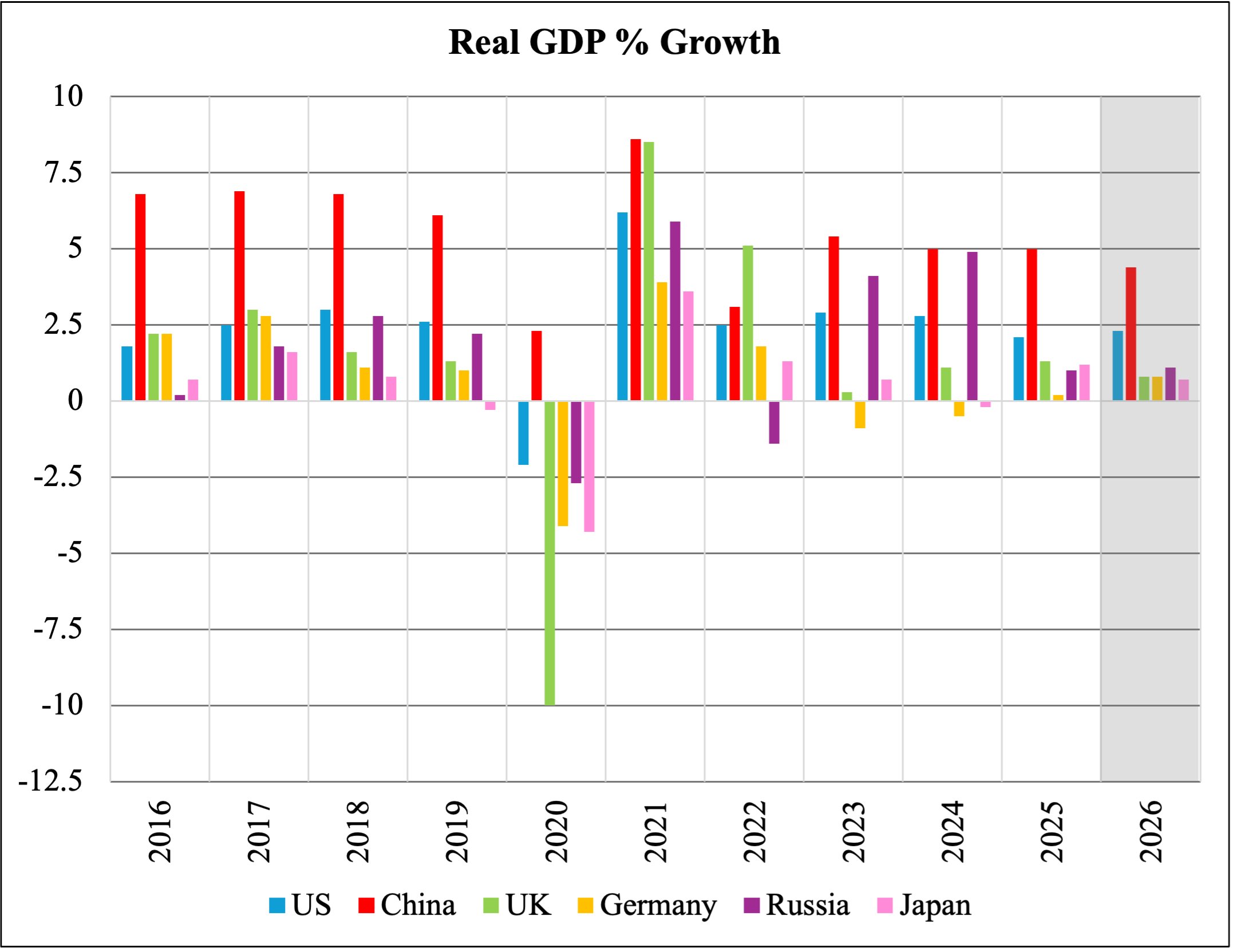
Endnotes
- This table was published on Harvard Professor Graham Allison’s X account on July 20, 2026.
The cutoff for reports summarized in this product was 10:00 am East Coast time on the day it was distributed.
AI was used in production of this digest.
*Here and elsewhere, the italicized text indicates comments by RM staff and associates. These comments do not constitute an RM editorial policy.
Slider photo: In this photo provided by the Ukrainian Presidential Press Office, from left, acting Minister of Defense Major General Yevhen Khmara, former Commander-in-Chief of the Ukrainian Armed Forces Oleksandr Syrskyi, Ukrainian President Volodymyr Zelenskyy and new commander-in-chief of Ukraine's Armed Forces Mykhailo Drapatyi, pose for a photo during their meeting in Kyiv, Ukraine, Wednesday, July 22, 2026. (Ukrainian Presidential Press Office via AP)