
Russia Analytical Report, Aug. 25–Sept. 2, 2025
6 Ideas to Explore
- At the Shanghai Cooperation Organization (SCO) summit in Tianjin this week, Xi Jinping positioned China as the architect of a new multipolar world order, urging Moscow, New Delhi and others to join Beijing in challenging U.S.-led global governance and promoting “sovereign equality” and multilateralism, according to Financial Times. At the summit, which was attended by some 20 nations’ leaders, including Vladimir Putin and Narendra Modi, Xi presented China as the champion of a Global South-led multipolar order, according to Yu Jie. In his turn, Putin declared “unprecedented” Russia-China ties and embraced further economic integration with China, even as energy deals like the Power of Siberia 2 reveal Moscow’s growing dependence on Beijing, according to Mikhail Krutikhin. Modi’s presence at the summit underscored a China-India thaw amid U.S.-India tensions, according to Meduza. The summit shows how China and Russia are exploiting the weakening of the transatlantic alliance, fostering a pragmatic yet asymmetrical partnership that challenges U.S. influence, according to analytical articles in The New York Times and other outlets.
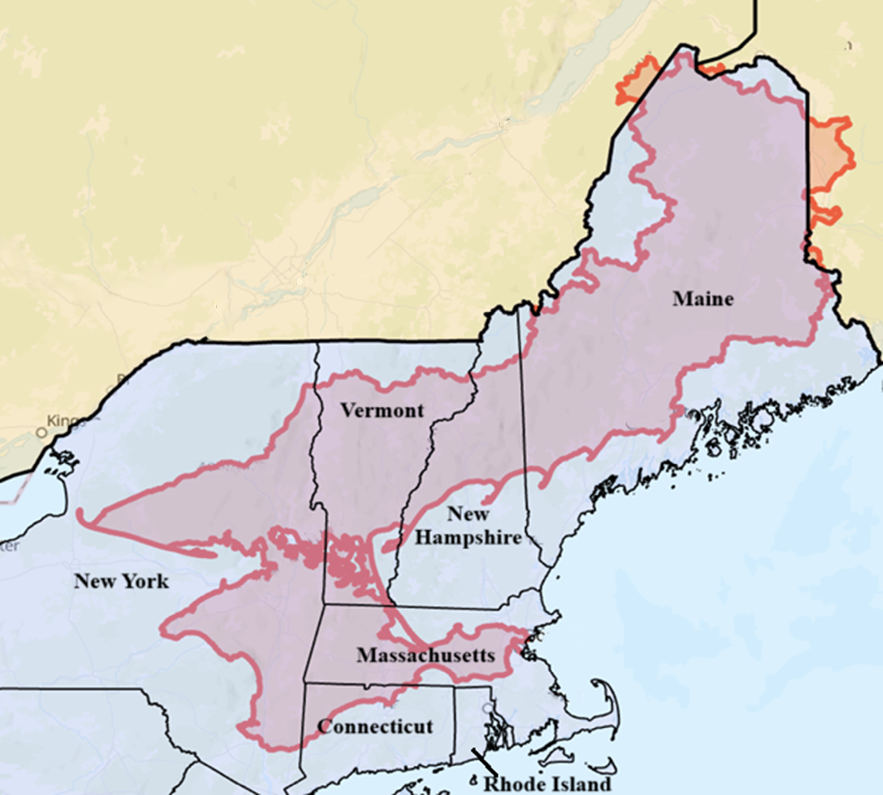
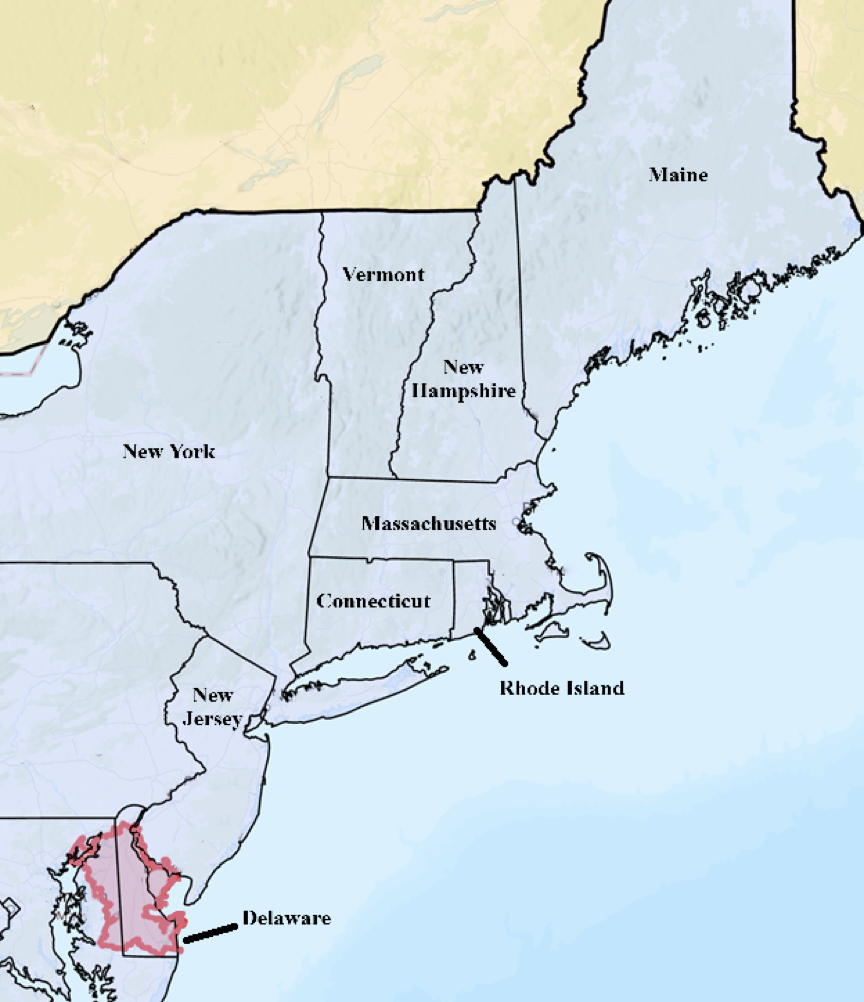
- “In considering alternative Ukrainian futures, it is useful to begin by recognizing that, territorially, it is a big country,” Graham Allison, Douglas Dillon Professor of Government at Harvard University, writes in The National Interest. As the United States, Ukraine, Europeans and Russia consider various “peace deals” and “land swaps,” Allison along with the Russia Matters team created a series of maps that put the territory under discussion into context for a U.S. audience. In the first map, Allison overlays current Russian territorial control onto a map of New England, while a second map shows additional Russian territorial demands in Donetsk within the context of other U.S. states. While Allison acknowledges that when the war ends is anyone’s guess, he leaves readers with an uncomfortable question, asking, “If we start with the fact that recovering the equivalent of northern New England now is not a realistic option, the operational question is how much they should care about the further loss of Delaware?” Ending on an optimistic note, Allison writes that “if a joint U.S.-European initiative can give reasonable assurances of a sustainable armistice, the Ukrainian government will find a way to trade temporary control of land for peace.” To view the maps in Professor Allison’s NI commentary, visit this link or see the section on Ukraine-related negotiations below, which contains a summary of this commentary.*
- In The Economist, Finnish President Alexander Stubb argues that Ukraine should follow the pragmatic path that Finland chose to walk as WWII neared its end. Despite territorial losses and no Western guarantees, Finland eventually prospered by focusing on education, welfare and reform, while avoiding provoking Moscow—a policy derided as “Finlandization” but embraced as “realpolitik.” Stubb believes Ukraine today is in a better position than Finland was in 1944— “a devastated, dirt-poor country” with next to no support from the outside. In contrast, contemporary Ukraine has allies who are working on security guarantees and are helping it economically. Ukraine, he says, can either dwell on the past and lament the unfairness of the world outside, or “it can pick up the pieces, reconstruct and believe in its own future; eradicating corruption, fostering freedom and social justice, and killing cynicism. That is the choice that lies ahead.” Note: When Finland accepted a negotiated peace in 1944, the Soviet Union occupied 10% of its country.
- Washington Post columnist David Ignatius compares the intractable Ukraine peace talks to a chess “zugzwang”—any party’s next move worsens the situation. With Trump contemplating withdrawal from negotiations, the West faces limited, high-risk choices: increased escalation or alternative security frameworks. Ignatius suggests that, rather than escalate, "defensive guarantees" to Ukraine offer a viable solution. He argues that Russia’s concerns—especially over NATO’s expansion—require acknowledgment. Here, Harvard Professor Graham Allison’s theory is helpful: Allison contends that recognizing Russian security anxieties through mutual guarantees could break the stalemate, consistent with his broader “applied history” approach—studying past settlements to shape modern diplomacy.
- Former Ukrainian Foreign Minister and Belfer Center senior fellow Dmytro Kuleba outlines how European leaders have adapted to Trump’s approach to the Ukraine conflict in “Europe Has Found Its Formula for Managing Trump.” The formula he describes in his New York Times op-ed is twofold: first, flatter Trump by praising his strength and deal-making prowess; second, attempt to incrementally shift his stance against Putin. Kuleba warns that Europe’s historical inability to sustain unified action remains its greatest vulnerability if it hopes to resist Russia. He cautions that any peace deal or cease-fire could quickly erode the cohesion that has thus far been achieved, risking weakened support for Ukraine. Ultimately, he suggests lasting unity is essential if Europe is to thwart Putin’s ambitions and secure Ukraine’s future.
- Sarang Shidore explains why most Global South nations have not joined Western sanctions against Russia since 2022 in his Foreign Policy article, “Why the Global South Won’t Quit Russia.” Despite mounting U.S. pressure—including Trump’s recent tariffs on India—these states have strong strategic, economic and security interests in maintaining close ties to Moscow. Russia remains a crucial supplier of arms to countries like India, Algeria and Vietnam, as well as a key security partner in parts of Africa where Western influence is receding. Economically, major developing nations such as India, Turkey and Brazil depend on Russian oil, fertilizer and nuclear energy. Shidore argues that attempts by Washington to force alignment ignore these deep interests and global multipolar realities. “For rising states with expanding ambitions, three great powers are preferable to two … multipolarity gives greater strategic space for those not inside the great-power club,” Shidore concludes.
I. U.S. and Russian priorities for the bilateral agenda
Nuclear security and safety:
- No significant developments.
North Korea’s nuclear and missile programs:
- “Kim responded by accepting a different kind of invitation — to Beijing, where he will join Russia's Vladimir Putin and China's Xi Jinping in a show of defiance against the Western-led global order,” Michelle Ye Hee Lee writes.
- “Kim is pursuing a military upgrade with considerable help from Putin… Russia is believed to be reciprocating with weapons technology and economic support,” the author explains.
- “Since 2023… North Korea already appears to have received air defense systems and antiaircraft missiles from Russia — much-needed upgrades to North Korea's antiquated air force,” Lee reports.
- “Russia and North Korea are even cooperating on the production of the Geran drone, a Russian version of the Iranian-made suicide drone, Shahed, according to the Ukrainian intelligence agency,” the article notes.
- “North Korea is developing multiple independently targetable reentry vehicles (MIRV) and hypersonic glide vehicles, technologies that could overwhelm U.S. and allied missile defenses, with Russian support possibly accelerating this progress,” the author writes.
- “In the future, if the North Koreans detect the right timing, they can really cause a huge amount of instability in the region,” Go Myong-hyun said, quoted in the article.
- “North Korea’s drone capabilities are developing rapidly, and Russian instructors are reportedly working in North Korea, training drone pilots,” Lee reports.
Iran and its nuclear program:
- No significant developments.
Humanitarian impact of the Ukraine conflict:
"Rebuilding Ukraine is an opportunity for European companies," Financial Times, 08.28.25.
- “The total bill for reconstruction and recovery weighs in at $524bn over the next decade, according to estimates by the Ukrainian government and multilateral institutions,” the article reports.
- “The private sector…could invest perhaps $170bn in the country, or one-third of the total bill, according to the Rapid Damage and Needs Assessment,” the article notes.
- “Comments on earnings calls suggest 100-plus companies already have an eye on opportunities in the country,” the Financial Times writes.
- “More modern housing and renewable energy are especially in demand, with wind energy and rebuilding better and greener high on the agenda,” the article explains.
- “Building materials such as cement are heavy and cheap; there is no sense shunting them long distances, so companies with operations either in Ukraine itself or nearby eastern European countries are more likely candidates,” the Financial Times said.
- “ArcelorMittal is increasing production in Ukraine, and Kingspan Group is erecting a €280mn building materials campus,” the article notes.
- “Risks are inherently abundant: labor costs are high, inflation is rampant, and insurance costs — a vital component of any project given the possibility that conflict may flare up again — swell the bill,” the article concludes.
See these links for more commentary/analysis on this subject:
- "After 1,157 Days in Russian Captivity, a P.O.W. Is Home," Thomas Gibbons-Neff, Dzvinka Pinchuk, and David Guttenfelder, The New York Times, 08.24.25.
- "When the Kremlin Failed to Brainwash Them as Children, They Plotted Their Escape; Dozens of Ukrainian children have defied a decade under Russia's propaganda machine in occupied Ukraine and fled to Kyiv-held territory," Oksana Grytsenko, The Wall Street Journal, 08.29.25.
- "Moscow Basks in a Reverie of Whimsy While a Distant War Rages," Ivan Nechepurenko and Nanna Heitmann, The New York Times, 08.31.25.
- For military strikes on civilian targets see the next section.
Military and security aspects of the Ukraine conflict and their impacts:
- “The idea of simply giving up the Donbas was met with outrage across the region. At the Donetsk training ground, ‘Nikitos,’ a 25-year-old sniper from Horlivka, a town in eastern Ukraine now under Russian control, stayed silent for a moment when asked how he would react if his brigade was ordered to pull out. ‘There won’t be such an order,’ he said. ‘I don’t believe it.’”
- “The matter is not simply one of principle or legality, Ukrainian officials and soldiers say. In northern Donetsk, a 45km belt of heavily-fortified cities and smaller settlements dotted along a key road now represents a formidable barrier — the last major line of defense in the region. ‘Beyond this, you have open terrain, no large industrial agglomerations, no areas that would make it possible to build a stable defense,’ said Dmytro Zaporozhets, spokesperson for Ukraine’s newly formed 11th army corps.”
- “The ‘fortress belt’ begins at the southern tip of Kostyantynivka, a town with a prewar population of around 65,000. Russian forces have been gradually approaching the city from three directions, recently getting within 10km of its outskirts.”
- “The Russian military has struggled to seize urban areas, with the battle of Bakhmut lasting close to a year and the ruins of Chasiv Yar only falling under Russian control after 15 months of brutal fighting. The neighboring cities of Kramatorsk and Slovyansk are, by contrast, around three times the size of Bakhmut. The industrial center of Kramatorsk also features some of the largest metallurgical plants in the region. With their production lines long shut down, they could be turned into powerful strongholds.”
- “Losing these cities would hand Russia control of strategic transport hubs and would open up routes to Ukraine’s remaining fortified positions further west.”
"Why Ukraine Won't Give Up Donetsk," Jillian Kay Melchior, The Wall Street Journal, 08.26.25
- “Russia wants the entire region of Donetsk, including the 25% that Ukraine still controls, an unoccupied swath larger than Delaware,” Jillian Kay Melchior writes. In fact, “Vladimir Putin’s demand that Ukraine cede territory the Russians haven’t even managed to conquer may seem audacious, but it’s actually a sign of weakness. Mr. Putin doesn’t have the power to take the land by force easily,” she writes.
- “A heavily reinforced defensive line, known as the fortress belt, has stopped the Russians from rolling deeper westward, and Ukraine has no plans to surrender the area,” the author explains.
- “Penetrating it by force would take years, according to the Institute for the Study of War—so Mr. Putin seeks to seize it through negotiations instead,” Melchior argues.
- “Seventy-eight percent of Ukrainians reject the idea of a deal that yields unoccupied territory to Russia, according to a poll published this summer by the Kyiv International Institute of Sociology,” the article notes.
- “American intelligence plays a crucial role in Ukraine's defense… Without [US support], Russia can better target civilians and Ukraine's fighter jets, defense industrial base, energy infrastructure and other high-priority targets,” Melchior writes.
- “Europe is now considering a deterrent force, known as a ‘coalition of the willing,’ that would include troops in Ukraine. But Russia has repeatedly violated cease-fire agreements, and there's no reason to believe it would honor the next one,” according to the author.
- “Mr. Putin pitches the surrender of Donetsk as a condition to end the war. Ukrainians know any such concession would enable Russian aggression, not end it,” Melchior concludes.
- “An invading army with heavy armored vehicles would have a very hard time entering this swampy area of north eastern Germany, known as Kieshofer Moor,” Hans Joosten explains.
- “Joosten believes bogs like Kieshofer can become a crucial frontier against two of the biggest threats facing Europe: Russian expansionism and man-made climate change,” the authors write.
- “Salvaging drained wetlands was a cost-effective way to keep out Vladimir Putin while also rescuing an invaluable carbon sink,” Joosten argues.
- “As the Ukrainian armed forces sought to stop the Russian armored thrust towards Kyiv in 2022, they destroyed a Soviet-era dam north of the capital, using water and swamps as an anti-tank ditch,” the authors notes.
- “Ukraine has repeatedly relied on rivers, floodplains and marshy terrain as natural defenses. The lessons have been notes elsewhere in Europe,” the article explains.
- “Refilling wetlands could provide defensive benefits for just a fraction—about 5 to 10 per cent—of the total rewetting needed in Europe, with the main goals still being climate and biodiversity,” according to the article.
- “Joosten likes the ‘humanistic’ idea of using bogs as a deterrent against weapons of war: ‘It’s not aggressive… Peatlands do not shoot back.’”
- “Russian cruise missiles struck a factory run by an American multinational in Mukachevo, western Ukraine, just six days after President Trump met Putin in Alaska,” Barker and Mykolyshyn report.
- “A week later, two missiles hit central Kyiv, damaging the offices there of the European Union and the British Council,” the authors write.
- “Striking American and European assets sent a confrontational message: Mr. Putin feels empowered to rebuff pressure to make peace, to wage war as he sees fit, and even to inflict pain on the West in the process,” they argue.
- “After the attack in Mukachevo, Mr. Trump said that he was ‘not happy’ with it and had expressed his displeasure to Mr. Putin… But the president’s threats of additional sanctions against Russia have remained only threats,” the article notes.
- “‘Russia is effectively testing the boundaries of Western deterrence while pursuing a broader coercive strategy aimed at weakening allied resolve and forcing Ukraine toward unfavorable negotiating positions,’” Franz-Stefan Gady said, quoted in the NYT.
- “Europe is debating sending peacekeeping troops to Ukraine. The message from Moscow is ‘don’t you dare send your troops here, because Ukraine is somewhere we can strike anywhere we like,’” write Barker and Mykolyshyn, citing Volodymyr Dubovyk.
- “Just over half of American companies in Ukraine have been damaged in Russian strikes, including a McDonald's, a building used by Boeing and a Philip Morris factory,” the authors note.
See this link for more commentary/analysis on this subject:
- "Why Ukraine Remains the World’s Most Innovative War Machine," Ibrahim Naber, Politico, 08.27.25.
- “Divesting the Past to Secure Tomorrow’s Battlefield," Benjamin Fernandes and Benjamin Jensen, CSIS, 08.27.25.
- "How Did the World’s Most Sophisticated Military Fall So Far Behind With Drone Warfare?" Politico, 08.27.25.
Military aid to Ukraine:
"Guaranteeing Ukraine’s Security," Steven Pifer, CISAC/Stanford, 08.26.25.
- “European leaders came to Washington to bolster Zelensky’s position following Trump’s grievous Alaska conversation with Putin,” Steven Pifer writes.
- “Trump’s original Alaska ‘understanding’ would have required Ukraine to cede territory just to start negotiations—appears to have fallen by the wayside during talks with Zelensky and Europeans,” the author explains.
- “Trump’s position on security guarantees for Ukraine seems to have shifted; he later suggested U.S. air power could be on offer,” Pifer notes.
- “Strong security guarantees are important if Ukrainians are to have confidence that Russia will not launch a new assault after a couple of years regenerating its military,” according to the article.
- “Another Budapest Memorandum does not provide the answer. Russia blithely violated its commitments in that 1994 document…Moscow does not deserve a seat at the table on this issue,” Pifer argues.
- “In the event of a ceasefire, a package of security guarantees could include: (1) a large, well-equipped standing Ukrainian military, (2) a European ‘coalition of the willing’ with an American backstop, and (3) future NATO membership as a goal,” the article states.
- “Taken together, these elements could provide the basis for a strong security package for Kyiv…If Russia and Ukraine do negotiate a just and durable settlement…Moscow presumably would have decided to live in peace with Ukraine. So why should the Russians then care about security guarantees that would only be triggered if they chose to attack again?” Pifer concludes.
- “Since the recent flurry of diplomatic activity…discussion about ending the Russia-Ukraine war has turned to the notion of ‘security guarantees’—a strikingly fuzzy concept that means very different things to different people,” Christian Caryl writes.
- “A piece of paper saying ‘guarantee’ will not do; that has already been tried and failed. Russia, the United States, and Britain did not honor their guarantee of Ukraine’s borders, which was signed in Budapest in 1994,” the author argues.
- “It is hard to imagine how any form of protection for Ukraine would not entail the presence of a large body of troops on the ground,” Caryl explains.
- “Among those who have so far declared themselves willing to put boots on the ground are Belgium, Lithuania, and Estonia, with a combined population of 16 million. If I were Ukrainian, I’m not sure that I would feel especially reassured by any of this,” the author notes.
- “As for the United States, the Trump administration’s interest in security guarantees appears to be bound up with the desire to minimize U.S. involvement,” Caryl writes.
- “Putin refuses to countenance any Western troops in Ukraine. Lavrov declared that Moscow will only allow members of the UN Security Council to guarantee Ukraine’s security—which would give Russia (and China) a veto,” the article states.
- “The best way forward is to keep up the pressure on Putin…supplying Ukraine with more and better weapons, continuing economic support, and intensifying sanctions on Russia and buyers of its oil. Seizing the roughly $300 billion of Russian assets frozen in European banks and giving them to Kyiv would send exactly the right kind of signal,” Caryl concludes.
- “Ukraine is pursuing a multibillion-dollar arms buildup that would be funded by Europe, seeing it as the best chance of ensuring the country’s long-term survival as American assistance dries up and Western security guarantees remain uncertain. Kyiv wants not only to sustain its army through the current war but also to make it the backbone of any postwar settlement, with the goal of deterring Russia from invading again.”
- “At the center of these efforts is a new NATO-backed procurement system that will channel European funds into buying U.S. weapons for Ukraine. President Volodymyr Zelensky hopes the system will enable $1 billion in purchases each month, with a particular focus on acquiring U.S.-made Patriot air-defense systems to expand Kyiv’s limited arsenal.”
- “The new system would both help replace U.S. arms donations that President Trump has ended and also increase and streamline deliveries of weapons to Ukraine over time. A first sale of cruise missiles and GPS navigation kits, worth $825 million, was announced on Thursday. Kyiv is also betting on its booming domestic defense industry, which has already delivered drones that swarm the battlefield and is now working to produce more powerful weapons.”
- “Ukraine is hoping it will soon be able to rely on its new missile, which is called Flamingo. On paper, it can fly more than 1,800 miles with a 2,500-pound payload, according to experts, meaning the missile could strike Moscow and Russian cities far beyond. Its effectiveness on the battlefield, however, remains untested Still, experts say such a weapon could serve as a more potent deterrent to the Kremlin than any Western pledge of protection.”
- “Europe has already outpaced the United States in military aid, providing roughly $95 billion to Washington’s $75 billion, according to the Kiel Institute for the World Economy. Recent pledges from Germany and Norway to provide up to $10 billion each in military and civilian support next year suggest that Europe might be prepared to meet the challenge.”
For more commentary on this subject see the following links:
- "Congress Already Knows How to Help Ukraine," Andreas Kluth, Bloomberg, 08.29.25.
- "Romania Holds the Key to Ukraine Peacekeeping," Philip Breedlove and Glen E. Howard, The National Interest, 08.29.25.
Punitive measures related to Russia’s war against Ukraine and their impact globally:
"Sanctions Can Help Trump Beat Russia," Mike Pence, The Wall Street Journal, 08.27.25.
- “President Trump's Alaska summit with Vladimir Putin could be the first significant breakthrough for peace since Russia launched its brutal, unprovoked invasion more than three years ago,” Mike Pence writes.
- “Putin only understands strength. Diplomacy alone won't suffice. A peace process must be backed by real leverage…Congress could back Mr. Putin into a corner by immediately passing additional sanctions on Russia,” the author argues.
- “Moscow has a record of dragging out negotiations as a cover for continued aggression, and Mr. Putin has mercilessly bombed Ukraine since the Alaska summit. The U.S. can't allow him to dictate the pace or the terms of diplomacy,” Pence explains.
- “Sen. Lindsey Graham has introduced a bipartisan sanctions package that would impose steep tariffs on countries fueling Russia's war machine by buying its oil, gas, uranium and other exports. Eighty-five senators support the bill,” the author notes.
- “Mr. Trump could strengthen his negotiating position by giving the green light immediately [to move Graham’s sanctions bill],” according to Pence.
- “The carrot-and-stick approach is a proven strategy in American foreign policy. The carrot is the opportunity for Russia to end its international isolation…the stick is the threat of economic sanctions so crushing that Mr. Putin will think twice before walking away from the table,” the author argues.
- “Passing Mr. Graham's sanctions bill would show Mr. Putin that America speaks with one voice and that our entire country stands behind the president as he seeks to end this war,” Pence concludes.
For sanctions on the energy sector, please see section “Energy exports from CIS” below.
Ukraine-related negotiations:
“Mapping the Russia-Ukraine War Endgame,” Graham Allison, The National Interest, 08.29.25.
- “Ukraine faces a difficult choice: end the war and risk conceding territory or fight on and absorb more material, manpower, and territorial losses.”
- “To assist in visualizing the options laid out in the various peace proposals, Harvard’s Russia Matters team has produced a second map that overlays the Ukrainian territory Russia currently holds on a map of New England. That 44,000 square miles of Ukraine amounts essentially to the combined area of the northern New England states of Maine, Vermont, and New Hampshire.”
Map 2: Current Russian Territorial Control Overlaid on New England
Map 3: Remainder of Donetsk Equivalent
- “[N]either West Germany nor South Korea gave up their aspirations and claims to recover occupied lands. On the other hand, Russians remind us that at the end of World War II, the Soviet Union had acquired approximately 10 percent of Finland’s pre-war territory following the Russo-Finnish War. For a decade after the war, the Finns discussed reunification. However, it eventually relinquished these claims and focused instead on becoming the modern miracle it is today.”
- “Whether the bloody war in Ukraine will come to an end in the foreseeable future remains to be seen. But if it does, two brute facts are almost certain. First, Russia will continue to occupy about 20 percent of the land that previously belonged to Ukraine; second, Ukraine will not relinquish its claim to recover its land.”
- “The question his [Zelenskyy’s] government now faces is whether to accept an option that will end the war sooner, with all the liabilities that entails, or to continue fighting and risk losing more warriors, citizens, and territory.”
"A way around the Russia-Ukraine deadlock," David Ignatius, The Washington Post, 08.28.25.
- “Chess players sometimes fall into a situation they call ‘zugzwang,’ in which any move worsens their position. The impasse in the Ukraine peace talks feels like that. … [Trump is] now considering walking away from negotiations, which would be a severe personal failure for him and a disaster for Ukraine and Europe.”
- “One tough Western approach would be reciprocity. If Putin continues to attack cities and civilian infrastructure across Ukraine, then Kyiv's allies would give it the means to respond in kind... But realistically, he [Trump] and European leaders seem unlikely to enable an all-out offensive on Moscow.”
- “A potent but more palatable alternative might be a defensive guarantee.”
- “A sensible approach to peace would invite Russia to present its list of desired security guarantees.”
- “Putin would surely demand as his first security guarantee that Ukraine stay out of NATO. Trump, for better or worse, has already signed off on that. I could accept it, too, so long as Kyiv gets ‘NATO-like’ guarantees of its security, now and in the future. Putin might also insist on limiting NATO weapons inside Ukraine that can target Russia. That's trickier.”
- “Russian Foreign Minister Sergei Lavrov this month proposed that negotiators return to what he described as a Ukrainian plan for mutual security guarantees that was floated in April 2022 in Istanbul, two months into the war, and then abandoned. ‘The Ukrainian proposal clearly meant that these guarantees would be equal, the security of all interested parties, including Ukraine's neighbors, would be ensured on an equal and indivisible basis. And that approach at that time … was supported by the Russian side,’ Lavrov said.”
- “There are many potential snares in this approach, but Graham Allison, a professor at the Harvard Kennedy School, explains the rationale of reciprocal security guarantees. ‘Russians, even if paranoid, are concerned that Ukraine in NATO would be a threat to them. If we're prepared to recognize that concern as part of mutual security arrangements between Russia, Ukraine and Europe, we might get beyond the current stalemate.’”
- “Embracing what Allison calls ‘applied history,’ we can see that security guarantees have helped stop wars for more than two centuries.”
- “There are many potential snares in this approach, but Graham Allison, a professor at the Harvard Kennedy School, explains the rationale of reciprocal security guarantees. ‘Russians, even if paranoid, are concerned that Ukraine in NATO would be a threat to them. If we're prepared to recognize that concern as part of mutual security arrangements between Russia, Ukraine and Europe, we might get beyond the current stalemate.’”
- “The strategist Fred Iklé writes a brilliant little book called ‘Every War Must End,’ during the agonizing final years of the Vietnam conflict. Two comments seem especially appropriate now. ‘Inflicting 'punishment' on the enemy is … an ineffective strategy for ending a war,’ Ikle cautioned. To end conflicts, he said, ‘nations on both sides tend to see a peace settlement that will bring greater and more lasting security than existed before the fighting broke out.’ If Russia chooses unwisely to fight on, then Europe and the United States should begin providing security guarantees for Ukraine now, not later. This isn't chess. When a game is heading toward defeat, step away from the board.”
"Europe Has Found Its Formula for Managing Trump," Dmytro Kuleba, The New York Times, 08.27.25. Clues from Ukrainian Views.
- “Europe has found its formula for dealing with Mr. Trump on Ukraine: First, flatter. Praise his strength, his commitment to peace and his capacities as a deal maker. Second, try, in increments, to turn him against Russia's president, Vladimir Putin -- something that Mr. Putin, despite his best efforts, seems unable to do himself.”
- “When it comes to European unity, Mr. Trump has made a real difference. While he certainly deserves credit for insisting that European countries contribute more toward their own defense, he has also, perhaps inadvertently, helped European leaders to focus on what they can agree on, rather than what separates them.”
- “Europe’s inability to act in unison is its perennial weakness and its path to defeat, including on Ukraine. But if it can pull together—and remain together—Mr. Putin will not prevail.”
- “If a cease-fire—or even the formal end of the war—is announced… there’s a real risk that the resolve of Ukraine’s European allies will soften, and their unity splinter,”
- “The peace that was imposed on Finland in 1944 was hardly just. But it could have been worse. Finland handed over 10% of its territory, including Karelia and half of Lake Ladoga. ... To much of the world, this was a defeat. To Mr. Stubb, whose father was born in the territory annexed by the Soviet Union, and whose summer house stands in Porkkala, back in Finnish hands since the 1950s, it looks different.”
- “Lacking any security guarantees from the West or anyone else, Finland exercised this independence not by turning anti-Russian—which would almost certainly have resulted in another invasion—but by building one of the most successful countries in Europe. ‘People didn’t wait for perfect conditions. They worked with what they had,’ Risto Penttilä, a foreign-policy expert, explains.In politics and in the media Finland carefully avoided anything that could anger Moscow.”
- “To most outsiders, what became known as ‘Finlandization’ was a servile form of appeasement. To Mr. Stubb and most of his countrymen, ‘it was the definition of realpolitik at a time when we did not have a choice.’ It allowed Finland to stick to its core values: universal education, social welfare and the rule of law.”
- “Finland was able to create national defense not just because of a threat from Russia, but because it had something worth defending. Mr. Stubb says that Ukraine today is in a better position than Finland was in 1944—'a devastated, dirt-poor country’ with next to no support from the outside. Ukraine has allies who are working on security guarantees and are helping it economically. Ukraine, he says, can either dwell in the past and lament the unfairness of the world outside, or ‘it can pick up the pieces, reconstruct and believe in its own future’; eradicating corruption, fostering freedom and social justice and killing cynicism. That is the choice that lies ahead.”
"Putin’s Play for Time: How Trump’s Performative Diplomacy Strengthens Russia’s Hand," Alexander Gabuev, Foreign Affairs, 08.26.25. Clues from Russian Views.
- “Despite low expectations among Ukraine and its allies before the Alaska summit, Trump did not hand over Ukraine’s fate to Putin nor normalize relations before the war was resolved,” Alexander Gabuev writes.
- “Putin now banks on Trump losing patience and reducing U.S. assistance to Ukraine, which, in the Kremlin’s calculus, still counts as winning,” the author explains.
- “The Kremlin believes time is on Russia’s side; on the battlefield, Russia maintains numerical advantages and slowly advances in the Donbas, withstanding casualties as it catches up in drone warfare,” according to Gabuev.
- “Putin secured Trump’s agreement that peacemaking should focus on a comprehensive settlement — not an unconditional ceasefire — allowing fighting to continue,” the article notes.
- “After the summit, Trump accepted the logic of ‘land swaps’ offered by Putin, with the decision left to Zelensky, who cannot afford to cede the most fortified parts of Donbas politically or militarily,” Gabuev writes.
- “Promises of groundbreaking security guarantees for Ukraine dissolved as Russia insisted any security arrangement be guaranteed by the UN Security Council’s permanent members, where Moscow would hold a veto,” according to the author.
- “Europe’s Plan B (if Trump doesn’t pressure Putin) is to maintain or even increase military and financial support for Ukraine and raise sanctions, though their toolkits remain less powerful than Washington’s,” Gabuev observes.
- “The Kremlin is obviously preparing money and troops for a protracted war in which its only strategy is to outlast Ukraine militarily and economically. Yet the eventuality for which the Kremlin does not appear to have a plan is that Russia will be unable translate its massive advantage in manpower and materiel into a decisive breakthrough—as has been the case since the war began. A plan, in other words, for the possibility that Ukraine’s defense lines don’t crumble after all,” Gabuev concludes.
"The Case for a Ceasefire in Ukraine," Richard Haass, Project Syndicate, 08.27.25.
- “An enduring peace agreement with Russia would surely be preferable, but for now it simply remains beyond reach. A long-term settlement must be doable as well as desirable, and for now such ambitious diplomacy is not possible – and pursuing it could be dangerous.”
- “An enduring peace between Russia and Ukraine would surely be preferable, but it simply remains beyond reach. A long-term settlement must be doable as well as desirable, and for now such ambitious diplomacy is not. What is more, there are a good many risks associated with pursuing a lasting peace before the time is ripe.”
- “[A] ceasefire offers something for both sides, beyond the benefits that would accrue from stopping the fighting. Neither side would be required to give up its long-term aims or be prevented from strengthening its military.”
- “Bringing about such a ceasefire would require two things: increased pressure on Russia and a long-term commitment to Ukraine.”
- “[E]ven if a ceasefire were to come about, there is the danger it wouldn’t last, that it would simply turn out to be a pause rather than a step toward peace. The way to guard against renewed fighting would be to make it unattractive by bolstering deterrence and to buttress this approach by specifying the costs that would be imposed on the side that violates the ceasefire.”
- “There is also the danger that the ceasefire would last and that temporary lines become near-permanent. This has been the experience on both the Korean Peninsula and in Cyprus. Still, it would be far better than continued war. And one day, after new leadership emerges, there may well be an opportunity to negotiate a peace agreement. Until then, a lasting ceasefire looks like the best option for everyone.”
- “Trump’s intuition that a deal will require land swaps and security guarantees is correct; Putin will agree to end the war only if he feels that he has won Ukrainian territory, and Zelensky will never agree to cede territory without the promise of protection from a future Russian invasion,” writes Michael McFaul.
- “Rather than discussing these two issues with everyone all at once, Trump needs to organize two sets of separate negotiations. The order in which these negotiations occur will be key to their success. Trump and his team must first reach an agreement on security guarantees among Ukraine, other European countries, and the United States. Only then should Washington encourage a conversation between Zelensky and Putin about de facto territorial concessions that could bring an end to the war,” according to the author.
- Before Trump can entice Zelensky to risk his political future on a potential land swap, he must convince him that the United States and its allies in Europe are willing to credibly deter a future Russian invasion. … [I]f the United States and Europe are to offer Ukraine a truly credible deterrent, Russia cannot be involved in these talks,” McFaul argues.
- “A precedent exists for ironing out European security arrangements without consulting Moscow: Washington and Europe did not ask Stalin for the Soviet Union’s permission to found NATO in 1949. Six years later, the alliance extended an invitation to West Germany without seeking Soviet leader Nikita Khrushchev’s blessing … President Bill Clinton did not give Russian President Boris Yeltsin a veto over adding new members to NATO. Nor did President George W. Bush seek Putin’s permission to expand NATO membership to the Baltic countries and others,” the author writes.
- “For President Trump, consistency is less important than leader-to-leader diplomacy,” David E. Sanger writes.
- “After the Anchorage meeting, all the outward signs are that any real progress has ground to a stop…neither a Putin-Zelensky nor a three-way meeting has been scheduled,” the author notes.
- “Trump insisted to European leaders that Mr. Putin had agreed to allow a peacekeeping force inside Ukraine, but by midweek Russia was describing a different construct, where it would participate in security guarantees for the country it invaded,” Sanger explains.
- “‘We haven’t even discussed the specifics’ of security guarantees, Trump said Monday, highlighting the strategic incoherence of the negotiations,” the article reports.
- “Trump alternates between playing the mediator and promising to secure Ukraine from future attack, but rarely takes clear positions,” according to Sanger.
- “For the Ukrainians, memories of failed agreements like the Budapest Memorandum and American caution about commitment lead to suspicion of any U.S. security assurance,” the author argues.
- “Trump’s personal-diplomacy-first approach means muddled strategy, abandoning unified Western positions and sending mixed signals about American responsibility for Ukraine’s fate,” Sanger concludes.
- John E. Herbst: “Most of the commentary on ‘the battlefield’ focuses on Moscow’s monthslong land offensive. The key point, well understood but incomplete, is that Moscow is making very slow, if painful, gains,” Herbst writes. “It is no surprise that negotiations with Russia are going nowhere fast. Putin does not want to end the war… his goal is not to lock in his gains or to take the rest of the Donetsk Oblast, but to take effective political control of Ukraine,” Herbst explains.
- Brian Whitmore: “The most visible impact of the war on Russian society has been a sharp escalation in repression, censorship and the curtailment of all forms of dissent,” Whitmore writes. “As many as 1.3 million Russians, many of them highly educated and highly skilled, have fled the country to escape military mobilization, repression and diminishing opportunities,” Whitmore notes.
- Brian Mefford: “Ukraine’s GDP growth will slow from 3.5 percent last year to about 2 percent this year. On the ground in Kyiv, though, you can see that this is a much harder year economically for everyone—and conditions in the outlying regions are worse,” Mefford writes. “With six million Ukrainians still abroad, another one million serving in the military, and daily attacks on factories and infrastructure, economic capacity is suffering,” Mefford explains.
- Peter Dickinson: “From the political leadership to the men and women on the front lines and ordinary folk across the country, almost everyone in Ukraine is utterly exhausted and desperate for peace,” Dickinson writes. “These grim realities are fueling widespread acceptance of the idea of a negotiated settlement that would allow Russia to continue occupying the approximately 20 percent of Ukraine that is currently under Kremlin control,” Dickinson notes.
- Daniel Fried: “The substance of security guarantees should start with a steady stream of Western and other military equipment plus defense industrial cooperation to enable the Ukrainians to defend themselves,” Fried explains.
- Marek Magierowski: “The best-case scenario for Russia would be to allow the United States and its European partners to offer security guarantees to Kyiv. And then see them fall apart.”
- Torrey Taussig: “In the near term, the prospects for Ukraine becoming a NATO ally are slim to none,” Taussig writes.
- Joseph Webster: “China’s position vis-à-vis the war remains the same: It does not want Russia to lose and is willing to endure sizable—but not unlimited—costs to achieve that end,” Webster writes. “The Chinese Communist Party is quietly but perceptibly preparing for a post-Putin Russia—and hedging against major convulsions in Russian domestic politics in an uncertain post-war period,” Webster explains.
Great Power rivalry/new Cold War/NATO-Russia relations:
"Why the Global South Won’t Quit Russia," Sarang Shidore, Foreign Policy, 09.01.25.
- “When the West slammed severe sanctions on Russia after its illegal invasion of Ukraine in 2022, practically the entire global south refused to participate,” Sarang Shidore writes.
- “Trump has recently turned his ire on India, implementing an additional 25 percent tariff on its imports to pressure New Delhi to stop buying oil from Moscow,” the author notes.
- “If Washington thinks an aggressive push will wean the global south off Russia, then it should think again. States in the global south have good reasons to retain their ties to Moscow and even welcome its persistence as a great power in the global order,” Shidore argues.
- “Russia is the biggest source of imported arms for India, Algeria, and Vietnam. In several African states, especially in the Sahel, Russia has stepped in as security guarantor, displacing France and the United States,” the article states.
- “India and Turkey are major importers of Russian oil, and Brazil relies greatly on Russian fertilizers… Russia is also the biggest international player for nuclear energy, with active projects in multiple countries,” Shidore explains.
- “Bipolarity creates pressures toward formation of two opposing blocs… Alternatively, a G-2 arrangement… could create even greater pressures on the global south to conform to rules set by the mighty,” according to the author.
- “For rising states with expanding ambitions, three great powers are preferable to two… multipolarity gives greater strategic space for those not inside the great-power club,” Shidore concludes.
- “Ukraine cannot accept any deal that fails to provide ironclad security guarantees to ward off a renewed Russian invasion,” Anders Fogh Rasmussen writes.
- “Nato’s Article 5 mutual defense clause remains the most effective and least expensive security guarantee available. However, if Trump does not agree to Nato membership for Ukraine, European allies must provide their own credible commitments,” the author explains.
- “The most important element of any such guarantees must be a well-armed European deterrence force on the ground in Ukraine... Without this concrete guarantee of security, Moscow’s forces will simply use any future ceasefire as an opportunity to rest and re-arm,” Rasmussen argues.
- “European security guarantees are being treated as something to be included in a final peace deal, rather than as a prerequisite to such an agreement. This thinking must be turned on its head,” the article states.
- “Europe’s security strategy must have three pillars to its deterrence force: strengthen Ukraine’s own deterrence, establish a European-centric command format, and secure US support for transport, intelligence, and air defense,” Rasmussen writes.
- “Europe cannot replace the scale and quality of US intelligence collection... ensuring critical intelligence sharing would be a low-cost way for the US to back the European force,” the author emphasizes.
- “Putin is demanding that Russia play a role in ‘guaranteeing’ Ukraine’s security—something that would be the equivalent of putting a nuclear-armed bear in charge of the henhouse,” Rasmussen concludes.
"Russia Will Ramp Up Hybrid Warfare if Ukraine Fighting Ends," Luke McGee, Foreign Policy, 08.25.25.
- “Even if a peace deal is agreed upon, it will remain in Russian President Vladimir Putin’s interests to keep chipping away at both Ukraine and its international allies,” Luke McGee writes.
- “Russia is arguably much better at hybrid warfare than it is at conventional warfare, as its failure to overrun a state a fraction of its size has showed,” the author explains.
- “Since long before the full-scale invasion began in 2022, the Kremlin has sponsored relentless disinformation campaigns across the globe and across the ideological spectrum,” McGee notes.
- “European security officials say Russia is already actively trying to destabilize the confidence of the coalition through disinformation designed to make Europeans question their willingness to support the war,” according to the article.
- “If European troops end up in Ukraine, these kinds of disinformation campaigns against Ukraine and its Western allies will ramp up, possibly becoming more directly linked to violence and escalation,” the article explains.
- “Kremlin proxies…have repeatedly made claims that Ukraine is making dirty bombs or attacking nuclear power plants…It’s easy to see how that could escalate into false flags, giving Russia pretext to retaliate and test the resolve of so-called security guarantees,” McGee writes.
- “Trump should be under no illusion that, even if he pulls off the greatest deal of his life, Putin will stick to the agreement for very long,” McGee concludes.
"Deterring Kremlin Grey Zone Aggression Against NATO," Joe Morley-Davies, RUSI, 08.29.25.
- “Even if fighting were to cease in Ukraine, the Kremlin’s grey zone aggression would not end with it. Indeed, it is likely to increase to destabilize the West and give the Kremlin an asymmetric advantage,” Joe Morley-Davies writes.
- “Grey zone aggression confuses attribution, divides alliances, and exploits legal grey areas, ultimately undermining timely and unified deterrent action by NATO and its partners,” the author explains.
- “Deterrence by denial focuses on preparation; deterrence by punishment focuses on response—both must be adapted for grey zone threats,” Morley-Davies argues.
- “Building societal resilience is crucial—public information campaigns, cooperation with journalists and community actors, selective declassification of intelligence, and tools to reveal malign influence can preempt Kremlin operations,” the article notes.
- “NATO states can prepare a suite of offensive overt and covert policy options—from sanctions and deplatforming disinformation to information campaigns targeting the Kremlin domestically,” according to Mori-Davies.
- “Expanding knowledge-sharing, creating interoperable frameworks, and empowering civil society all strengthen deterrence and resilience,” the author writes.
- “Preparation must begin now. How we respond to grey zone aggression will influence the Kremlin’s expectations about a military test against more vulnerable NATO members,” Morley-Davies concludes.
"Why Putin Feels Compelled to Continue his War," Hanna Notte, Russia.Post, 08.28.25.
- Political scientist Hanna Notte argues that giving in is not an option for Vladimir Putin in his war against Ukraine. Russia's entire foreign policy, its future international status and its very destiny depend on its outcome.
- “Putin continues to fight because he has the means and because he believes that Russia will outlast its adversaries in this war,” Notte writes.
- “Putin's ultimate goal is an imposed peace. The necessity to continue fighting arises from a historically and culturally derived and stubbornly ideological claim that it is up to Russia to decide the political fate of a demilitarized Ukraine,” she explains.
- “The war has become the organizing principle of Russia's globally oriented foreign policy… its outcome will either permanently strengthen or severely damage Russia's reputation in the Global South,” the author argues.
- “With its invasion of Ukraine, Russia has maneuvered itself into a strategic dead end. Russia is relentlessly waging a war that can only weaken the country in the long run,” Notte writes.
- “If Putin backs down in Ukraine, he rightly fears losing further influence – whether in Ankara or Astana, Baku or Bishkek, Tashkent or Tbilisi,” the author reports.
- “In a war that Russian propaganda has hyped up as pivotal for the fate of humanity, Putin cannot simply back down...he has made Russia’s destiny dependent on its outcome... it is also a war that Vladimir Putin cannot easily end – because he has made Russia’s destiny dependent on its outcome,” Notte concludes.
"Next Kremlin Strike—Where Is the New Attack Being Prepared?," Sergey Konyashin, Republic, 09.01.25. Clues from Russian Views. Machine-translated.
- “A Russian attack on neighbors seems unlikely—forces are stuck in Ukraine, losses are huge, the economic situation is worsening. But many analysts in winter 2021–22 made similar assessments,” Sergey Konyashin writes.
- “The scale of military exercises in Belarus and amendments to its martial law have neighboring states nervous. Concern is growing from the Baltics to Kazakhstan,” the author observes.
- “NATO Secretary General Rutte warned: ‘Russia will remain a danger even when the Ukraine war is over,’ predicting Russia could be ready for a war against the alliance within five years,” Konyashin explains.
- “If Russian forces get a respite and keep their combat capacity, they’ll find new uses—history is rife with Moscow offsetting internal crises through external conflicts,” the article argues.
- “The most dangerous scenario is a strike against the Baltic states, where Russia and NATO interests collide directly. The region’s geography—Kaliningrad on one end, Belarus on the other—creates a vulnerable corridor,” Konyashin states.
- “Baltic Russian-speaking populations could provide Moscow with a pretext for provocations, as Russian propaganda pushes claims of ‘oppression of Russians’ in the Baltics,” the author writes.
- “Another real possibility is a move in Transnistria, the pro-Russian enclave in Moldova, destabilizing both Moldova and Ukraine without formally attacking NATO; Russia could increase its peacekeeper presence there,” Konyashin notes.
- “The South Caucasus remains highly unstable, with Russia’s influence weakened post-Karabakh; conflicts between Armenia and Azerbaijan could be manipulated by Moscow to restore its role,” the article explains.
- “If Russia felt it was losing control in Central Asia, a ‘Donbass scenario’ in Kazakhstan could unfold, using the Russian minority and social unrest as pretext,” Konyashin suggests.
- “Russia’s own postwar weaknesses could invite aggression from others—notably China, whose ambitions in the Russian Far East are watched warily in Moscow,” the author observes.
- “A ground incursion into the Russian Far East would be easier than a landing on Taiwan; the region’s resource wealth is strategically important to China,” Konyashin argues.
- “The West’s rush to negotiate an end to the Ukraine war without decisively defeating Russian forces leaves Putin with a battle-hardened army and incentives for future conflict—while even greater risks loom from ‘predators’ larger than Putin,” the article concludes.
"The Fateful 2030: How Strategic Documents Frame the ‘Russian Threat’ Across the Atlantic," Anton Bespalov, Valdai Club, 09.01.25. Clues from Russian Views. Machine-translated. (This organization is affiliated with the Russian authorities.)
- “The escalation of military anxieties in Europe benefits the United States, as it justifies the need to raise NATO members’ military spending to 5% of GDP—a goal championed by the White House,” Anton Bespalov writes.
- “Militarizing Europe and conditioning its younger generations for war with Russia may become a self-fulfilling prophecy, with potentially catastrophic consequences for the entire continent,” the author argues.
- “Recent national security strategies…position the risk of a major high-intensity war on the continent by 2030 as the paramount threat, with Russia framed as the source of this danger,” Bespalov notes.
- “A central rationale for military assistance to Kyiv has become the argument that Ukraine represents Europe’s first line of defense, and that failure to stop Russia there would mean further aggression,” the article explains.
- “The French strategic review highlights America’s ‘less predictable foreign policy’ under Trump and the peril of the ‘combination of the Russian threat and American disengagement,’” Bespalov writes.
- “Direct military confrontation with Russia is gaining traction in Europe… A Bundeswehr report labels Russia an ‘existential risk to Germany and Europe,’” the author states.
- “Talk of a Russia-NATO war has shifted from ‘Russia would lose’ to ‘Russia seeks war and is preparing for it’—despite repeated denials by Russian officials,” the article reports.
- “None of the analyzed documents cite Ukraine’s ‘victory’ as the objective. The best aim is to ‘drain Russia’s military resources and strain its economy, preventing conflict spillover,’” Bespalov observes.
- “Europe is interested in prolonging the war while accelerating its own preparedness for potential escalation; the US aims ‘to bring the war to an acceptable close’ to reduce the risk of nuclear conflict,” the article notes.
- “There is a key transatlantic rift: Europe adopts the ‘democracy versus authoritarianism’ narrative, whereas Trump’s team shows indifference to such ideological framing, focusing on national interests,” Bespalov writes.
- “Stoking military anxieties in Europe serves short-term US interests by legitimizing Trump’s demand for higher NATO defense spending,” the author explains.
- “The obvious danger is that militarizing Europe and preparing younger generations for war with Russia may become a self-fulfilling prophecy,” Bespalov concludes.
"Struggle for Peace Through Strength," Fyodor Lukyanov, Russia in Global Affairs, 09.01.25. Clues from Russian Views. Machine-translated. (This organization is affiliated with the Russian authorities.)
- “The phrase ‘struggle for peace’ was a Soviet slogan of ambiguity: both to keep peace (as the opposite of war) and to gain control over the world (in the sense of mankind),” Fyodor Lukyanov writes.
- “Now the ‘struggle for peace’ is back—with military peril at least as great as before, and control over turbulent global processes again in play as 1990s-era managers lose hold,” he observes.
- “The Trump-Putin Alaska summit echoed the format of the first Reagan-Gorbachev summits: starting from deep misunderstanding, but serious intent to keep talking,” Lukyanov explains.
- “This time, the structure is the opposite: Reagan and Gorbachev opened the era of liberal world order—Trump and Putin are closing it,” he writes. “Both Reagan and Trump prioritized America first, wrapping national interests in international rhetoric; Gorbachev and Putin see the world order itself as central to national interest,” Lukyanov observes.
- “Trump borrowed from Reagan the ‘peace through strength’ model—though in Russian, it can mean peace achieved by force, or peace kept grudgingly, against one’s will,” the author argues.
- “Trump’s obsession with the Nobel Peace Prize is not only vanity but an attempt to codify his signature approach: forceful pressure to end, not start, wars,” Lukyanov writes.
- “Reagan became the father of globalism; Trump rolls back globalism and seeks to make America a magnetic center, not isolationist, requiring a new world order,” he said.
- “Unlike the Reagan-Gorbachev era, now powerful independent actors—especially China—are involved, yet the Moscow-Washington line is again the central nerve,” Lukyanov notes.
- “If the process started in Alaska continues, its outcome will be the opposite of Geneva 1985: not ending the Cold War on US terms, but ending the post–Cold War era of US global dominance, at America’s own request,” he concludes.
"Russia’s Neighbors and the Prospect of Peace in Europe," Timofei Bordachev, Valdai Club, 09.01.25. (This organization is affiliated with the Russian authorities.)
- “The military-political crisis between Russia and the West, centered on Ukraine, is really about the fate of the entire European security system, and its resolution will bring mixed consequences for all of Greater Eurasia—even for states not directly involved,” Timofei Bordachev writes.
- “The outcome of a settlement—even a temporary one—will force Eurasia’s smaller states to adapt, and may usher them into an era of unprecedented uncertainty in which they must make sovereign foreign policy decisions,” the author argues.
- “Most Eurasian countries maintain friendly ties with Russia while also seeking cooperation with its adversaries, but their opinions rarely impact the positions of the main antagonists,” Bordachev observes.
- “For these countries, the onset of US-Russia diplomacy over Ukraine, or stabilization of relations, could provoke unexpected actions as they adjust to a new reality,” the article notes.
- “A US-Russia reconciliation could return Russia’s neighbors to peripheral positions—as was the case before the Ukraine crisis—possibly with significant economic consequences,” Bordachev explains.
- “For Russia, maintaining privileged positions in its neighborhood is not an end in itself, but it is important that these dependencies don’t harm Russia’s own interests,” the author writes.
- “After Russia weathered initial sanctions, secured support from the global majority, and controlled the military confrontation in Ukraine, its neighbors adapted quickly, benefiting from trade, investment, and intermediary roles,” Bordachev states.
- “These neighbors became adept at preserving economic relations with Russia while avoiding problems with its opponents and learned to exploit their neutral status for practical gain,” the article notes.
- “Donald Trump’s arrival in the White House marked a period of sharply increased uncertainty for Russia’s Eurasian neighbors… Not only did they worry; some Chinese experts did as well,” Bordachev observes.
- “A compromise between Russia and the US on Ukraine would mean a victory for Moscow, which would imply the West was abandoning its strategy of isolating and defeating Russia,” the author explains.
- “Such an outcome could rekindle traditional fears among Russia’s neighbors that Moscow will be less accommodating and compromise-prone,” Bordachev warns.
- “Given these uncertainties, Russia would be wise to adopt a new communication strategy with its neighbors—regularly updating them on the progress of Moscow-Washington negotiations to alleviate concerns without making excessive concessions,” the article concludes.
- “In June 2025, the European Commission selected 13 strategic projects aimed at securing supplies of strategic raw materials, some of which are vital to a wide range of defense applications,” Beales and Frank write.
- “China accounts for 68% and 85% of the world’s rare earth elements (REEs) in the extraction and processing stages, respectively—REEs are essential for defense technologies like radar, sonar, night vision, and guided munitions,” the article states.
- “EU members are dependent on a limited number of suppliers for their strategic raw materials—100% of their REE extraction and 99% of processing stems from third countries,” the authors explain.
- “The EU’s Critical Raw Materials Act (CRMA), in force since May 2024, sets 2030 targets: 10% extraction, 40% processing, and 25% recycling of annual consumption within the EU, and no more than 65% of supply from a single third country,” Beales and Frank note.
- “Four strategic projects—three on tungsten, one on magnesium metal—are explicitly linked to defense needs, as these materials are critical for armor, warheads, and lightweight military components,” the article reports.
- “EU partnerships emphasize ‘friendshoring’ and knowledge sharing to relocate operations and ensure access to critical materials within allied borders,” the authors write.
- “EU members and other European states continue to pursue agreements on critical raw materials—for example, France–Argentina, and UK–Canada—in 2025,” Beales and Frank explain.
- “For meaningful impact on defense supply chains, ongoing and future initiatives must closely align with specific defense requirements,” the article concludes.
- “Current supply chains are dominated by China, which covers 31% of the EU’s tungsten and 97% of its magnesium metal processing demand,” the article states.
- “The EU’s green sector focus and dual-use nature of these materials means defense benefits, but alignment with military needs is still needed,” Beales and Frank conclude.
See this link for more commentary/analysis on this subject:
- "Eighty years after WWII's end, the consensus it forged is crumbling," Naftali Bendavid, The Washington Post, 09.02.25.
- "Lawfare Daily: Defending Ukraine Outside NATO with Michael O'Hanlon and Andriy Zagorodnyuk," Lawfare, 08.26.25.
- "Europe facing revolts, promising more guns with no money," Anatol Lieven, Responsible Statecraft, 08.28.25.
- "Is NATO Sticking to Its New Defense Spending Goals?" Wilson Beaver and Adam Kurzweil, The National Interest, 09.01.25.
- "Don’t Abandon AUKUS: The Case for Recommitting to—and Revitalizing––the Alliance," James Mattis, Foreign Affairs, 09.02.25.
China-Russia: Allied or aligned?
Summary of "Full text of Xi Jinping's speech at the 'Shanghai Cooperation Organization Plus' Meeting," Xi Jinping, english.www.gov.cn, 09.01.25. Didn’t refer to either Russia or Ukraine or U.S.
- “New threats and challenges have been only increasing. The world has found itself in a new period of turbulence and transformation. Global governance has come to a new crossroads.”
- “History tells us that at difficult times, we must uphold our original commitment to peaceful coexistence, strengthen our confidence in win-win cooperation, advance in line with the trend of history, and thrive in keeping pace with the times. To this end, I wish to propose the Global Governance Initiative (GGI). I look forward to working with all countries for a more just and equitable global governance system and advancing toward a community with a shared future for humanity.”
- “First, we should adhere to sovereign equality.”
- “Second, we should abide by international rule of law.”
- “Third, we should practice multilateralism.”
- “Fourth, we should advocate the people-centered approach.”
- “Fifth, we should focus on taking real actions.”
- “In response to the once-in-a-century transformations unfolding faster across the world, the SCO should step up to play a leading role and set an example in carrying out the GGI.”
- “We should continue to uphold the principles of non-alliance, non-confrontation and not targeting any third party. We should combine our efforts in addressing various threats and challenges. We should remain a force for stability in this volatile world.”
- “We should step up to take the responsibility for open cooperation across the globe. SCO member states have rich energy resources, big markets and strong internal driving forces, and we are contributing a rising share to world economic growth. We should continue to dismantle walls, not erect them; we should seek integration, not decoupling.”
- “We should set an example in championing the common values of humanity. Among SCO member states, cultural exchanges are packed with highlights, people-to-people interactions are frequent and robust, and different civilizations radiate their unique splendor. We should continue to promote exchanges and mutual learning among civilizations, and write brilliant chapters of peace, amity and harmony among countries different in history, culture, social system and development stage.”
- “We should act to defend international fairness and justice. In compliance with the principles of justice and fairness, SCO member states have engaged constructively in international and regional affairs, and upheld the common interests of the Global South. We should continue to unequivocally oppose hegemonism and power politics, practice true multilateralism, and stand as a pillar in promoting a multipolar world and greater democracy in international relations.”
- “China supports the SCO in expanding cooperation with other multilateral institutions, such as the U.N., ASEAN, the Eurasian Economic Union, and the Conference on Interaction and Confidence Building Measures in Asia, to jointly uphold the international economic and trade order and improve global and regional governance.”
- “An ancient Chinese philosopher said of the importance of principles, ‘Uphold the Great Principle, and the world will follow.’”
- “We are ready, together with all parties, to uphold courageously the great principle and the common good of the world, promote a correct historical perspective on World War II, resolutely safeguard the fruits of our victory in the War, and deliver more benefits to the entire humanity through the reform of the global governance system and the building of a community with a shared future for humanity.”
"Vladimir Putin’s Remarks at the SCO Summit," Kremlin.ru, 09.01.25. Clues from Russian Views. Machine-translated.
- "Naturally, the SCO is making a tangible contribution to strengthening the atmosphere of cooperation and mutual trust across the entire Eurasian continent, thereby helping to lay the political and socio-economic foundations for the formation in Eurasia of a new system of stability, security, and peaceful development—a system that would replace obsolete Eurocentric and Euro-Atlantic models, take into account the interests of the widest possible range of countries, and be truly balanced, meaning it would not allow any attempts by some states to ensure their own security at the expense of others."
- "On this occasion, I would like to mention that Russia adheres to the same approaches regarding the crisis around Ukraine. I would remind you that this crisis did not arise as a result of Russia attacking Ukraine, but as a result of a coup d’état in Ukraine, which was supported and provoked by the West, and then through attempts to use armed forces to suppress the resistance of those regions and people in Ukraine who did not accept or support this coup." "The second reason for the crisis lies in the West’s ongoing attempts to draw Ukraine into NATO, which, as we have repeatedly underlined and said over many years, is a direct threat to Russia’s security."
- "Incidentally, as a result of the coup in Ukraine in 2014, the country’s political leadership, which did not support Ukraine’s accession to the North Atlantic bloc, to NATO, was removed."
- "In this regard, we greatly appreciate the efforts and proposals of China, India, and our other strategic partners aimed at assisting in the resolution of the Ukrainian crisis."
- "I would also like to note that the understandings reached at the recent Russia–U.S. summit in Alaska, I hope, are also moving in this direction and open the way to peace in Ukraine."
- "During today and tomorrow’s planned bilateral meetings, I will certainly inform my colleagues in more detail about the results of the negotiations in Alaska."
- "Incidentally, at the lunch yesterday hosted by our hosts for the participants of our SCO meetings, I already spoke about this with President Xi Jinping—the work has begun, and I informed him in detail about what was achieved during the negotiations with the President of the United States."
- "And of course, for the Ukrainian settlement to be sustainable and long-term, the root causes of the crisis that I have just mentioned (and have mentioned many times before) must be eliminated and a fair security balance restored."
- "Naturally, one of the SCO’s priority tasks is maintaining stability in the member states and along the external borders."
Vladimir Putin’s remarks at SCO+ Forum, Kremlin.ru, 09.01.25. Clues from Russian Views. Machine-translated.
- "In addition to its ten full members, the orbit of the Shanghai Cooperation Organization now includes two observer states—Mongolia and Afghanistan—and 15 dialogue partners."
- "On this occasion, I would like to congratulate President of Laos Thongloun Sisoulith, as today, by unanimous decision of the [SCO] Council of Heads of State, his country was also granted partner status. Applications from another dozen states to join cooperation with the SCO as either observers or dialogue partners are currently under consideration."
- "Since its creation in 2001, the SCO has been actively involved in building an atmosphere of peace and security, trust, and cooperation across our common Eurasian continent. In this regard, we have listened with great attention to all the proposals made by Mr. Xi Jinping regarding the creation of a new, more effective and functional system of global governance. This is especially relevant under conditions where certain countries have yet to relinquish their desire to dictate in international affairs. Russia supports Chairman Xi Jinping’s initiative and is interested in taking up specific discussions on the proposals put forward by our Chinese friends."1
- “China is casting itself as the standard-bearer of a multipolar world led by the Global South, set against the Western narrative of a US-led liberal international order,” Yu Jie writes.
- “Both events are carefully staged pieces of political theatre, blending diplomatic posturing, military strength and historical narrative,” the author states.
- “China’s strategic focus remains Asia… with over 30 heads of state and international organizations participating, most major Asian powers are present—with the notable absence of Japan, South Korea, Singapore and the Philippines, all close US security allies,” Yu explains.
- “Beijing views the SCO summit as a platform to help it realize its vision of global relations: a world in which the West plays a diminished leadership role, while non-Western countries step up to help shape a multipolar world order,” Yu writes.
- “Wednesday’s parade will be the fourth large-scale military parade since Xi Jinping took power in 2012…For Xi and his lieutenants, the occasion is meant to reinforce a central message to the population: the Communist Party of China’s legitimacy is rooted in the victory over Japanese aggression 80 years ago,” the article explains.
- “The notable absence of leaders of major Western powers…while the presence of leaders like Russia’s Vladimir Putin and North Korea’s Kim Jong-un have caused concern,” Yu observes.
- “China is seeking to send a very different but critical message: that its People’s Liberation Army is on track to become the world’s most advanced fighting force, equipped with cutting-edge homegrown technology after a decade of pursuing self-reliance,” the article concludes.
"Beijing Learns from Trump’s Relationship to Europe and Putin," Sari Arho Havrén, RUSI, 09.02.25.
- “For China, both events underscored the unpredictability of US diplomacy under Trump and the opportunities this presents, often without requiring any action beyond maintaining the current course,” Sari Arho Havrén writes.
- “The inconsistency of President Trump… makes it challenging to understand his stance on any particular issue. Unpredictability is generally not something Beijing prefers… however, Beijing has adopted a ‘wait and see’ position, exploiting the vacuums created by the US in the global arena…to decrease the United States’ overall influence,” Havrén explains.
- “China has long viewed Europe predominantly through the lens of the United States… encouraging European strategic autonomy. This narrative has supported its preference for a weakened or completely dismantled transatlantic alliance,” the article notes.
- “The US, acting without allies, performed in isolation, much to China’s satisfaction. The symbolic nature of the talks also served China well…as long as the dialogue remains ongoing, China can hope to avoid secondary sanctions and benefit from the US’ attention being predominantly directed elsewhere, away from the Indo-Pacific,” Havrén writes.
- “Putin called President Xi [before the Alaska talks]…asserting that ‘strategic partnership coordination between Russia and China will not change under any circumstances’, and that ‘Russia will continue maintaining close communication with China,’” according to the article.
- “Russian Foreign Minister Lavrov watered down Western ideas of security guarantees by stating that ‘the real security guarantees for Ukraine would have to involve its biggest ally, China,’” Havrén notes.
- “Together, Russia and China can influence unity in a way that the Europeans alone risk filling the gap, helping Ukraine only temporarily,” Havrén concludes.
- “President Vladimir V. Putin of Russia on Tuesday said his country’s ties with China were at an ‘unprecedented’ high as he met with China’s leader, Xi Jinping, in a display of unity that they presented as a counterweight to the West,” Lily Kuo and Anton Troianovski report.
- “The Chinese leader said that relations between the countries had ‘withstood the test of a changing international situation and set an example for relations between major countries,’” the article states.
- “Their meeting came on the eve of a military parade…to commemorate the 80th anniversary of the end of World War II. The event is intended as an elaborate display of China’s military might and expanding global influence.”
- “Mr. Xi, in his meeting with Mr. Putin on Tuesday, praised the role of the Soviet Union and China in ending hostilities. The countries were the ‘main victors’ of World War II and were determined to safeguard the results of that triumph as they push for a ‘more just and equitable’ international system, he said.”
- “‘We were together then, we remain together now,’ Mr. Putin said,” according to the article.
- “In one tangible sign of a deepening relationship, China announced it would offer visa-free entry for Russian tourists at least until September 2026,” Kuo and Troianovski report.
- “Beijing, Russia’s largest trading partner, has been an economic lifeline to Moscow since the full-scale invasion of Ukraine in early 2022. Experts say the alignment… is aimed at establishing an alternative world order with Beijing and Moscow on top,” the article concludes.
“Putin Finds a Growing Embrace on the Global Stage,” Paul Sonne, The New York Times, 09.01.25.
- “When Vladimir V. Putin attended the annual summit of Eurasia’s main political and security organization three years ago, the Russian president seemed isolated and on the ropes. … Now, Mr. Putin’s fortunes have changed — and so has the world.”
- “Putin used his stage to publicly blame the West for the war in Ukraine. He gleefully held hands with Prime Minister Narendra Modi of India and erupted in laughs as the pair joined in a huddle with the Chinese leader, Xi Jinping. Leaders from Iran, Nepal, Tajikistan, Turkey and Vietnam glad-handed Mr. Putin in private meetings that ran past midnight.”
- “Ukraine’s Ministry of Foreign Affairs, in a statement, called it ‘surprising’ that the summit’s final communiqué made no mention of ‘the largest war of aggression in Europe since World War II’ despite referring to ‘a number of other wars, terrorist attacks and events in the world.’”
- “‘It’s not only that Russia endured three and a half years of difficult war and is still on its feet and still pushing forward, but Russia’s diplomacy has been quite skilled,’ said Michael Kimmage, director of the Washington-based Kennan Institute, which focuses on Eurasia. ‘Russia has built a network of relationships that matter to the Russian economy, that legitimize the Putin system and that make the war’s impact on Russia smaller than it perhaps otherwise would be,’ he said.”
- “Mr. Trump’s disruptive trade wars and mercurial foreign policy have created an opening, as Mr. Putin and Mr. Xi present themselves as more stable potential partners. ‘The Chinese argument, which the Russians are happy to join, is that the U.S. is a source of disorder,’ Mr. Kimmage said. ‘It’s not just a meme or an argument now.’”
- “The leaders of China, Russia and India held hands at a regional summit and promised to cooperate, a display of unity that aimed in part at President Trump—and that underscores the challenges faced by his unorthodox approach to world affairs,” Yaroslav Trofimov writes.
- “The leaders of China, Russia and India held hands at a regional summit and promised to cooperate, a display of unity that aimed in part at President Trump—and that underscores the challenges faced by his unorthodox approach to world affairs,” Trofimov writes.
- “President Trump's gentle treatment of Vladimir Putin has done nothing to pull Russia away from China. His rough treatment of Narendra Modi, on the other hand, is pushing India closer to Russia and warming up its relations with China,” Michael Fullilove said, as quoted in the article.
- “The meeting in Tianjin represented a reset between China and India, and a message for Washington that India cherishes its strategic autonomy,” Kabir Taneja said, as quoted in the article.
- “Chinese strategist Shi Yinhong, a distinguished professor at Renmin University in Beijing, said: ‘The issues are all still there, and they will not be solved. Every major problem, every dispute, and even the psychological hostility between the two nations are still there.’”
- “In his remarks at the talks with Modi, Xi said that the world’s two most populous nations should be friends, enable each other’s success, and choose ‘the cooperative pas de deux of the Dragon and the Elephant,’” Trofimov reports.
- “While the final statement of the Shanghai summit didn't mention Ukraine, Putin dedicated much of the speech to the war, saying that the ‘crisis’ didn't begin with the Russian invasion but with what he described as a Western-backed coup in 2014,” the article says.
- “‘The ‘reverse Kissinger’ doesn't work. India's alignment with the Russia-China dynamic… would signify the strengthening of a new world order led by China, and a narrowing of the strategic room for maneuver available to the United States and its allies in Asia,’ said Marko Mihkelson, chairman of the foreign-affairs committee of the Estonian parliament.”
- “While Xi didn't mention the U.S. in his remarks, he called for ‘an equal and orderly multipolar world and a universally beneficial and inclusive economic globalization’ and for making ‘the global governance system more just and equitable,’” Trofimov writes.
- “Xi Jinping has called on Russia, India and other countries in the region to join China in leveraging their economic influence to challenge the west at a time of rising geopolitical and trade tensions,” Joe Leahy and Kathrin Hille write.
- “Hosting a regional security forum on Monday, Xi told more than 20 leaders that with the world undergoing ‘turbulence and change,’ they needed to uphold an ‘orderly multi-polar world,’” the article reports.
- “This included championing free trade and ‘a more just and reasonable global governance system,’ Xi said in a clear challenge to the current US-led system,” the authors explain.
- “Xi announced a ‘global governance initiative’ founded on principles including ‘sovereign equality,’ ‘international rule of law’ and ‘multilateralism,’ as an alternative to the US-led order,” the piece states.
- “Chinese foreign minister Wang Yi said ‘the monopoly of global governance by a few countries must not continue,’” according to the article.
- “The meeting coincides with the 80th anniversary of Japan’s defeat in WWII; China will mark it with a lavish parade and seeks to recast history with itself in the role of guardian of the postwar order,” Leahy and Hille write.
- “Xi wants to amplify China’s role in WWII and the global order, reinforce its claims over Taiwan, and present Beijing as the leader of a new multipolar, inclusive world,” the article concludes.
"In Tianjin—a SCO summit, and it's not a mere protocol event. Its participants seek to prove: China is the new world leader and Russia is not isolated," Meduza, 09.01.25. Clues from Russian Views. Machine-translated.
- “The Shanghai Cooperation Organization (SCO) summit in Tianjin, China (Aug 31–Sept 2, 2025) is being used by Beijing to assert itself as a new global center of power, and by Moscow to show the West has not succeeded in isolating Russia.”
- “Xi Jinping and Vladimir Putin stressed anti-hegemonism and multipolarity, with Xi calling for ‘a more just and equal global governance system’ and warning against ‘hegemonism and power politics.’”
- “Putin endorsed China’s initiatives and argued the SCO could take a leading role in building a new global order, criticizing attempts by ‘some countries’ to dictate international affairs.”
- “The summit included serious economic elements, with Xi announcing a new development bank and plans for energy cooperation under the organization’s umbrella. Putin called for reforming the IMF and World Bank to end the use of finance ‘as a tool of neocolonialism.’”
- “Modi’s attendance marks his first visit to China in seven years and signals an India-China thaw, especially after deadly border clashes in 2020; direct flights are to resume, and leaders pledged to shift toward partnership instead of rivalry.”
- “Modi’s trip was set against record tensions with the United States: Trump imposed 25% tariffs on Indian goods, then an additional 25% due to India’s Russian oil purchases, straining carefully built India-U.S. relations.”
- “The timing of a massive Chinese military parade (Sept. 3, 2025) following the summit—marking the end of WWII but excluding Western leaders—was seen as a strategic signal showcasing China’s might and leadership of a new Global South alliance, while downplaying U.S. contributions and foregrounding those of China and the USSR.”
"Delayed Transition to Peacetime: Vladimir Putin Arrives in China Seeking Legitimacy for Postwar Rule," Maxim Trudolyubov, Republic, 09.01.25.2 Clues from Russian Views. Machine-translated.
- “Putin’s talks with Trump did not end fighting in Ukraine, and his meeting with Xi and other Eastern leaders only strengthens his position and bolsters his demands,” Maxim Trudolyubov writes.
- “Beijing is not interested in a warring or peaceful, but in a stable Russia—and will continue to support the Kremlin. Yet after the war, this support may turn into a destabilizing factor for the regime,” the author argues.
- “Moscow’s summer diplomacy disappointed those hoping for symbolic moves toward peace as the Kremlin simply buys time, but preparations for a winding-down of fighting are under way—very slowly, to minimize regime stability risks,” Trudolyubov observes.
- “Stability of the Russian government is paramount for both Russia and China; destabilization in Russia would mean rising risks for China’s northern border, loss of support in world organizations, and exposure to U.S. pressure,” the article states.
- “China values Russia for potential continental stability, crucial for Beijing as Western pressure in the Indo-Pacific rises. In the event of escalation around Taiwan, Moscow’s support will be vital for China’s energy security and sanctions resistance,” Trudolyubov explains.
- “Putin’s regime is preparing for peacetime by accelerating the development of a full digital authoritarian infrastructure—drawing lessons from China and seeking to increase control over society through technology,” the author notes.
- “The main challenge for the Kremlin is managing potential unrest among combat veterans and an exhausted society when war ends and the mobilization factor disappears,” Trudolyubov observes.
- “If Russia’s economic or military situation worsens and the U.S. keeps up pressure on Beijing, China is likely to increase its support for Moscow—not out of ideology, but as a strategic necessity,” the article argues.
- “Chinese and Russian interests are aligned for now, but deep-seated cultural and institutional differences will eventually surface, limiting long-term compatibility,” Trudolyubov states (referencing Chinese Russia-watchers).
- “The more clearly the Kremlin’s control depends on China’s interest in stability, the less room Russia will have for independent maneuver,” the author warns.
- “China’s backing for the regime is both a guarantee against sudden collapse and a seal of vassalage that will constrain Russia’s future policy,” Trudolyubov concludes.
- “Debate about postwar Russia will focus less on liberal-democratic scenarios, and more on new dependencies—internal (security, bureaucracy) and external (especially on China). The Kremlin aims to lock in this postwar regime by combining internal control with external guarantees from China,” the author explains.
- “Russia’s ‘Eastward Turn’ accelerated following its invasion of Ukraine in February 2022. Faced with harsh Western sanctions and the loss of European energy markets, Moscow was forced to intensify its alignment with China economically, politically and ideologically,” Pierre Andrieu writes.
- “On Feb. 4, 2022, two weeks before the invasion, Putin and Xi signed a major declaration in Beijing… proclaiming that their friendship had ‘no limits’ and their growing strategic coordination was neither directed against third parties nor constrained by changes in the global environment,” the article explains.
- “While clear about their political objectives, these documents contain no binding provisions…creating strategic ambiguity. In a way, the two countries have become ‘allies without a treaty,’” Andrieu observes.
- “The Russian invasion of Ukraine caused China to lose an important partner in Eastern Europe… By 2020, China had replaced Russia as Ukraine’s largest trading partner,” the author notes.
- “Beijing appears to have been taken by surprise by the Russian invasion. Despite this, Beijing adopted a rather ambivalent ‘pro-Russian neutrality’… interests dictated that it not abandon its Russian ally during a critical moment,” the article states.
- “While hoping for greater Chinese involvement, Ukrainians remain skeptical of China’s diplomatic initiatives. President Volodymyr Zelensky was recently disturbed by reports that more than one hundred Chinese soldiers were fighting on the Russian side,” Andrieu reports.
- “The continuation of hostilities aligns with China’s geostrategic interests, as it directs Western and, for the moment, U.S. military attention and assistance toward Ukraine and Europe at the expense of East Asia,” the article says.
See this link for more commentary/analysis on this subject:
- "Military parades and memory wars: China and Russia commemorate history to reimagine international order," Kainan Gao and Margaret M. Pearson, Brookings, 08.27.25.
- “China-Russia Joint Submarine Exercises: A Strategic Nightmare in the Making?” Brandon J. Weichert, The National Interest, 09.01.25.
Missile defense:
- No significant developments.
Nuclear arms:
"Why Don’t We Take Nuclear Weapons Seriously?" Rivka Galchen, The New Yorker, 09.02.25.
- “Nuclear weapons have been prominent in recent geopolitical crises—in Ukraine, with Russia brandishing nuclear threats, and in conflicts involving North Korea and Iran,” Rivka Galchen writes.
- “Russia, which has spent decades on modernizing its nuclear arsenal, has put into space what the U.S. military assesses as an anti-satellite weapon with nuclear potential—sometimes called a ‘Sput-nuke’—and in November 2024, Vladimir Putin formally lowered the threshold for using nuclear weapons,” the author explains.
- “In the context of Russia’s war on Ukraine, the specter of tactical nuclear weapons has become part of regular discourse even as concrete policy action remains largely unchanged,” Galchen observes.
- “Recently, Trump responded to a tweet by the Russian official Dmitry Medvedev about Russia’s nuclear capabilities by saying that he was sending two nuclear submarines over to ‘appropriate places,’” the article states.
- “Neither economic sanctions nor the more than a hundred thousand Russian soldiers who have died in the war on Ukraine appear to have had much of an impact on Putin’s decision-making,” Galchen reports.
- “How nuclear risk is perceived is an area of special interest for political scientist Rose McDermott. ‘Believing in rational stability is a salve. A way to avoid knowing that we live on the knife’s edge of extinction,’ McDermott told me. ‘It’s avoiding the truth that there are unsuitable leaders in control of weapons that can destroy humanity.’”
- “Despite the capacity to destroy life as we know it, the issue [of nuclear war] is less present in the public mind now, and it was scarcely mentioned in the run-up to the 2024 election,” Galchen concludes.
“No "A Blow to the NPT," Sergey Baczanov and Sofya Shestakova, Russia in Global Affairs, 08.2025. Machine-translated. Clues from Russian Views. (This organization is affiliated with the Russian authorities.)
- “The Israeli and US military strikes marked a fundamentally new stage in the situation around Iran’s nuclear program, a bifurcation point not only for the Iranian nuclear dossier but for the entire nuclear nonproliferation regime,” Sergey Baczanov and Sofya Shestakova write.
- “The entry of the US into the Iran-Israel confrontation came as a surprise to the international community, since Netanyahu had pushed Washington to use force since the 2000s but had found no support,” the authors note.
- “The military operation against Iran set a precedent: a nuclear program, characterized as peaceful, was targeted for complete elimination by force,” the article states.
- “The NPT’s foundational principle—an inalienable right of member states to peaceful nuclear energy—has been violated,” the authors emphasize.
- “Notably, the Israeli-American strikes did not target Iranian nuclear facilities linked to other countries. For instance, the Bushehr nuclear plant, being built by Russia, was guaranteed safety,” the article argues.
- “The practical combination of nuclear and non-nuclear forces often undermines the value of the NPT regime in favor of short- and medium-term strategic interests,” Baczanov and Shestakova write.
- “Russia has repeatedly highlighted the factor of non-nuclear forces in strategic stability,” the authors point out.
- “The 2009 Russian National Security Strategy first designated the role of non-nuclear means (‘strategic weapons in non-nuclear configuration’) for strategic deterrence and strikes,” the article adds.
- “The military campaign will lead to significant changes in Tehran’s strategy, which in the short term may shift from a policy of ‘nuclear latency’ to one of ‘nuclear ambiguity,’” Baczanov and Shestakova write.
- “Iran may conclude that it needs a ‘North Korean path’: development of nuclear weapons and withdrawal from the NPT,” the article states.
- “It is no coincidence that the idea of creating an international uranium-enrichment consortium in Iran has repeatedly come up,” the authors note.
- “It is clear that the attack on Iran will have profound, far-reaching, and wholly negative consequences not only for regional security, but for global stability, the viability of the NPT and its nonproliferation regime, and the authority of the UN Security Council and the IAEA,” the article concludes.
Counterterrorism:
- No significant developments.
Conflict in Syria:
- No significant developments.
Cyber security/AI:
- “Military experts say the so-called swarm technology represents the next frontier for drone warfare because of its potential to allow tens or even thousands of drones—or swarms—to be deployed at once to overwhelm the defenses of a target, be that a city or an individual military asset.”
- “Ukraine has conducted swarm attacks on the battlefield for much of the past year, according to a senior Ukrainian officer and the company that makes the software. The previously unreported attacks are the first known routine use of swarm technology in combat, analysts say, underscoring Ukraine's position at the vanguard of drone warfare. Swarming marries two rising forces in modern warfare: AI and drones.”
- “The drones deployed in the recent Ukrainian attack used technology developed by local company Swarmer. Its software allows groups of drones to decide which one strikes first and adapt if, for instance, one runs out of battery, said Chief Executive Serhii Kupriienko. ‘You set the target and the drones do the rest,’ Kupriienko said. ‘They work together, they adapt.’ … Kupriienko said the software has been tested with up to 25 drones.”
- “The business, which has secured funding from U.S. investors, is one of a number of companies working on swarm technology.”
- “The U.S. has been exploring the technology since at least 2016, when it launched more than 100 small drones from three jet fighters.”
- “The U.S., China, France, Russia and South Korea are among the countries pursuing swarm technology. But analysts said they weren’t aware of it being used regularly in combat until hearing of the Ukrainian operations.”
- “Ukraine produced over 1.5 million drones last year alone”
Energy exports from CIS:
- “Until recently, Ukraine had by and large refrained from hitting Moscow's economic lifeline, its oil-and-gas export infrastructure.” That is no longer the case. Ukrainian drones on Sunday set ablaze the strategic Ust-Luga facility on the Baltic Sea, a few days after the Druzhba pipeline that supplies Russian crude oil to Belarus, Hungary and Slovakia was disabled. More than a dozen Russian refineries have been hit over the past month, some several hundred miles from the border, as Ukrainian drones became more potent and more numerous.”
- “‘Ukraine is now able to carry out sustained attacks. Last year, it attempted that too, but the warheads were lighter and the success rate lower. What is happening now is that, once the consequences of a strike are repaired, a new strike follows suit. And if Ukraine will be able to maintain this pressure and damage refineries more frequently than Russia is able to fix them, there will be a completely different situation,’ said Sergey Vakulenko, who served until 2022 as the head of strategy and innovation at Gazprom Neft, one of Russia's main state oil companies.”
- “The strikes also create political leverage for Kyiv as it navigates pressure from President Trump to end the war by acquiescing to at least some of Russia's demands. Since the spring, the Pentagon has restricted Ukrainian use of U.S.-provided ATACMS missiles to target Russia. Ukrainian-made weapons don't have these limitations.”
- “In addition to drones, Ukraine is developing its own missiles, including the Flamingo cruise missile. With its much bigger warhead, the missile could become a game-changer, said Fabian Hoffmann, a missile expert at the University of Oslo who closely follows the war in Ukraine. ‘If you move from a long-range strike capability that is able to disrupt enemy industrial and economic targets to one that is able to comprehensively destroy them. That makes the whole thing a lot more difficult for Russia to deal with,’ he said. ‘Russia will have to keep into account that, as long as they continue this war, Ukraine will be able to really hurt Russia.’”
"On a war footing: Securing critical energy infrastructure," Caspar Hobhouse, EUISS, 08.25.25.
- “Russia is already engaging in hybrid aggression, targeting electricity cables and gas pipelines in the Baltic Sea, and exposing deep vulnerabilities at the heart of Europe’s energy system,” Caspar Hobhouse writes.
- “The Eagle S, a vessel belonging to Russia’s shadow fleet, was apprehended by Finnish authorities after severing EstLink 2, a critical electricity interconnector linking Finland and Estonia… a direct, premeditated and malicious attack on European energy infrastructure,” the author explains.
- “Europe’s electricity grid is, on average, 40 years old. Years of underinvestment mean that it now needs considerable upgrading,” Hobhouse notes.
- “By June 2025, Russia’s shadow fleet, which has been weaponized in the past to attack critical infrastructure, comprised over 1,000 vessels… the Joint Expeditionary Force…numbered just 28 vessels,” the article states.
- “Armored reinforcement and burying cables are only partial solutions—sophisticated tools and explosives can still penetrate or damage them, and repairs can be costly and slow,” according to Hobhouse.
- “Europe will need 54,000 kilometers of new transmission lines to connect almost 500 GW of new generation capacity… with over €1.2 trillion in investments by 2040 being projected,” the author writes.
- “Coordinated spatial planning offers key advantages for enhancing the security of the energy system—by integrating security from the outset, unifying fragmented approaches to gas, electricity, and hydrogen, and enhancing overall efficiency,” Hobhouse argues.
"The Russia Oil Surcharge: Anticipating the Benefits and Challenges," Clayton Seigle, CSIS, 08.26.25
- “A $20 per barrel surcharge imposed on Russia’s oil customers, like India, in exchange for waiving secondary tariffs, could cut Moscow’s revenues by as much as $40–50 billion per year—putting significant budgetary stress on the Kremlin,” Clayton Seigle writes.
- “Russia earned about $467 million per day from oil sales in July, but its budget deficit in the first seven months of 2025 reached $61.1 billion—already a quarter above its full-year target,” the author explains.
- “The more Washington and its allies can reduce Russia’s oil revenues, the more Moscow will be forced to drain its National Welfare Fund (now only about $51 billion in liquid assets),” according to Seigle.
- “A monthly revenue reduction of $4.3 billion would eliminate Russia’s $52 billion projected current account surplus within 12 months,” the article states.
- “If India had paid the U.S. $20 for each of the 1.4 million barrels per day of Russian oil it imported in July, the surcharge would have reduced Moscow’s revenue from India by $840 million that month,” Seigle notes.
- “While China and Turkey may resist the surcharge, applying it to more than 60% of Russia’s oil exports could still have a material effect,” the author argues.
- “The surcharge would float with market prices, neutralizing Russia’s ability to game export curtailments: if oil prices rise, the surcharge rises too, keeping Russian sale prices capped,” according to Seigle.
- “If Russia halts non-China and non-Turkey exports, it is unlikely that the resultant oil price spike would offset the sharp export volume reduction—Moscow would be worse off for slashing exports,” the article says.
- “Disruption of Kazakhstan’s Caspian pipeline (CPC) exports by Russia could raise global prices by an estimated $8 per barrel,” Seigle writes.
- “Washington’s surcharge would allow India and other importers to keep buying Russian oil while maintaining US trade ties—instead of cutting purchases or risking a price spike,” the author explains.
- “Revenue from the surcharge, in the hundreds of millions or billions, could be used by Washington to support Ukraine and energize U.S. national security priorities,” according to the article.
- “For best results, Washington should hit all Russian oil buyers with similar secondary tariffs, accompanied by a waiver in exchange for the surcharge—driving Russia’s revenues lower without destabilizing the oil market,” Seigle concludes.
"‘Gazprom’ Reports Success in Talks With China, Questions Remain," Mikhail Krutikhin, The Moscow Times, 09.02.25. Machine-translated.
- “‘Gazprom’ pledged to supply 50 billion cubic meters of gas per year for 30 years via a new route. China also agreed to take 44 billion cubic meters a year through the operating Power of Siberia pipeline starting in 2031, and to increase annual imports on a planned Far Eastern route from 10 to 12 billion cubic meters,” Mikhail Krutikhin writes.
- “Combined, the Chayanda and Kovyktinskoye fields currently produce 42 billion cubic meters of gas annually, but real export volume is just 38 billion—less than promised,” Krutikhin reports.
- “Annual production at Chayanda is now only 21.3 billion cubic meters instead of the planned 25.4 billion; the average well yield fell from 224,000 cubic meters per day to 200,000,” the article explains.
- “Gazprom has decided to buy pipes with a diameter of 1,420 mm and wall thickness of 38.1 mm for Power of Siberia 2, to operate at pressures up to 150 atmospheres; the total construction costs with compressor stations are estimated at over 2 trillion rubles,” Krutikhin states.
- “During earlier negotiations, it was publicized that China would invest $20–25 billion in pipeline construction, but for Power of Siberia 1, Gazprom paid for everything on Russian territory,” the author notes.
- “Chinese buyers currently pay only a little over $200 per thousand cubic meters of gas delivered through Power of Siberia—much less than the $400 per thousand cubic meters announced in 2014,” Krutikhin points out.
- “Given vast outlays on infrastructure and development, Russia is effectively continuing to subsidize Chinese gas consumers at a loss,” the expert concludes.
See this link for more commentary/analysis on this subject:
- "Demand for oil continues to grow. What about production prospects?" Mikhail Krutikhin, The Moscow Times, 09.01.25. Clues from Russian Views.
Climate change:
"The Coming Ecological Cold War," Nils Gilman, Foreign Policy, 09.01.25.
- “The decarbonization agenda is not simply about reordering markets or industrial policies, but in fact represents the crucible for a new geopolitical order,” Nils Gilman writes.
- “China’s green transition…is not limited to the export sector. Domestically, the country is now home to the world’s largest fleet of electric vehicles and the most extensive high-speed rail network. In 2023 alone, China installed more solar energy capacity than the rest of the world combined did the year before,” the author explains.
- “China’s centrally coordinated industrial strategy, long-term planning horizon, and unrivaled production capacity have enabled it to capture the commanding heights of the global green economy. This dominance is not merely economic. It confers geopolitical power,” Gilman argues.
- “Call it the axis of petrostates: a nascent coalition of states—notably, the United States, Russia, and Saudi Arabia—whose economic models, geopolitical power, and civilizational narratives are inextricably tied to fossil fuels,” the article states.
- “For Russia, hydrocarbons are not just an economic lifeline but also the foundation of its ongoing geopolitical relevance and civilizational self-conception. The green transition, in this context, threatens to strand Russian assets, hollow out its governmental budget, and marginalize it from emerging technological value chains,” Gilman writes.
- “From this point of view, working with the Trump regime to slow or stop the global green energy transition is simply a matter of shared national interests [for Russia, the U.S., and Saudi Arabia],” the author notes.
- “Their strategy is rooted in a revanchist yearning to restore past greatness through fossil-fueled nationalism… these regimes will seek allies among other carbon-intensive economies, fostering counter-networks that resist the new green order,” Gilman concludes.
U.S.-Russian economic ties:
- No significant developments.
U.S.-Russian relations in general:
"After Alaska. A New Stage in International Relations," Ivan Timofeev, Russian International Affairs Council, 08.29.25. Clues from Russian Views. Machine-translated. (This organization is affiliated with the Russian authorities.)
- “The Russian-U.S. summit in Alaska brought the global power centers into a new reality. This reality is inherently unstable, as shown by the unresolved parameters of a Ukraine settlement,” Ivan Timofeev writes.
- “If Russia cannot be defeated, it must be negotiated with—even if such talks are unpleasant or seemed impossible before,” the author asserts.
- “The U.S. suspended further escalation of sanctions, but also added the threat of secondary sanctions against Russia’s partners,” Timofeev notes.
- “Key world powers in the ‘global majority’ reacted to U.S. ‘stick’ threats with polite but firm resistance; for now, no one openly challenges the U.S., but murmurs are growing among both allies and the global majority,” the article observes.
- “The sharpest resistance to the new reality came from Ukraine, which faces the danger of a settlement being reached without its active participation—exposing its vulnerability and critical U.S. dependence for arms, aid, and intelligence,” Timofeev writes.
- “Europe’s influence in the Ukraine issue has become much more marginal; NATO’s European wing’s contribution to Ukraine is significant, but devalued without the U.S.,” the article says.
- “The Alaska meeting marked a break with the old template, but a new one has not yet emerged. Each player now approaches the new parameters with its own set of strengths and weaknesses,” Timofeev concludes.
See this link for more commentary/analysis on this subject:
- "Putin Sees Only US Weakness in Ukraine," Max Hastings, Bloomberg, 08.31.25.
- "The Americans moving to wartime Russia for ‘traditional values,’" Polina Ivanova, Financial Times, 09.02.25.
II. Russia’s domestic policies
Domestic politics, economy and energy:
- “The drone attacks that began on August 2, 2025, have been different. Ukraine clearly has more drones now, and can send out attack swarms numerous enough to overwhelm Russia’s air defenses,” Sergey Vakulenko writes.
- “By the middle of August, Kyiv had succeeded in damaging Russia’s Ukhta, Ryazan, Saratov, and Volgograd refineries, as well as the three refineries in the Samara group (Syzran, Samara, and Novokuibyshev),” the author explains.
- “Annual gasoline production in Russia exceeds domestic demand by up to 20 percent, while diesel production is more than double what is needed,” Vakulenko notes.
- “Most of the refineries that have been hit by Ukrainian drones continue to produce gasoline, albeit in reduced quantities. It has also been possible to redirect gasoline from unaffected regions, and some of the deficit has been eased by tapping state reserves,” according to the article.
- “Despite the controls, wholesale gasoline prices began to climb in the spring, and in June, they surpassed last year’s record…Retail prices have consistently increased every week this year by between 15 and 25 kopecks a liter,” Vakulenko writes.
- “The Russian authorities established formal and informal price controls for the retail fuel market in an attempt to limit gasoline price rises and even out seasonal spikes,” the author states.
- “In an emergency, the government might abolish price controls or temporarily relax fuel standards and allow off-grade products to be sold as motor fuel; true gasoline rationing would be a crisis measure of last resort,” Vakulenko explains.
- “There is still a long way to go before the transport, agriculture, and industrial sectors—or, most importantly, the army—experience any significant fuel shortages,” the author concludes.
- “President Vladimir Putin looks set to appoint Prosecutor General Igor Krasnov as head of Russia’s Supreme Court, following the death of Chief Justice Irina Podnosova on July 22,” Vladislav Gorin writes.
- “Krasnov has risen quickly—with nearly all his career under Putin—showing reliability to the Kremlin and avoiding anything that would harm his superiors or the political leadership,” the author explains.
- “Since Russia’s full-scale invasion of Ukraine in 2022, the office of the prosecutor general has played a key role in a wave of nationalizations. Krasnov claimed prosecutors have helped bring almost 2.4 trillion rubles ($29.9 billion) in assets under state control,” the article notes.
- “Prosecutors have cited extremism, corruption, old privatization violations, the influence of foreigners, and other reasons to seize assets, going beyond stated justifications like ‘unfriendly’ jurisdictions or tax avoidance,” Gorin writes.
- “Putin avoids appointing ‘political’ officials who are too prominent in public life; he prefers officials like Krasnov: uncharismatic, low-profile, and dependent on him for their careers,” the article argues.
- “The appointment signals an even greater political control over the legal system and wholesale subordination to the executive branch,” according to Gorin.
- “Podnosova, the former chief justice, had argues for the decriminalization of economic crimes and tried to maintain some legality in nationalizations; Krasnov, by contrast, is expected to enable further state seizures of private assets,” the author concludes.
See this link for more commentary/analysis on this subject:
- "Russia’s investment climate is still getting worse," Alexandra Prokopenko and Alexander Kolyandr, The Bell, 08.29.25. Clues from Russian Views.
- "Russia's fuel crisis," Pyotr Mironenko, The Bell, 08.26.25.
- "Russia’s digital Gulag," The Bell, 09.01.25. Clues from Russian Views.
- "Dangerous Liaisons, or Why We Need an Independent Central Bank," Tatyana Rybakova, The Moscow Times, 08.26.25.
- "Poor but Clean: What the “New Stagnation” Could Really Be Like," Tatyana Rybakova, The Moscow Times, 09.02.25.
- "Dismissal by Promotion, or Why Prosecutor General Igor Krasnov Will Become Chairman of the Supreme Court," Vladislav Inozemtsev, The Moscow Times, 08.27.25.
Defense and aerospace:
- See section Military aspects of the Ukraine conflict and their impacts above.
Security, law-enforcement, justice and emergencies:
No significant developments.
III. Russia’s relations with other countries
Russia’s external policies, including relations with “far abroad” countries:
"Why India Should Not Walk Into the China-Russia Trap," James Crabtree, Foreign Policy, 08.27.25.
- “Trump turned simmering tensions into a full crisis by hitting India—notionally a vital U.S. partner in its long-term competition with China—with 50 percent punitive tariffs,” James Crabtree writes.
- “Both China and Russia, which is also an SCO member, will now court India, seeking to capitalize on Modi’s rift with Trump. But New Delhi will rightly be wary of this,” the author explains.
- “Trump’s approach represents a dramatic and wrongheaded departure from previous U.S. policy… a monumental act of geopolitical self-harm, given India’s critical position as a long-term geopolitical counterweight to China,” Crabtree argues.
- “India’s recent foreign-affairs strategy has aimed for balanced engagement with multiple powers, with a particular focus on building ties with technologically advanced democracies,” according to the article.
- “India has options beyond simply choosing between the United States and China. It can further deepen security cooperation with Australia and Japan, as well as South Korea, the EU, Israel, the UAE, Singapore, and Malaysia,” Crabtree writes.
- “China and Russia cannot provide what India needs most for long-term development and security. India has been gradually but systematically diversifying away from Russian weapons,” the author notes.
- “Even if the hotline to Washington is dead, there are plenty of leaders in Europe and elsewhere whose calls Modi should be happy to take,” Crabtree concludes.
"Putin’s botched African adventure," The Economist, 08.27.25.
- “Security in Mali, as in the rest of the Sahel, is getting worse… two years after Prigozhin’s death, the Wagner Group is in meltdown in Mali,” The Economist writes.
- “Deaths in Mali linked to jihadists averaged 3,135 per year from 2022 until 2024, compared with 736 annually over the previous decade,” the article explains.
- “Wagner’s brutal methods have caused tensions within the Malian army, including a purge of generals who criticized the Russians,” The Economist reports.
- “Wagner has failed to enrich itself with minerals and has been unable to successfully take over mines in Africa’s second-largest gold producer,” the article notes.
- “A construction worker in Bamako reckons that ‘they lost 80% of their popularity because they cannot lead a country…the social fabric crumbles from day to day,’” The Economist quotes.
- “Wagner’s approach is unsuited to counter-terrorism. Most civilian deaths at the hands of Malian soldiers or Wagner, not jihadists. The group blockades towns it suspects, runs ‘open-air prisons,’ and is accused of supporting ethnic cleansing,” the article observes.
- “With Wagner rebranded as Africa Corps, Moscow exerts clearer control, but Mali’s junta may now consider alternatives—including forging closer ties with America, Turkey, or Gulf states,” The Economist concludes.
Ukraine:
"The Real Limits of Ukrainian Power: How Democratic Unity May Determine Military Survival," Nataliya Gumenyuk, Foreign Affairs, 08.29.25. Clues from Ukrainian Views.
- “For Ukrainians, the Trump-Putin summit only confirmed the sense that they will need to keep fighting for a long time to come—and that the United States can no longer be counted on to support them,” Nataliya Gumenyuk writes.
- “Ukraine is facing almost daily missile and drone attacks along 750 miles of front line, and the odds of a cease-fire seem remote,” the author explains.
- “In July, Ukrainians staged the largest protests since Russia’s full-scale invasion—the largest since Zelensky came to power in 2019—demanding limits to executive power,” Gumenyuk notes.
- “The main reason Ukrainian society has held together during the war is close cooperation among government, civil society, and citizens—an implicit social contract strengthened by democratic accountability,” the article states.
- “Sixty-nine percent of Ukrainians surveyed said they supported seeking a negotiated end ‘as soon as possible,’ but nearly the same share thought a lasting end to fighting was unlikely within a year,” reports Gumenyuk.
- “Recent protests over government attempts to curb the power of anti-corruption institutions marked a new warning against executive overreach—even in wartime,” the author observes.
- “Moscow still portrays Ukraine as surviving only through Western aid, not as an independent state. But as Ukraine marks 34 years of independence, it is its own resilience—as a state, a society, and a military power—that has allowed it to survive,” Gumenyuk concludes.
Russia's other post-Soviet neighbors:
- “The two countries signed a framework agreement that could lead to the end of a conflict that predates their independence from the Soviet Union, unlock regional trade and investment deals, and insert the United States as an important actor into a region long dominated by Russia, Turkey, and Iran,” Jeffrey Mankoff writes.
- “The deal remains incomplete and holds real risks—both for the region and the United States,” the author notes.
- “Azerbaijan’s victory in 2020 and 2023 created a fundamentally new reality; Pashinyan understood the need for peace but Baku long seemed hesitant,” according to Mankoff.
- “Key sticking points include the corridor to Nakhchivan and a requirement for Armenian constitutional change, as well as border demarcation and refugee status,” the article explains.
- “A key element of Washington’s behind-the-scenes diplomacy was a proposal for the United States to claim exclusive development rights over the corridor,” Mankoff writes.
- “As part of the overall deal, Azerbaijan will gain a closer strategic partnership with the United States, investments in energy and infrastructure, and removed restrictions on defense cooperation; Armenia will also benefit from closer security ties with the U.S. and the eventual opening of its borders with Azerbaijan and Turkey,” the article notes.
- “Further benefits would accrue from the expansion of the Middle Corridor, which would diminish Russia’s leverage in Eurasia,” according to Mankoff.
- “Challenge remains in keeping both Armenia and Azerbaijan on board before a final treaty is signed, impeded by local politics and international rivalries,” the author states.
- “Russian strikes on Azerbaijani-owned energy assets in Ukraine following the signing ceremony appear to signal the Kremlin’s displeasure,” Mankoff observes.
- “Getting to this point required political courage in Baku and Yerevan, as well as persistence and creativity from the United States (and France). One way or another, the agreement signifies the start of a new era in the South Caucasus,” the author concludes.
"In Pursuit of Peacemaker Laurels: Donald Trump and U.S. Policy in the South Caucasus," Sergey Markedonov, Russian International Affairs Council, 08.21.25. Clues from Russian views. Machine-translated. (This organization is affiliated with the Russian authorities.)
- “The August 8, 2025, summit in the White House between Donald Trump, Ilham Aliyev, and Nikol Pashinyan ended with less than expected; the Armenia-Azerbaijan agreement was only initialed, not signed,” Sergey Markedonov writes.
- “Neither the joint Armenian-Azerbaijani declaration nor the initialed document resolves key obstacles, such as Azerbaijan’s demand for changes to Armenia’s constitution or border demarcation mechanisms,” the author notes.
- “The summit is not meaningless PR. The U.S. is signaling it is ‘here to stay’ in the turbulent South Caucasus; ignoring U.S. interests in the region is counterproductive,” Markedonov argues.
- “Since Russia’s invasion of Ukraine, Russia’s capacity to maneuver in the Caucasus has shrunk, allowing Azerbaijan and Turkey to capitalize on their restraint toward Moscow,” the article explains.
- “The U.S. built on groundwork laid by the Biden administration—including multiple visits, negotiations, and a strategic partnership charter with Armenia—suggesting the ‘historic’ summit was well prepared,” the author writes.
- “Despite progress, the U.S. has not scored a clear victory in the region. Russia retains military, economic, and diplomatic resources to maintain influence in the Caucasus,” Markedonov states.
- “U.S. ambitions for regional peacemaking bring risks and costs: there is no guarantee Armenia and Azerbaijan will always follow Washington’s lead,” the article warned.
- “The competition for influence will intensify as other powers besides Russia and the U.S. pursue their interests in this strategic region,” Markedonov concludes.
See this link for more commentary/analysis on this subject:
- "Defending Democracy: Why Moldova’s 2025 Parliamentary Elections Matter," Leah Kieff and Romina Bandura, CSIS, 08.29.25.
- "A Trump-Brokered Peace Deal in the South Caucasus Is Hopeful but Incomplete," Richard Giragosian, Foreign Policy, 08.29.25.
- “Georgian Drift," Scott Anderson, The New York Times Magazine, 08.31.25.
- “China Has Flooded Central Asia With Electric Cars—the Impact Will Be Long-Lasting," Temur Umarov and Roman Vakulchuk, Carnegie Politika, 09.02.25.
Footnotes
- More comments by Putin during his visit to China can be found here and here (in Russian).
- Original headline: “Отложенный переход на мирное время. Владимир Путин приехал в Китай за ярлыком на послевоенное княжение.”
The cutoff for reports summarized in this product was 10:00 am Eastern time on the day this digest was distributed. Unless otherwise indicated, all summaries above are direct quotations.
*Here and elsewhere, the italicized text indicates comments by RM staff and associates. These comments do not constitute a RM editorial policy.
Slider photo by Suo Takekuma/Pool Photo via AP.
 Russia Analytical Report